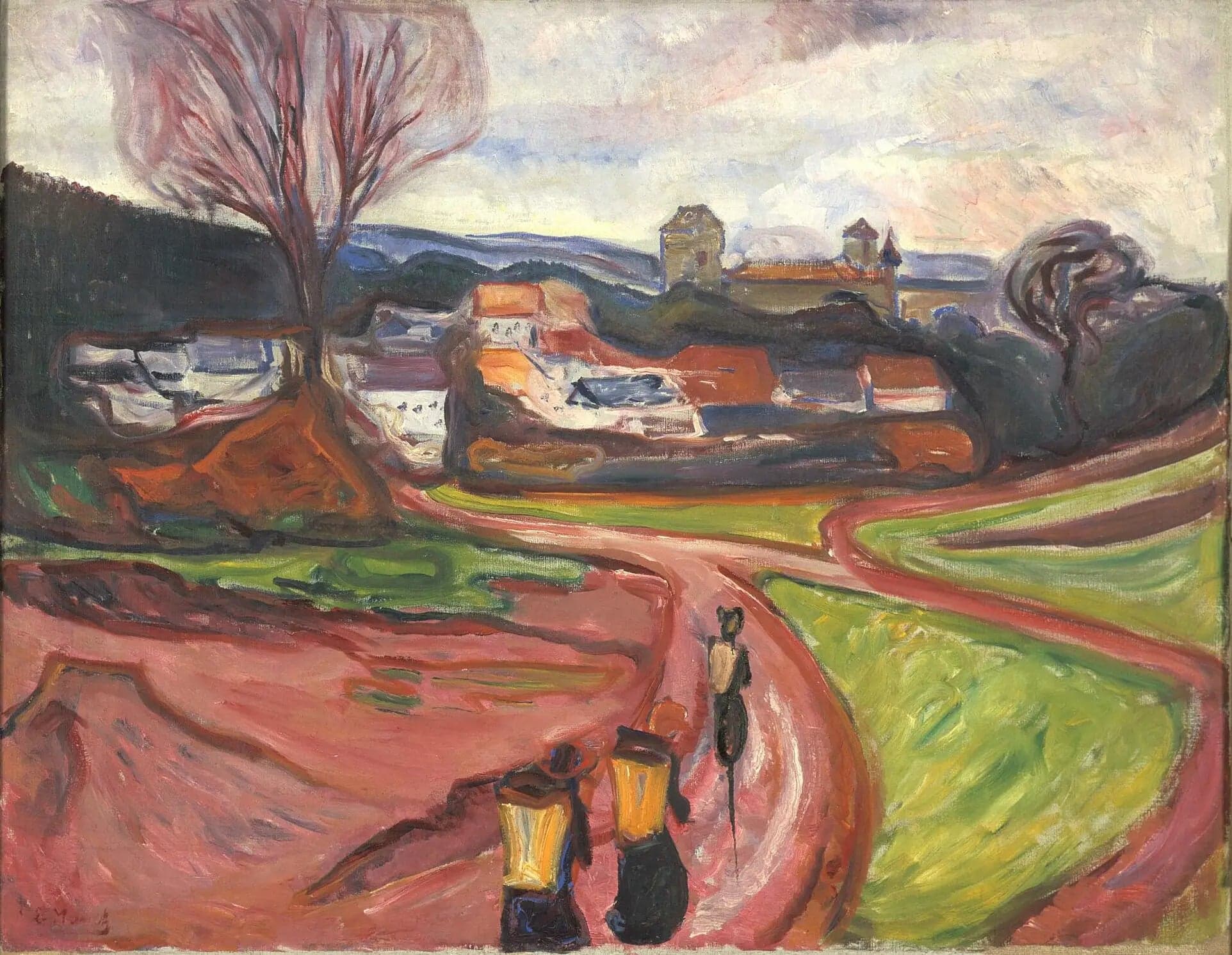
Elgersburg
- Original dimensions
- 90.5 x 70.5 cm
- Museum
- Munch Museum
- Year
- 1905
Scene depicted
The painting "Elgersburg" evokes a landscape that seems frozen in time, where shadows and light dance in harmony over the lush hills. Munch captures the gentle solitude of the place, allowing the viewer to feel the tranquility mixed with a subtle melancholy.
Historical context
Created in 1905, the painting "Elgersburg" is set against a fascinating historical backdrop. It is an emblematic work of the modernist period, emerging in a world undergoing transformation, in the shadow of the artistic and social revolutions of the time. Located at the Munch Museum in Oslo, this canvas captures the very essence of the emotional turmoil that characterizes the artist, affirming his legacy within the expressionist movement.
Place in the artist's career
"Elgersburg" represents a crucial phase in Munch's artistic evolution. Situated between works such as "The Starry Night" and "The Scream," this painting illustrates the transition to stylistic maturity. Munch explores new emotional horizons here, revealing a depth that foreshadows his future explorations.
Anecdote
"Painting is a confession," Munch said when discussing his creations. Strolling through the streets of Elgersburg one spring morning, he was struck by the melancholic beauty of the landscape. This timeless inspiration gave rise to a masterpiece that still resonates today with its emotional intensity.