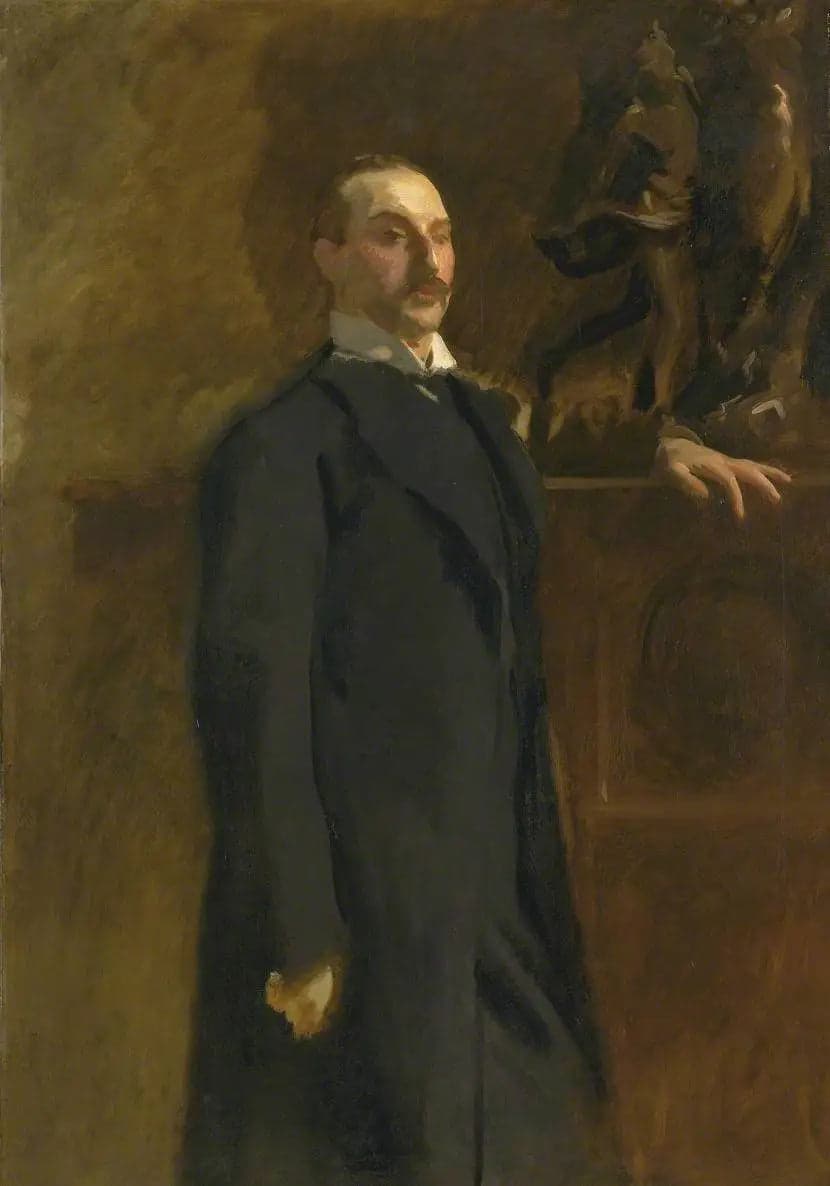
Édouard, son of Asher Wertheimer
- Original dimensions
- 163.2 x 114.9 cm
- Museum
- Tate
- Year
- 1902
Scene depicted
In this pictorial work, the artist presents us with Édouard, fils d'Asher Wertheimer, with a gaze full of innocence and hope. Dressed in a sober suit, he seems frozen in a moment where time stands still. The warm and blurred background of the painting accentuates the focus on the character, creating a palpable intimacy. Sargent masters the art of portraiture here, depicting the emotional bond that unites the child to his environment.
Historical context
Created in 1902, this painting finds its origin in London, in the heart of Victorian England, a period rich in artistic developments. Executed by the master John Singer Sargent , it is part of the realism movement while brushing against the finesse of impressionism . Currently, the painting is displayed at the Tate museum, where it continues to captivate the public with its timeless aura.
Place in the artist's career
The painting “Édouard, fils d'Asher Wertheimer” marks a peak in Sargent's career, demonstrating his exceptional mastery of portraiture. At this time, the artist had already established a solid reputation with works like “Madame X” and “The Children of the Phipps Family.” Let’s say this painting symbolizes a transition to a softer and more intimate approach that will characterize his later works.
Anecdote
“Light is color, and color is the soul of a face.” This word resonates deeply when discussing Sargent's inspiration for this masterpiece . Imagine a spring morning: soft light filters through the open windows, and on the face of young Édouard, a life emerges, capable of capturing a pure and delicate essence. This painting thus transcends the simple portrait to become a true ode to the beauty of childhood.