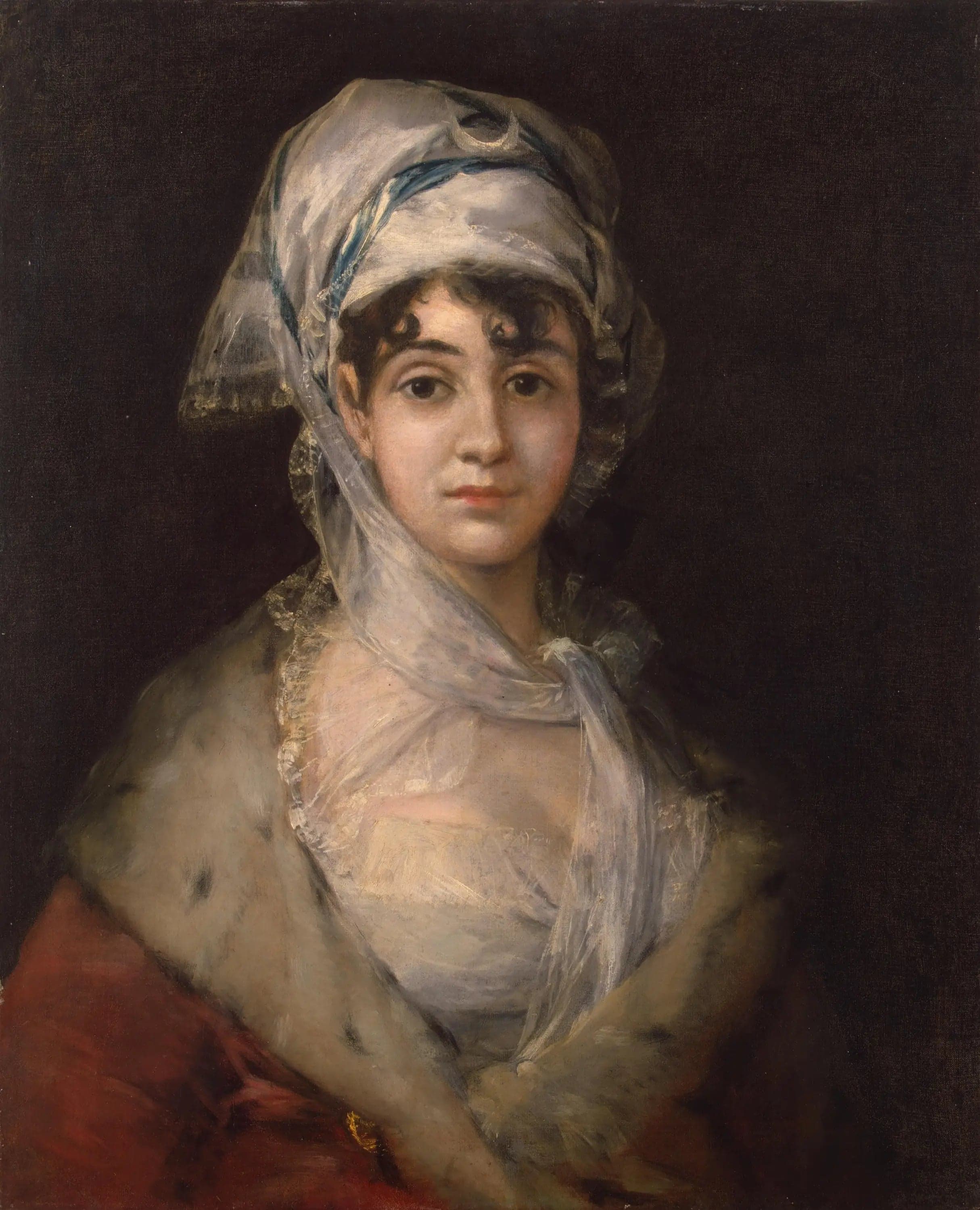
Doña Antonia Zárate
- Original dimensions
- 58 x 71 cm
- Museum
- Hermitage Museum
- Year
- 1810
Scene depicted
Goya's canvas reveals Doña Antonia Zárate in her best light, wrapped in exquisite fabrics, her captivating gaze conveying a story of grace and mystery. Every detail of the canvas is a tribute to the complexity of human nature and feminine beauty, magnified by the luminosity of the background and the artist's mastery of light.
Historical context
Created in 1810, the painting "Doña Antonia Zárate" is situated at the heart of a rich historical context, in a Spain marked by political and cultural upheavals. This work belongs to the romantic movement, which seeks to highlight emotions and individualities. Today, this canvas is preserved at the Hermitage, testifying to its importance in the history of art.
Place in the artist's career
The painting "Doña Antonia Zárate" marks a key period in Goya's career, representing a perfect fusion of his emerging talent and artistic maturity. Alongside works such as "The Naked Maja" and "The Executions of May 3rd," this canvas illustrates his technical and emotional evolution, offering a unique perspective on his creative genius.
Anecdote
"Beauty lies in truth, and each portrait is a window to the soul," Goya said when speaking of his art. Inspired by a clear morning, the moment he met the gaze of Doña Antonia, he knew that this pictorial work would capture the very essence of her spirit. This painting , the fruit of that encounter, awakens a palpable evocative force.