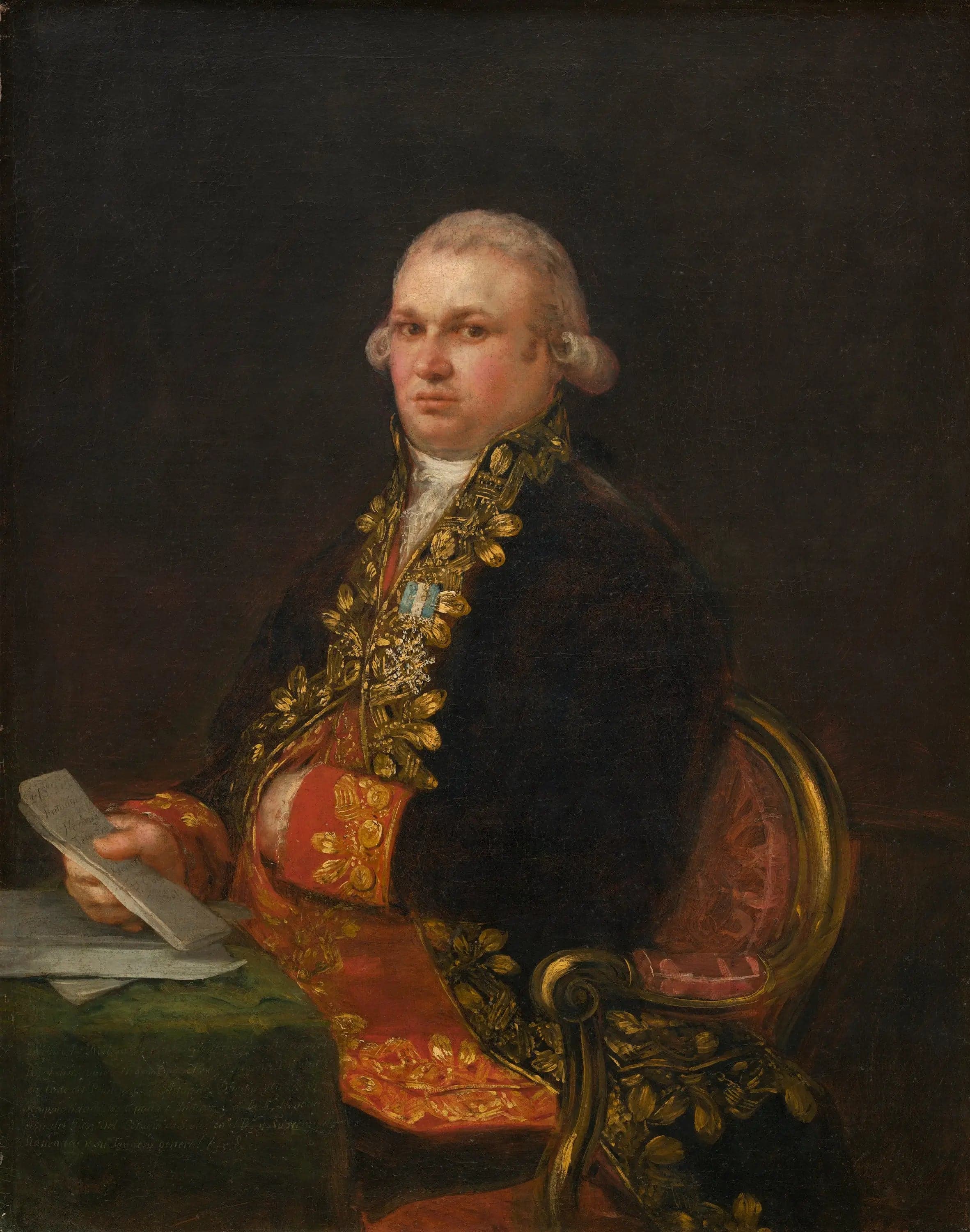
Don Antonio Noriega
- Original dimensions
- 80.9 x 102.6 cm
- Museum
- National Gallery of Art
- Year
- 1801
Scene depicted
"Don Antonio Noriega" is a striking representation of a statesman, offering a penetrating gaze, as if his look could transcend the centuries. Noriega's posture, the play of shadows and light, all evoke a depth of soul and dignity, skillfully merging social influence and human sensitivity.
Historical context
Created in 1801, the painting "Don Antonio Noriega" is set against the prestigious backdrop of Spain, reflecting a time rich in political and cultural tensions. Goya, a major figure of romanticism , captures the very essence of the society of his time. This canvas , currently displayed at the National Gallery of Art, transforms a simple canvas into a living monument, measuring 80.9 by 102.6 cm.
Place in the artist's career
This canvas marks a pivotal moment in Goya's career, reflecting both his growing mastery and bold pen. In parallel with other canvases like "La Maja Desnuda" and "The Family of Charles IV," one perceives a stylistic evolution towards vibrant humanity, between shadow and light.
Anecdote
"Art must be the mirror of the soul," Goya said while contemplating a clear spring morning. It was at that precise moment that he saw the potential for expression in his model, Don Antonio Noriega. Each brushstroke in this pictorial work conveys this fleeting inspiration, uniting the artist with his subject and captivating the viewer through time.