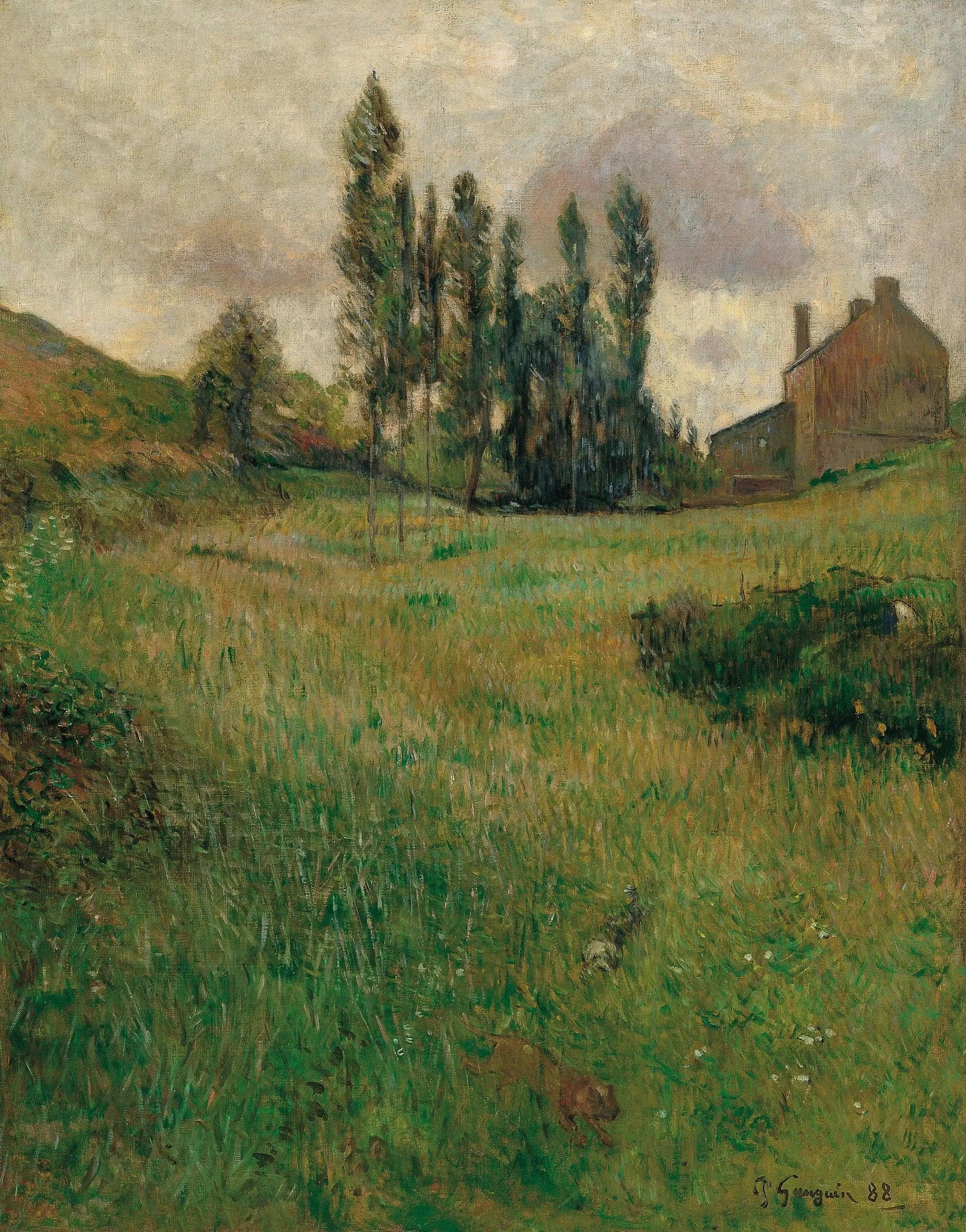
Dog Racing in the Prairie
- Original dimensions
- 72.5 x 92 cm
- Museum
- Thyssen-Bornemisza Museum
- Year
- 1888
Scene depicted
This painting depicts a lively scene where dogs frolic joyfully in the vastness of a prairie, embodying the harmony between man and nature. The vibrant touches of color illustrate the energetic movements of the animals, transporting the viewer into an atmosphere of freedom and carefreeness.
Historical context
Created in 1888, this painting is part of the post-impressionist movement in Pont-Aven, a town in Brittany. This iconic painting illustrates Gauguin's passion for nature and rural life. Currently, the painting is displayed at the Thyssen-Bornemisza Museum, where visitors can admire its unique beauty.
Place in the artist's career
Dog Sledding in the Prairie represents a turning point in Gauguin's career, marking his transition to a bolder style. Parallel to other works such as The Vision of the Baptismal and The Yellow Christ , this painting illustrates an evolution in the expression of his emotions through art.
Anecdote
“Nature is a true reflection of the human soul,” Gauguin might have said while painting this canvas. One spring morning, in the heart of the prairie, he captured the energy and beauty of dogs running in the soft green light, an inspiration born from his intimate relationship with the environment.