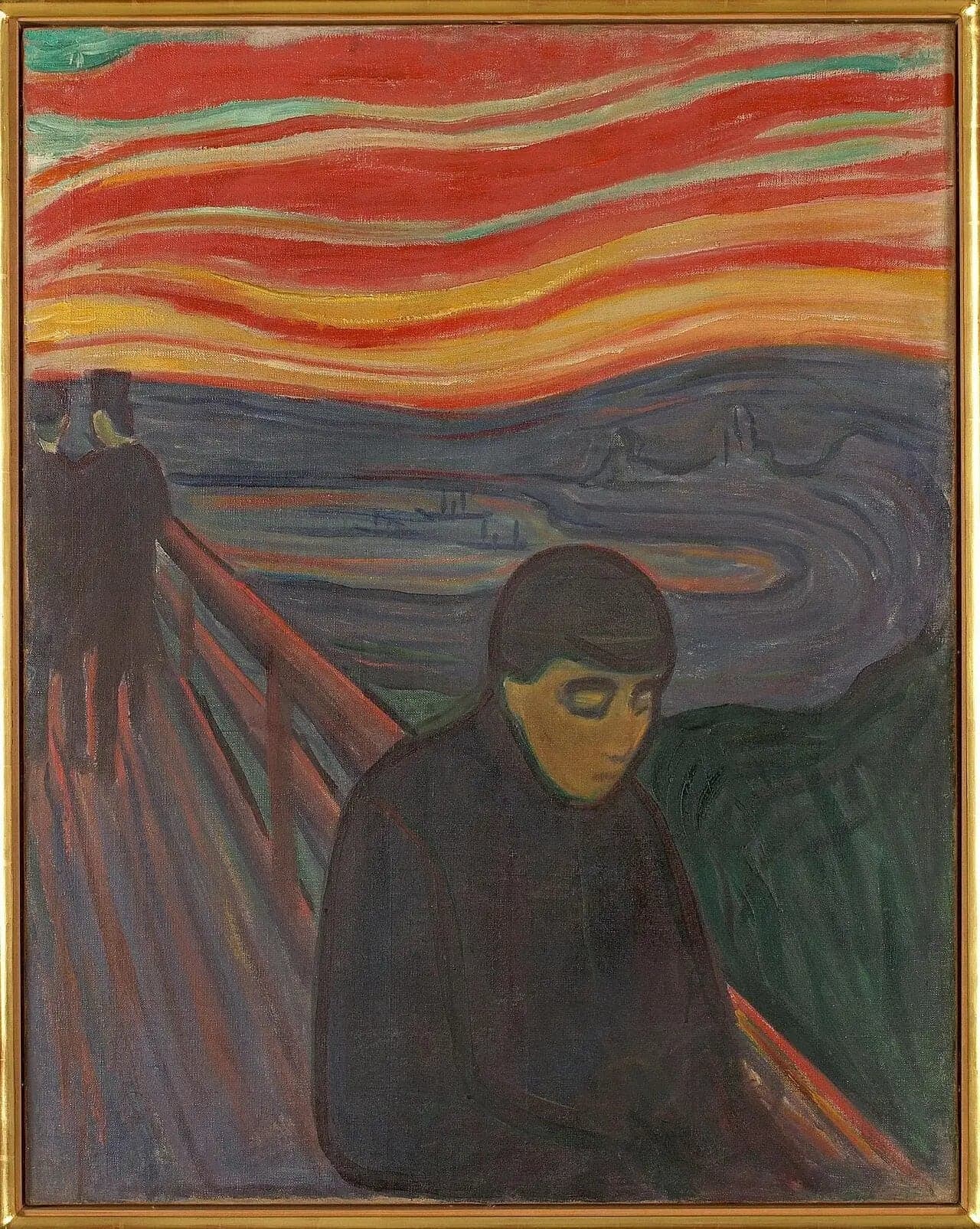
Despair
- Original dimensions
- 67 x 92 cm
- Museum
- Thiel Gallery
- Year
- 1892
Scene depicted
At the heart of the painting , a solitary figure stands on the promontory, lost in a sea of inner turmoil. The distorted landscape surrounding it, composed of tumultuous clouds and a restless ocean, illustrates the silent scream of human existence. "Despair" transcends the simple canvas and becomes a true manifesto of existential anxieties, prompting the viewer to introspective reflection.
Historical context
Created in 1892, Munch's iconic painting , the canvas named "Despair", emerges from a cultural context where expressionism shakes artistic conventions. Located in Stockholm, Sweden, this work is a poignant reflection of the artist's inner turmoil and his time. Currently exhibited at the Thiel Gallery, the 67 x 92 cm canvas immerses the viewer in an atmosphere filled with emotions.
Place in the artist's career
"Despair" is a decisive step in Munch's career, representing a period of artistic maturity. In parallel, his works such as "The Scream" and "Puberty" testify to a stylistic and emotional evolution. Munch, through this canvas , illustrates the depth of his existential concerns and the quest for identity in the face of human suffering.
Anecdote
“I have always sought the truth beneath the masks we wear.” These words from Edvard Munch resonate like an echo during the creation of his masterpiece . Inspired by the anxiety of a calm night, Munch painted this canvas after encountering a desperate face in an alley, a fleeting yet impactful meeting, awakening powerful feelings.