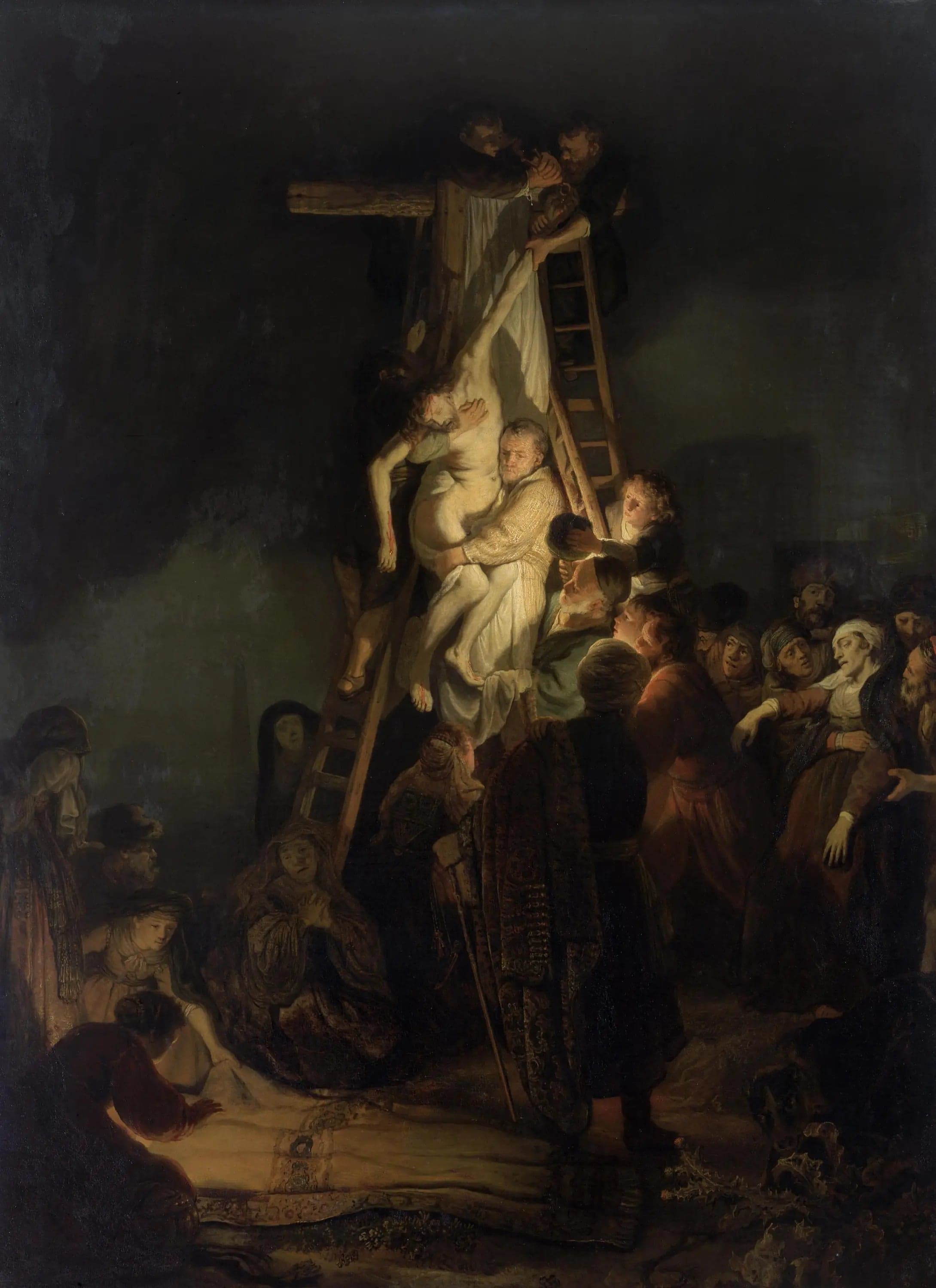
Descent from the Cross
- Original dimensions
- 117 x 158 cm
- Museum
- Hermitage Museum
- Year
- 1634
Scene depicted
This masterful painting captures a pivotal moment of the Crucifixion, representing the lifeless body of Christ being taken down from the cross, surrounded by moved figures. The palpable tension between the characters, the frenzy of gestures, and the weight of the drama are found in this pictorial work , where every detail is laden with symbolism , color, and tragedy.
Historical context
Created in 1634, this painting is emblematic of the Dutch golden age, reflecting a prolific time for the baroque movement. The work is currently displayed at the Hermitage Museum in Russia, where it continues to amaze visitors with its emotional depth and powerful composition.
Place in the artist's career
The Descent from the Cross plays a crucial role in the artistic evolution of Rembrandt . It is at this moment that he reaches a stylistic peak, comparable to his other works, such as The Night Watch and The Anatomy Lesson of Dr. Tulp , where his mastery of light and shadow is powerfully asserted.
Anecdote
“Art is a reflection of the soul, a true illumination of humanity's struggles.” This quote could resonate with the genesis of this masterpiece , conceived by Rembrandt as he observed the play of light through his window one winter morning. The visual shock of darkness and clarity illuminating the body of Christ at the center of the canvas evokes the struggle between the divine and the mortal.