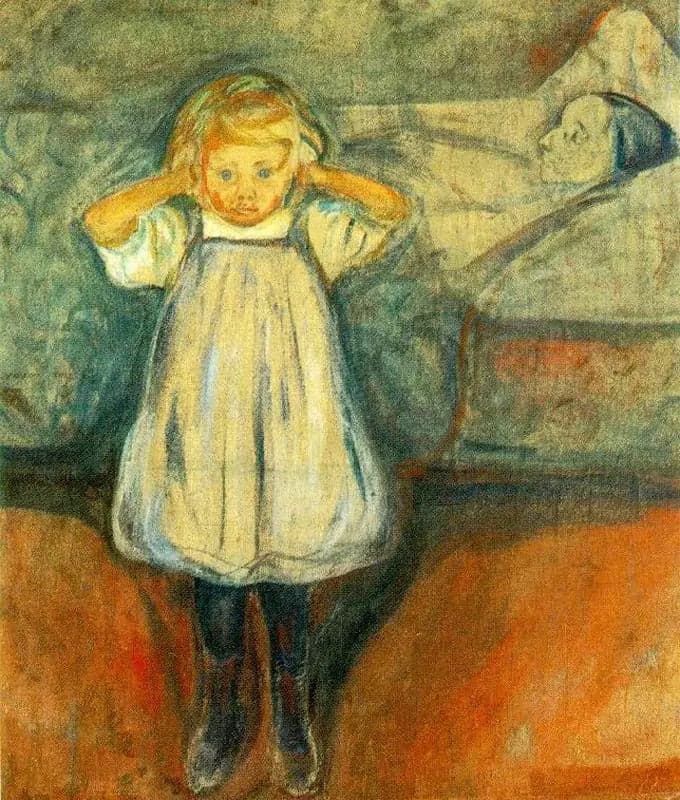
Death and the Child
- Original dimensions
- 179.5 x 104.5 cm
- Museum
- Munch Museum
- Year
- 1899
Scene depicted
In La Mort et l'Enfant , Munch depicts a scene of rare emotional intensity. The composition illustrates the contrast between life and death, focusing on the child, a symbol of innocence and vulnerability, against the dark silhouette of death. The silent interaction between these two figures evokes a captivating dialogue that provokes both deep melancholy and reflection on the cycle of life.
Historical context
Created in 1899 in Oslo, the iconic canvas La Mort et l'Enfant is part of the expressionist movement. At that time, Munch, a fervent explorer of human emotions, highlights the anxieties and deep feelings of the soul. Currently housed in the Munch Museum, this painting occupies a central place in the Norwegian artistic panorama and beyond.
Place in the artist's career
This painting is part of Munch's artistic maturity, combining his previous styles as seen in The Scream and The Madonna . While The Scream explores deep anxiety, La Mort et l'Enfant draws attention to the gentle fragility of life. These works testify to Munch's expressive evolution, from raw emotion to reflective depth.
Anecdote
Munch once stated: "Life is a long journey towards death." This thought resonates deeply in La Mort et l'Enfant , created after a period of personal loss, and offers a poignant look at the fragility of existence. The work was inspired by a disturbing encounter during a sunny summer, where the shadow of death seemed to make the innocence of a child even more precious.