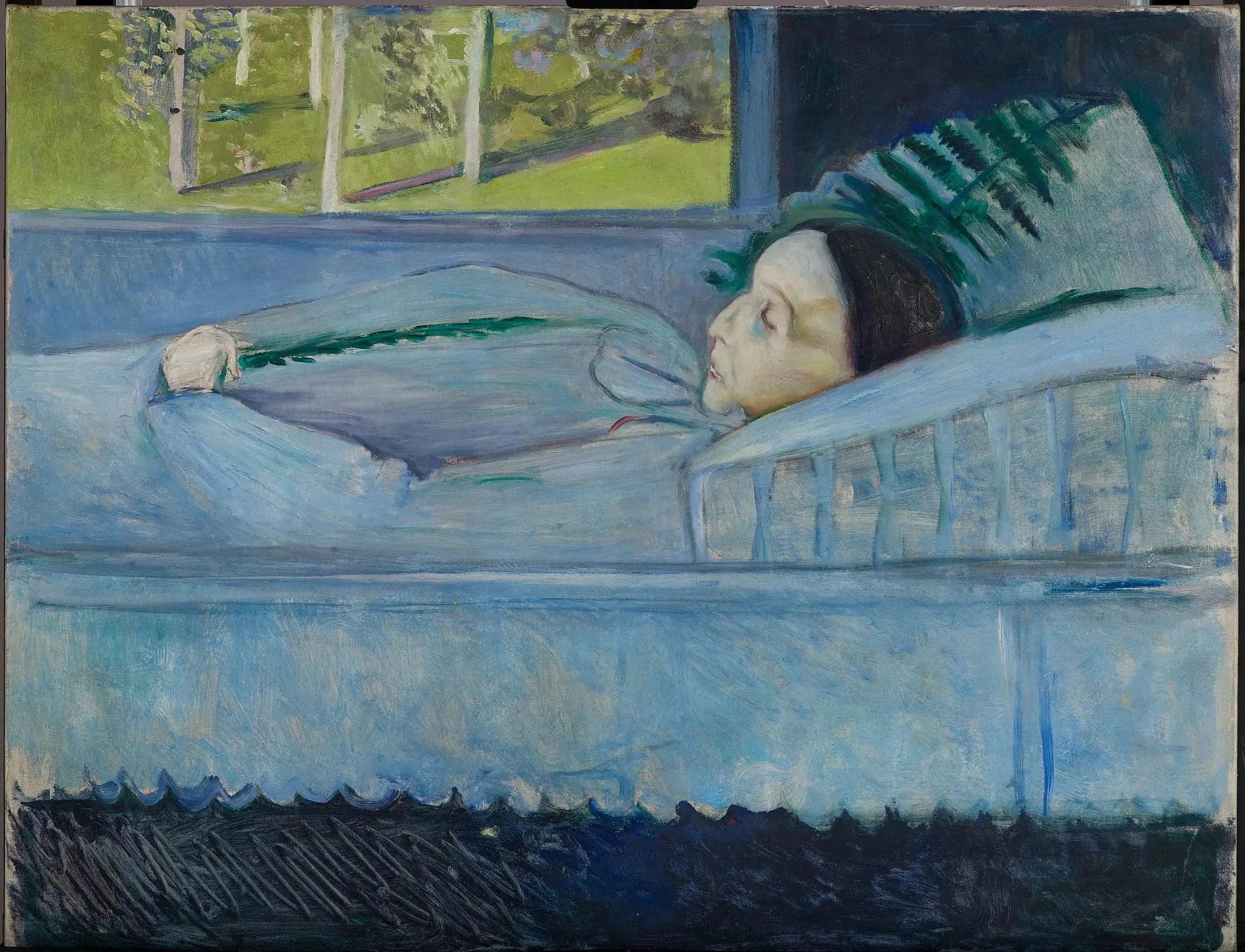
Death and Spring
- Original dimensions
- 94.5 x 73 cm
- Museum
- Munch Museum
- Year
- 1893
Scene depicted
In this composition , Munch explores the cycle of life, measuring the poignant contrast between the beauty of spring renewal and the threatening shadow of mortality. The characters and natural elements intertwine in a tragic ballet, where the vibrant colors of spring clash with the dark hues of anguish and loss. This painting is a reflection on human existence, a true cry from the heart in the face of the absurdity of our passage on earth.
Historical context
Created in 1893, this painting is the result of an artistic context marked by symbolism , a movement that delves into the exploration of emotions and states of mind. Located in Oslo, Norway, this canvas bore witness to a time when art reflected deep tensions, both personal and societal. Today, the painting is displayed at the Munch Museum, where it invites each visitor on an introspective journey, with dimensions that give it a majestic presence.
Place in the artist's career
The Death and the Spring fits perfectly into Munch's mature phase, marked by a bold exploration of the depths of the soul. Previously, works like The Scream laid the groundwork for the artist's fame, while later compositions, such as The Madonna, testify to an evolution towards an even more symbolic and emotional language. This painting represents a stylistic peak, crystallizing his unique character.
Anecdote
“Life flourishes in suffering and death.” This quote, undoubtedly inspired by Munch's penetrating view of existence, evokes the perfect moment when this pictorial work took shape. Perhaps one spring morning, when light enters a dark room, that inspired this masterpiece . The duality between the promising spring and the inevitable presence of death resonates in every brushstroke of this painting .