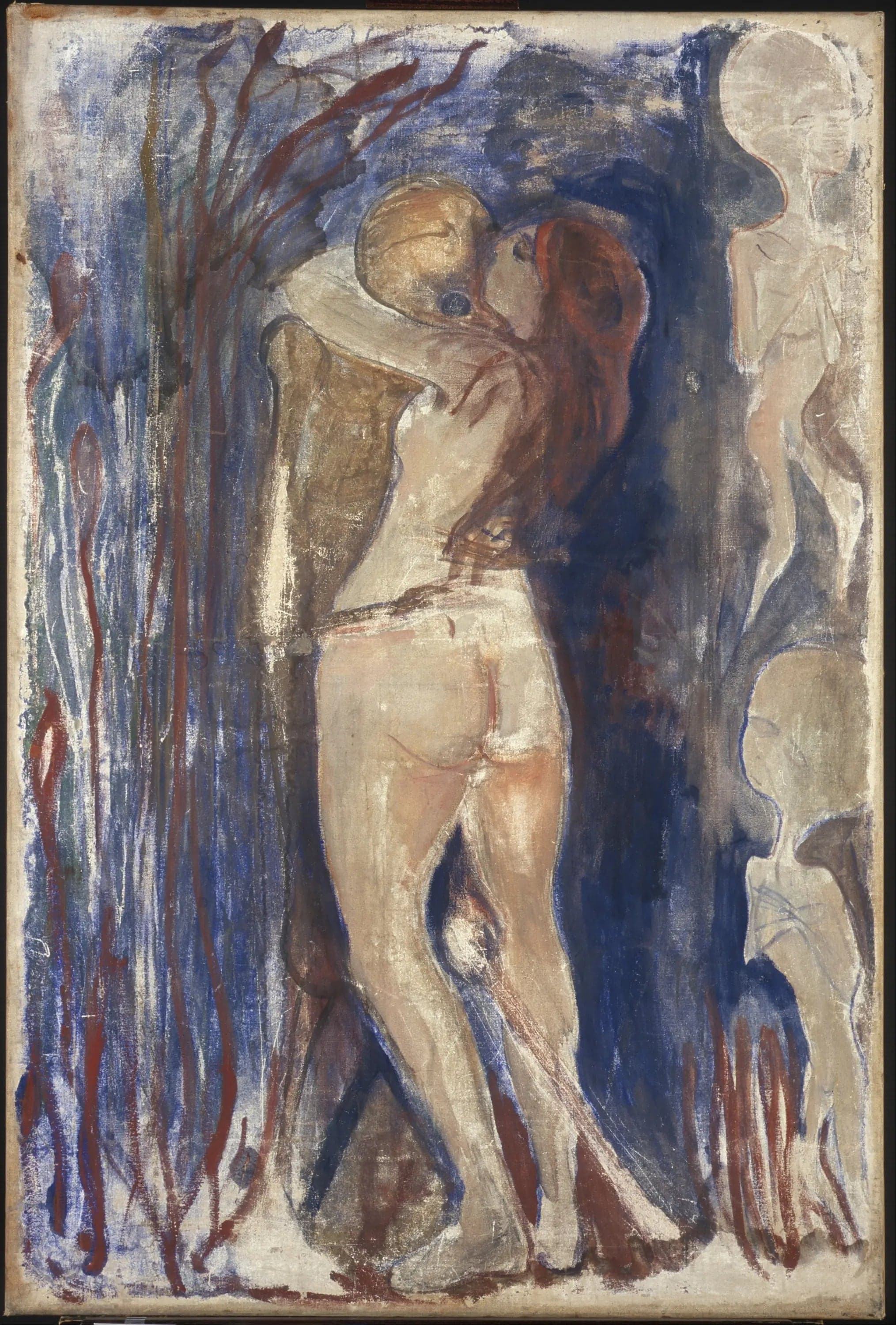
Death and Life
- Original dimensions
- 86 x 128 cm
- Museum
- Munch Museum
- Year
- 1894
Scene depicted
The canvas Death and Life offers a poignant representation of mortality and human existence. Munch depicts two intertwined figures, death hidden behind a vibrant figure of life. Sadness and love are evoked in an eternal dance, creating a powerful visual dialogue about the fragility of life.
Historical context
Created in 1894, this painting is iconic and was born in Oslo, within the expressionist movement, as Europe began a tumultuous period of transition. The canvas , currently housed in the Munch Museum, measures 86 x 128 cm. It represents the very essence of human emotions, immersed in a cultural context rich in tensions and reflections on life and death.
Place in the artist's career
Situated at a turning point in Munch's career, Death and Life marks his transition to a more symbolic and introspective style. In parallel with his works such as The Scream and The Madonna, this canvas highlights the evolution of his expression, merging emotions intertwined with the psyche of man.
Anecdote
“Every moment is a struggle between life and death,” Munch said. It was on a foggy morning, while walking in a silent park, that the artist captured the embrace between these fleeting moments of joy and sadness to give birth to his masterpiece , Death and Life.
Major exhibitions
Munch and France