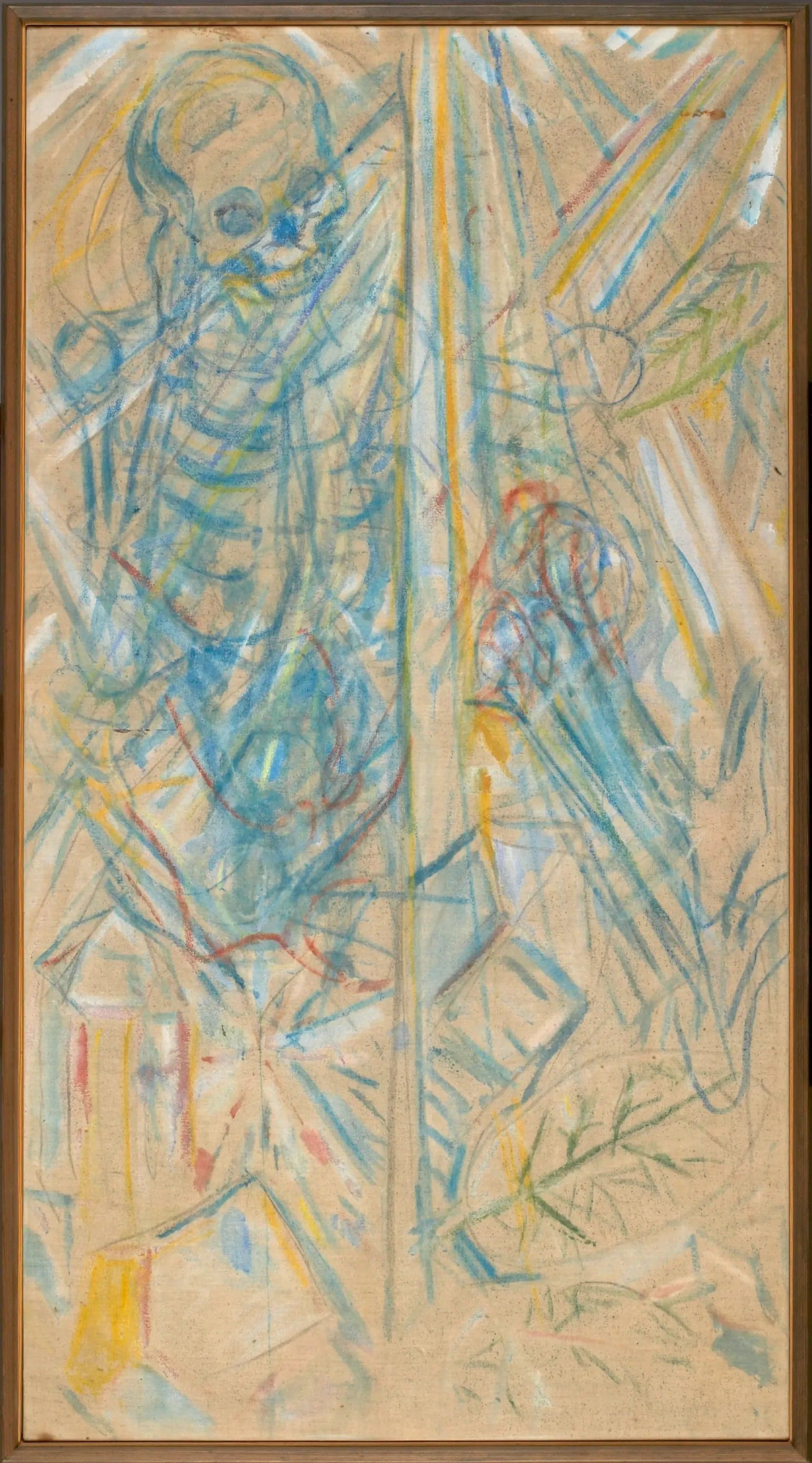
Death and Crystallization
- Original dimensions
- 75.5 x 139.5 cm
- Museum
- Munch Museum
- Year
- 1909
Scene depicted
The composition of “Death and Crystallization” depicts a poignant moment where life and death seem to intertwine. This pictorial work explores themes of mortality, decline, and the immanence of the cycle of life, capturing an atmosphere of melancholy and tragic beauty. The almost ghostly figures stand in a dreamlike landscape, creating a palpable tension that engages the viewer.
Historical context
Created in 1909, in Oslo, Norway, this painting is part of the expressionist movement, marked by a deep exploration of human emotions. The canvas is now preserved at the Munch Museum, where it continues to inspire and move visitors. Its dimensions evoke a singular grandeur, inviting contemplation and reflection.
Place in the artist's career
This painting marks a milestone in the career of Edvard Munch , signifying his period of artistic and emotional maturity. Placing it alongside his famous works “The Scream” and “The Madonna,” it is evident that “Death and Crystallization” echoes his relentless exploration of inner turmoil, while also displaying a notable technical evolution in the use of color and form.
Anecdote
Munch once said: “The truth is always within us, even when we do not see it.” This quote, resonating like an echo of his artistic quest, finds a powerful resonance in the evocative strength of the painting “Death and Crystallization,” created on a misty morning as he wandered through the silent streets of Oslo, his mind filled with memories and reflections.
Major exhibitions
Edvard Munch . Monumental projects