Day of God
- Original dimensions
- 87 x 66 cm
- Movement
- post impressionism
- Museum
- Art Institute of Chicago
- Year
- 1894
Scene depicted
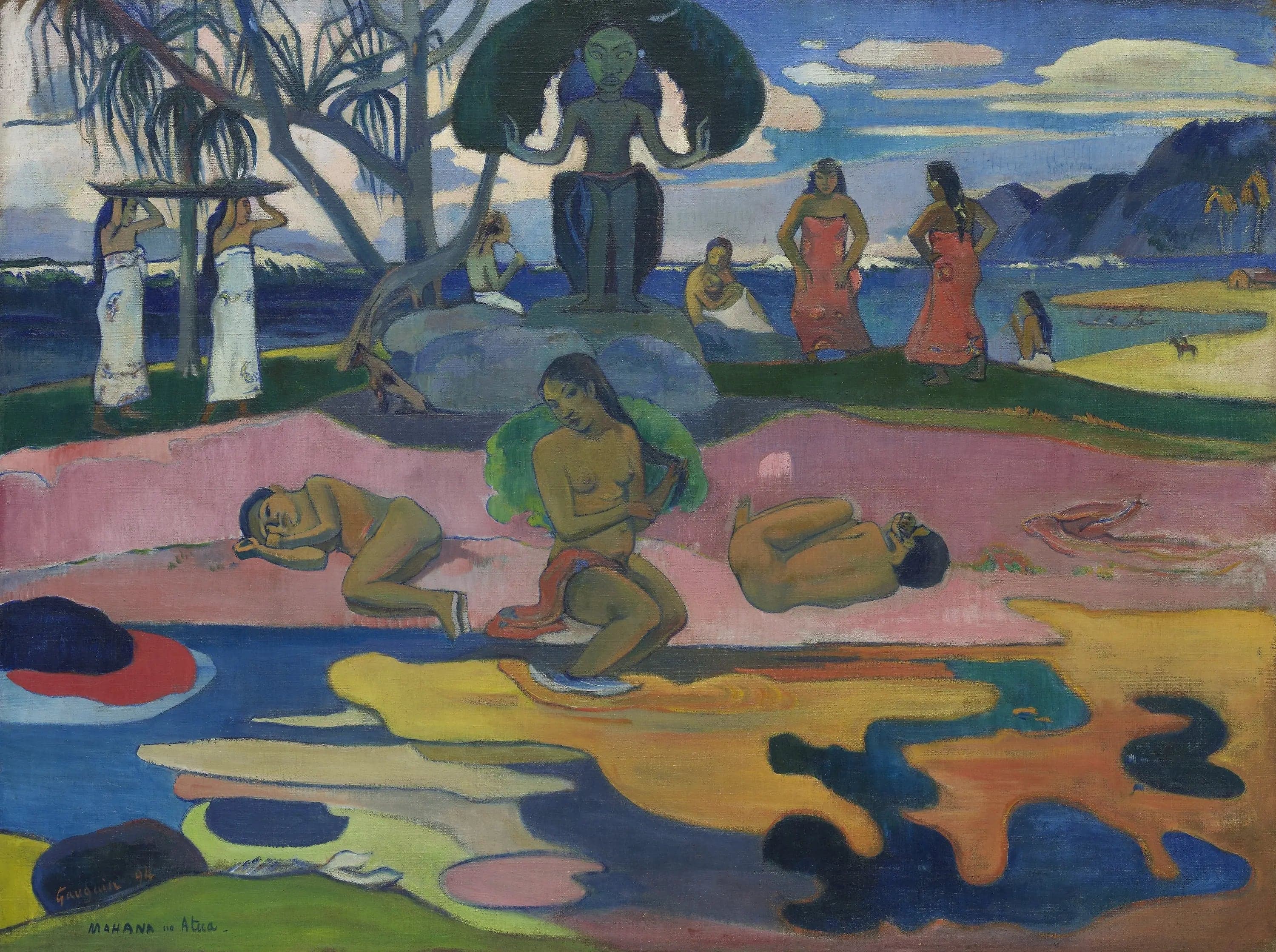
“Day of God” is an invitation to contemplate spirituality and light. Gauguin depicts a scene where human figures, in harmony with the lush setting, illustrate a dialogue between the sacred and the profane. This painting evokes an atmosphere of serenity, a frozen moment where the density of the air seems to vibrate with divine light.
Historical context
Created at the end of the 19th century, the painting emblematic "Day of God" resonates at the heart of the bold artistic movements of its time. Located in Chicago, this canvas is the embodiment of the nuances and depths of post impressionism . It echoes a moment when art seeks to express not only reality but also the deepest human emotions.
Place in the artist's career
“Day of God” is situated in a period of artistic maturity for Gauguin, marking a turning point in his exploration of color and form. By paralleling it with “Vision after the Sermon” and “The Yellow Christ,” one perceives an evolution towards symbolic abstraction, where each painting becomes a more intense spiritual quest.
Anecdote
“I seek the truth in color.” Such could be the thoughts of Paul Gauguin as he develops this masterpiece . Inspired by a sunny morning, surrounded by the soothing sounds of vibrant nature, he captures in this painting the primitive beauty of existence. This moment of introspection transcended the real and transformed into a pictorial work of immeasurable impact.