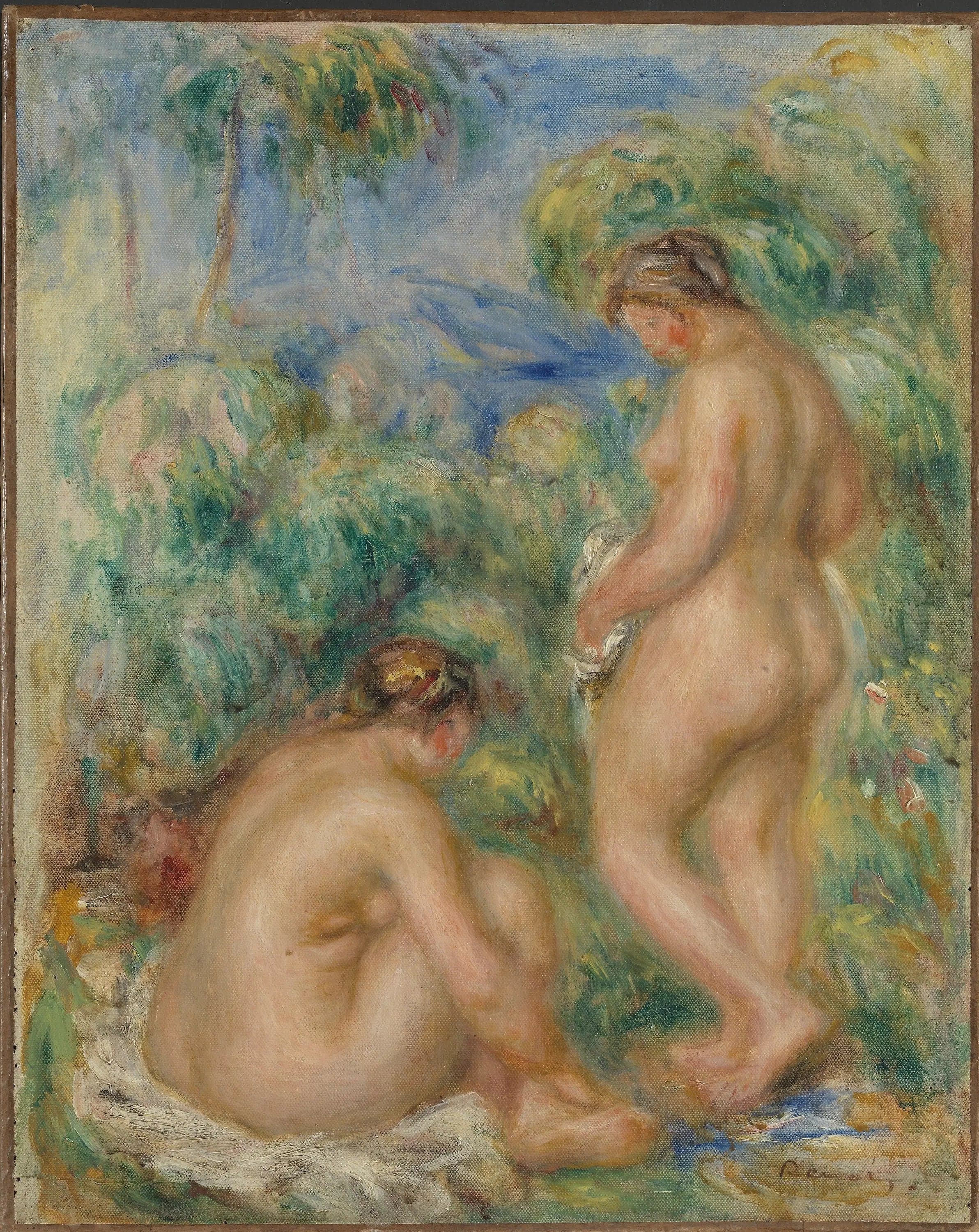
Daughters of Badende - Pierre
- Original dimensions
- 41 x 51 cm
- Museum
- Musée national
- Year
- 1916
Scene depicted
This painting, Filles de Badende, depicts a scene of peaceful life, where three young women indulge in the intoxication of water and light. Evoking laughter and shared complicity, each character is painted with such delicacy that one can almost feel the gentle breeze playing on their skin. This pictorial work sublimates the living moment, the quivering of the water, while drawing us into an atmosphere of regained freedom.
Historical context
Created in 1916, this iconic work is set in the vibrant Paris of the early 20th century, a time marked by the emergence of the Impressionist movement. The painting, currently on display at the Musée national, perfectly illustrates the free spirit and artistic effervescence of this period where light and colors told stories. Its size, 41 x 51 cm, allows for a detailed appreciation of the finesse of the brush strokes and the play of light that make this masterpiece renowned.
Place in the artist's career
Filles de Badende is part of the period when Renoir explores themes of femininity and nature, marking a more intimate approach to his subjects. In parallel with Les Coquelicots (1873) and Le Déjeuner des canotiers (1881), we observe the woven evolution of his style, where light plays a central role, highlighting his growing mastery in the representation of everyday life.
Anecdote
“The beauty of nature is not found in what we see, but in what we feel.” This quote from Renoir resonates particularly during the creation of Filles de Badende. Inspired by a gentle sunny morning, the artist captured the lightness and joy of the female figures frolicking, their laughter almost audible through the canvas. The painting embodies this fusion of observation and emotion, a moment suspended at the heart of innocence.