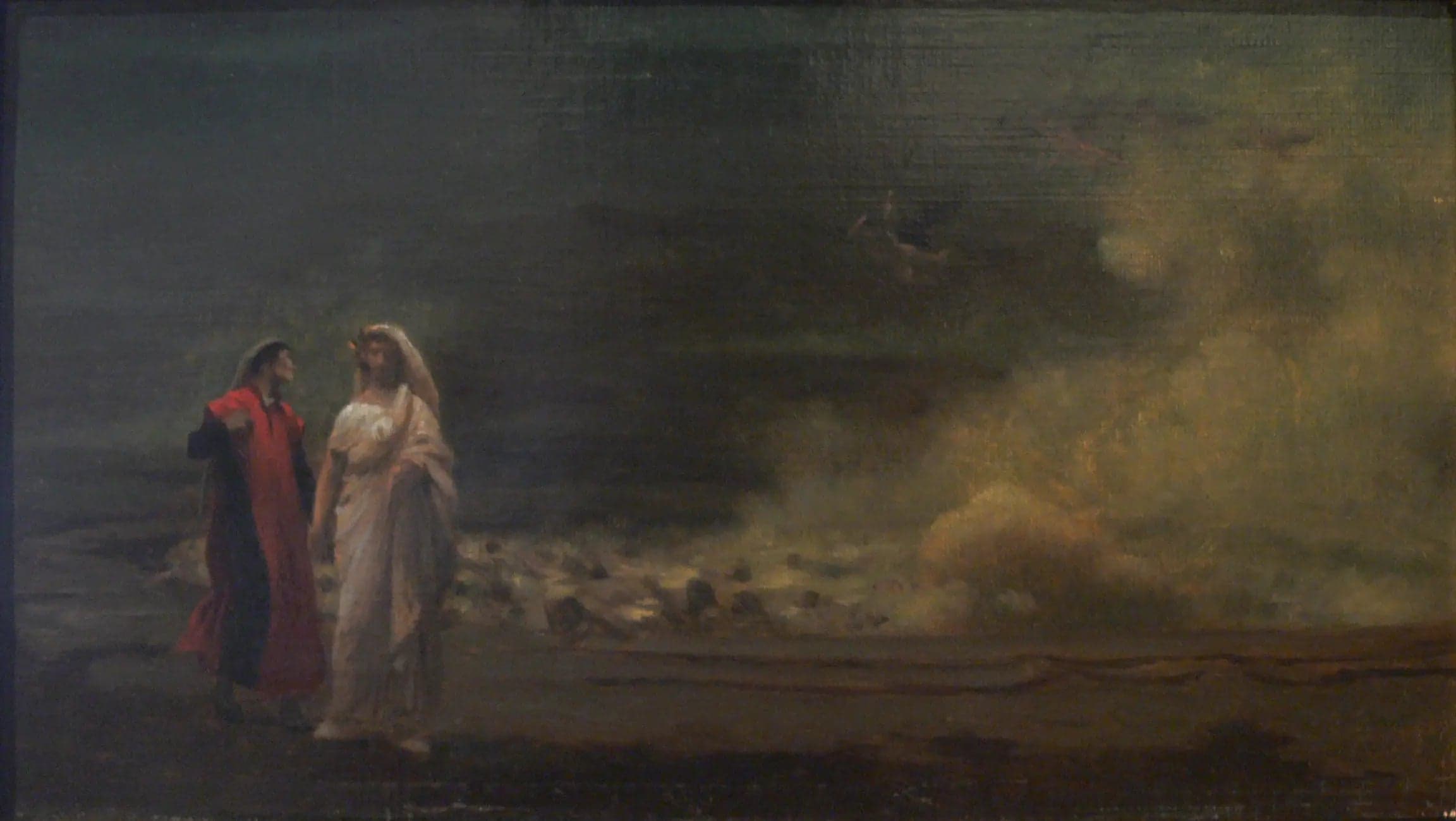
Dante and Virgil in Hell - Jean
- Original dimensions
- 35 x 20 cm
- Museum
- museum Jean-Léon Gérôme
Scene depicted
The canvas "Dante and Virgil in Hell" evokes a powerful scene from the epic poem "The Divine Comedy," illustrating Dante's terrible journey guided by his mentor Virgil through the circles of Hell. The figures illustrate the quest for redemption of the human soul, confronted with its sins. Every carefully crafted detail of this painting immerses the viewer in an atmosphere that is both dark and poignant, where love and suffering intertwine in a tragic dance.
Historical context
Created in 1850, the painting "Dante and Virgil in Hell" by Jean-Léon Gérôme is rooted in a rich artistic context, at the crossroads of neo-classicism and romanticism . Made in Paris, this masterful work finds its place in the museum Jean-Léon Gérôme , where it continues to amaze visitors with its delicate dimensions of 35 x 20 cm. It is set in a time when the love of mythology and great literary epics was flourishing, leaving a lasting mark in the history of art.
Place in the artist's career
"Dante and Virgil in Hell" is situated at a significant turning point in Gérôme's career, propelling his style towards more dramatic and moving horizons. At this stage, the artist combines his interest in history and mythology with a technical mastery revealed in other paintings , such as "Pollice verso" and "The Pilgrimage to Mecca," where exoticism and emotional intensity intertwine.
Anecdote
Jean-Léon Gérôme once declared: "Art is the redemption of souls through the emotion they feel in the face of beauty." This reflection resonates strongly when discussing the genesis of the masterpiece . It was born while the artist was walking through the streets of Paris, deeply inspired by a misty morning, during which he crossed the gaze of a passerby intensely looking at a book. This fleeting connection nourished his imagination, breathing life into the poignant composition of Dante and Virgil in Hell .