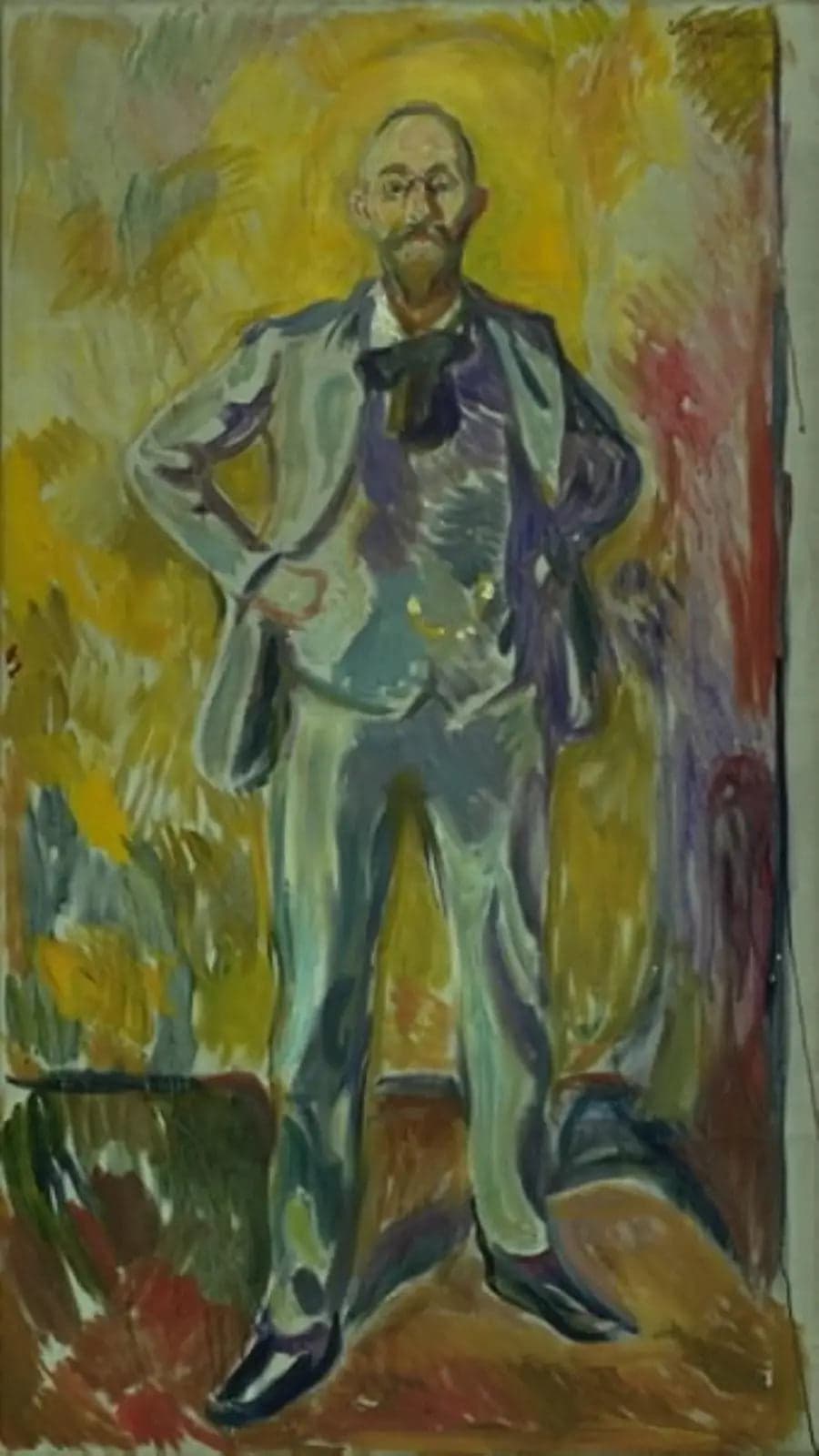
Daniel Jacobsen
- Original dimensions
- 73.7 x 128.3 cm
- Museum
- Statens Museum for Kunst
- Year
- 1908
Scene depicted
In "Daniel Jacobsen", Munch transposes a scene of rare emotional intelligibility. Through the composition, he highlights human relationships, intimacy, and the fragility of feelings. The canvas reveals an atmosphere that is both delicate and disturbing, a perfect balance between what is visible and what remains buried in the souls of the characters.
Historical context
Created in 1908, the painting "Daniel Jacobsen" finds its roots in the vibrant city of Copenhagen, where Edvard Munch , a key figure of symbolism , managed to capture the melancholy and intensity of human emotions. This canvas is emblematic of the pivotal time at the beginning of the 20th century, a period of artistic innovations marked by psychological exploration and subjectivity. Today, this painting is carefully preserved at the Statens Museum for Kunst , a prestigious setting for such a masterpiece.
Place in the artist's career
"Daniel Jacobsen" fits into a decisive period of Munch's career, where the artist synthesizes his past explorations while looking towards the future. His mastery of shadows and lights evokes works such as "The Scream" and "The Madonna", showing a stylistic evolution marked by an increasingly pronounced psychological depth.
Anecdote
"Art must be an expression of life, of the soul..." Munch might have said, as on a fresh spring morning, walking down an alley in his hometown, he was struck by the ephemeral beauty of a face in the daylight. This painting is the result of that revelation, a permanent emotional surge, made palpable through every brushstroke in "Daniel Jacobsen".
Major exhibitions
Edvard Munch : portretter