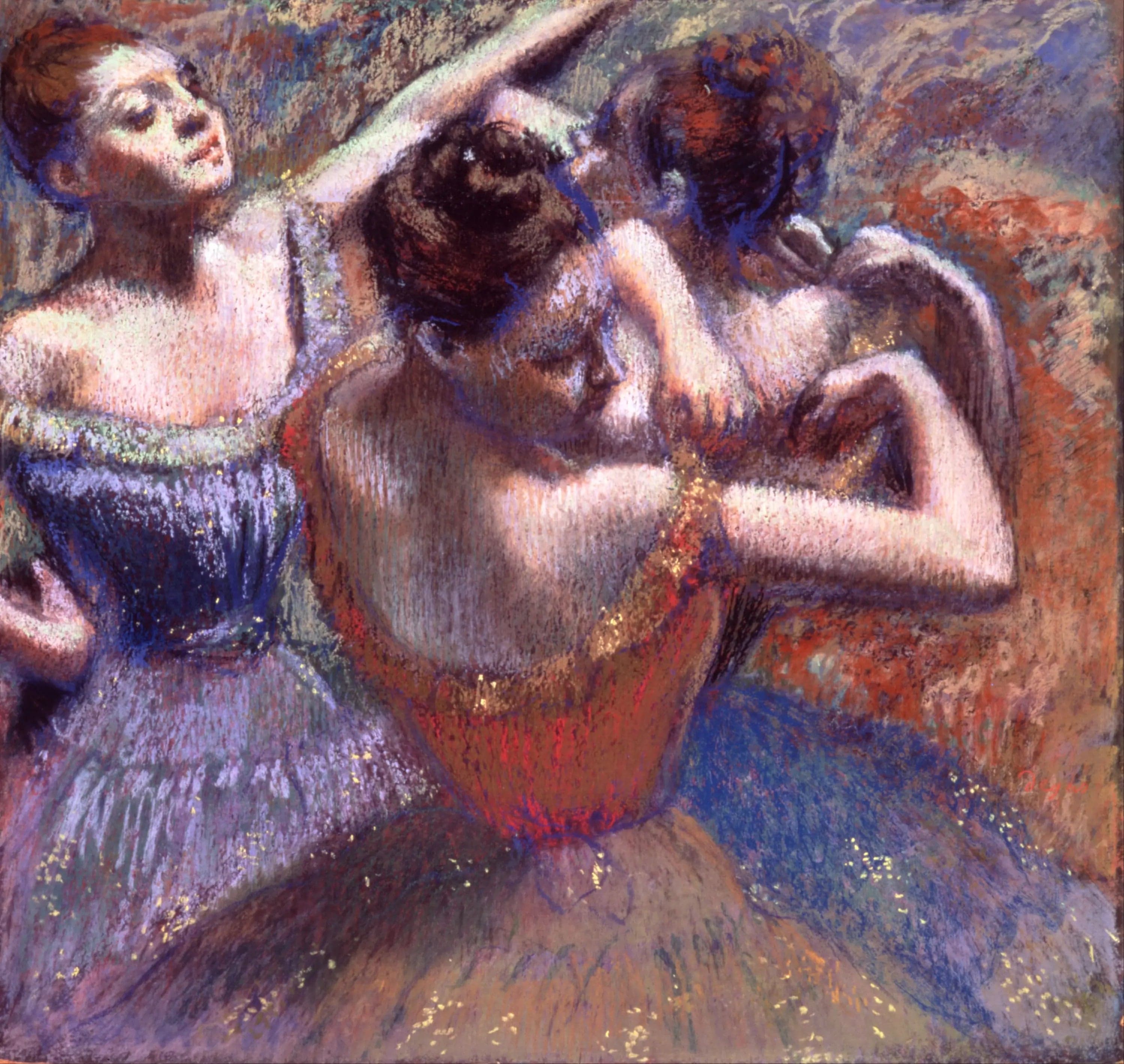
Dancers
- Original dimensions
- 6480 x 622 cm
- Museum
- Toledo Museum of Art
- Year
- 1899
Scene depicted
In Dancers , Degas transports us into the fascinating world of classical dance. The figures, systematically intertwined in a delicate choreography, seem to vibrate under the glow of artificial light. The drapery of the costumes intertwines, and each dancer becomes a note in a visually orchestrated composition, thus capturing the intensity of a suspended moment.
Historical context
Created in 1899, Degas' iconic painting , Dancers , embodies the essence of Impressionist movement, emanating from the vibrant streets of Paris at the end of the 19th century. This painting is a tribute to the art and passion of dance, revealing a fleeting moment within the theatrical world. Currently on display at the Toledo Museum of Art , this pictorial work spreads the muted atmosphere of the backstage, where dim lights mingle with the whispers of dancers.
Place in the artist's career
This painting fits into a pivotal moment in Degas' career, as he asserts himself as a master of stylized elevation and the capture of fleeting movements. Alongside other works such as The Dance Class and Dancer Adjusting Her Shoe , one observes an evolution in the elaboration of forms, an emotional depth that will reach its peak with Dancers .
Anecdote
“Dance is the last form of art that remains to be mastered,” he might have claimed while contemplating the graceful movement of his subjects. On a spring morning, on the stage of an opera, he captured the ephemeral essence of beauty, an inspiration that is found in the finesse of each gesture of this painting .