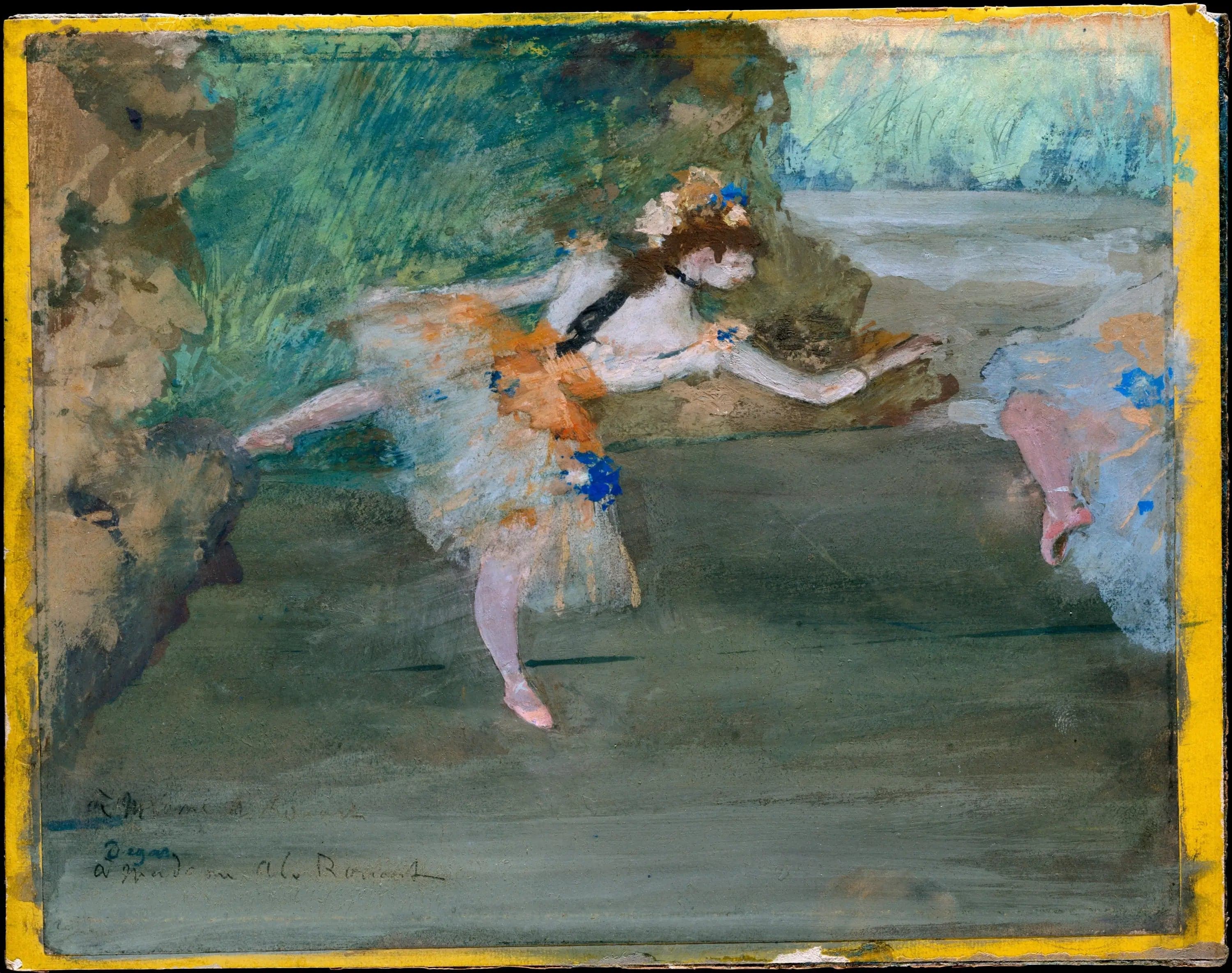
Dancer on Stage
- Original dimensions
- 22.9 x 17.8 cm
- Museum
- Metropolitan Museum of Art
- Year
- 1877
Scene depicted
This painting spectacularly represents a dancer in full rehearsal, highlighting the intensity and concentration of these artists on stage. With fluid and graceful movements, Degas manages to capture the very essence of the performance. The details of the dancer's costume and the projected shadows add a multitude of layers to this vibrant composition.
Historical context
Created in 1877, this painting is emblematic of the artistic Paris of the late 19th century. Located in the heart of a city in full cultural effervescence, Degas is part of the Impressionist movement, although his works are often marked by a more striking realism . His painting, currently on display at the Metropolitan Museum of Art in New York, masterfully illustrates the elegance and grace of dancers on stage, capturing both the energy and fragility of the moment.
Place in the artist's career
In the career of Edgar Degas , Dancer on Stage marks a period of maturation where he masters the art of movement. This painting is situated at a turning point, while recalling other significant paintings such as The Dance Class (1874) and The Dancer at Rest (1879). Together, these works illustrate a growing technical development and emotional depth.
Anecdote
“Dance is an ephemeral art, but every movement can be immortalized by my painting ,” said Degas, inspired one summer morning in the wings of the Paris Opera. It is in this emotionally charged and luminous setting that his artistic vision comes to life, connecting his essence to the heartbeat of the stage.