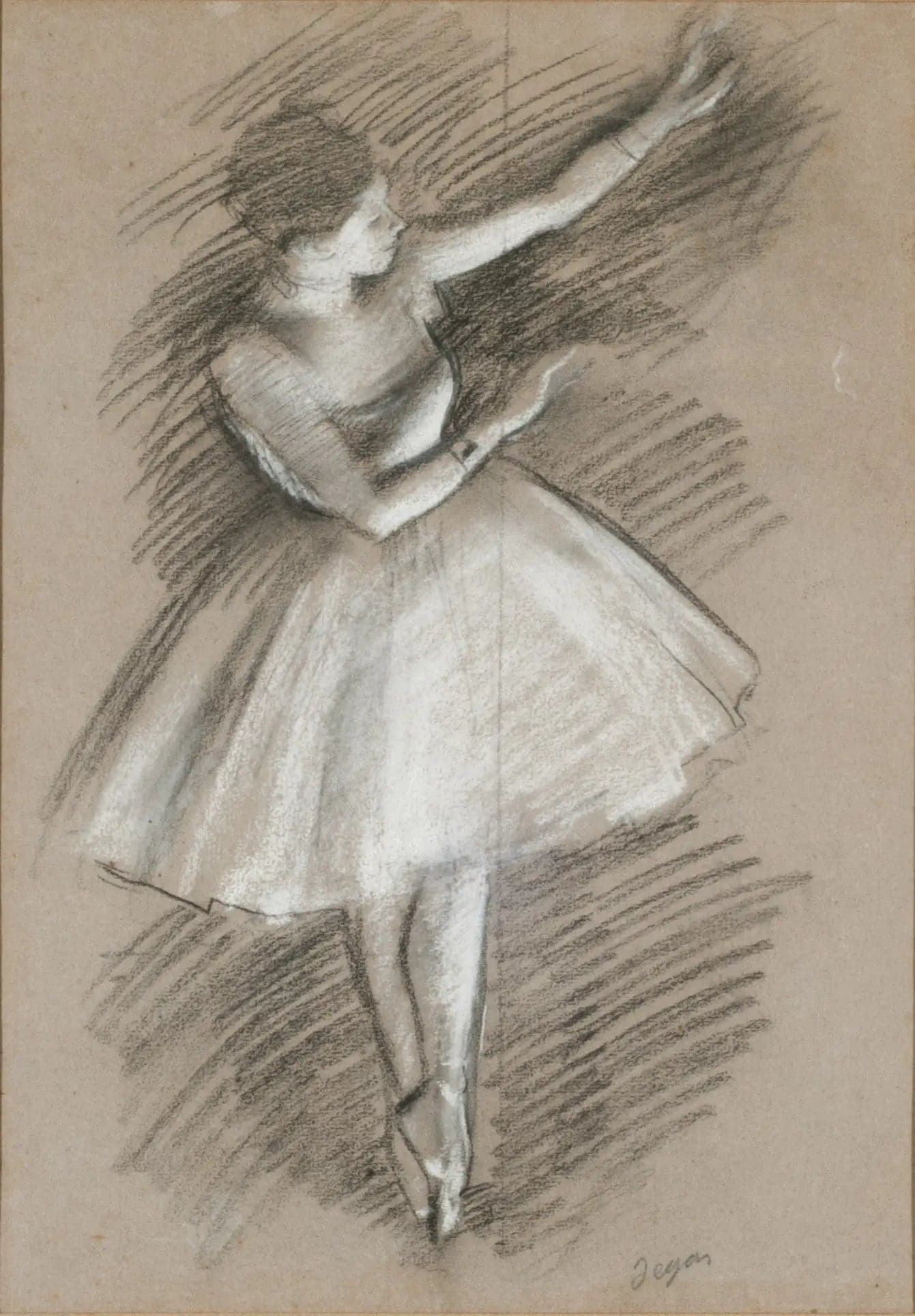
dancer in white
- Original dimensions
- 29 x 41 cm
- Museum
- National Museum of Fine Arts Buenos Aires
- Year
- 1877
Scene depicted
In "Dancer in White," Degas takes us to the heart of a fleeting moment, where a ballerina, dressed in a bright dress, prepares for her performance. Her posture, inspired and graceful, evokes both a loving intent and fierce determination, while in the background, the soft light and shadows make the surrounding elements dance. This canvas highlights the harmony between art and life, revealing the beauty of preparation before the show.
Historical context
Created in 1877, the painting "Dancer in White" is set in the dynamic framework of the artistic Paris of the late 19th century. Degas, an emblematic figure of the Impressionist movement, immortalizes here an intimate scene from the backstage of the Opera. This canvas , preserved in the National Museum of Fine Arts in Buenos Aires, is part of the works that reveal the very essence of Parisian life of that time, with its lights, sounds, and the euphoria that fills the performance halls.
Place in the artist's career
"Dancer in White" represents a crucial moment in Degas' career, at the intersection between his promising beginnings and his stylistic peak. This masterpiece resonates with works like "The Dance Class" and "The Orchestra of the Opera," demonstrating an evolution in the technique and emotional sensitivity of the dancers, thus confirming the artist's ability to capture the ephemeral essence of movement.
Anecdote
"Dance is a poem to be crossed, a form of expression where the body becomes the voice" Degas might have said about this canvas . Inspired by the vibrant energy of a rehearsal morning, he captures the ephemeral elegance of the dancers, their tenderness and discipline, thus revealing the beauty of movement in a suspended moment. The painting then becomes a reflection of a deep emotion and a quest for perfection.