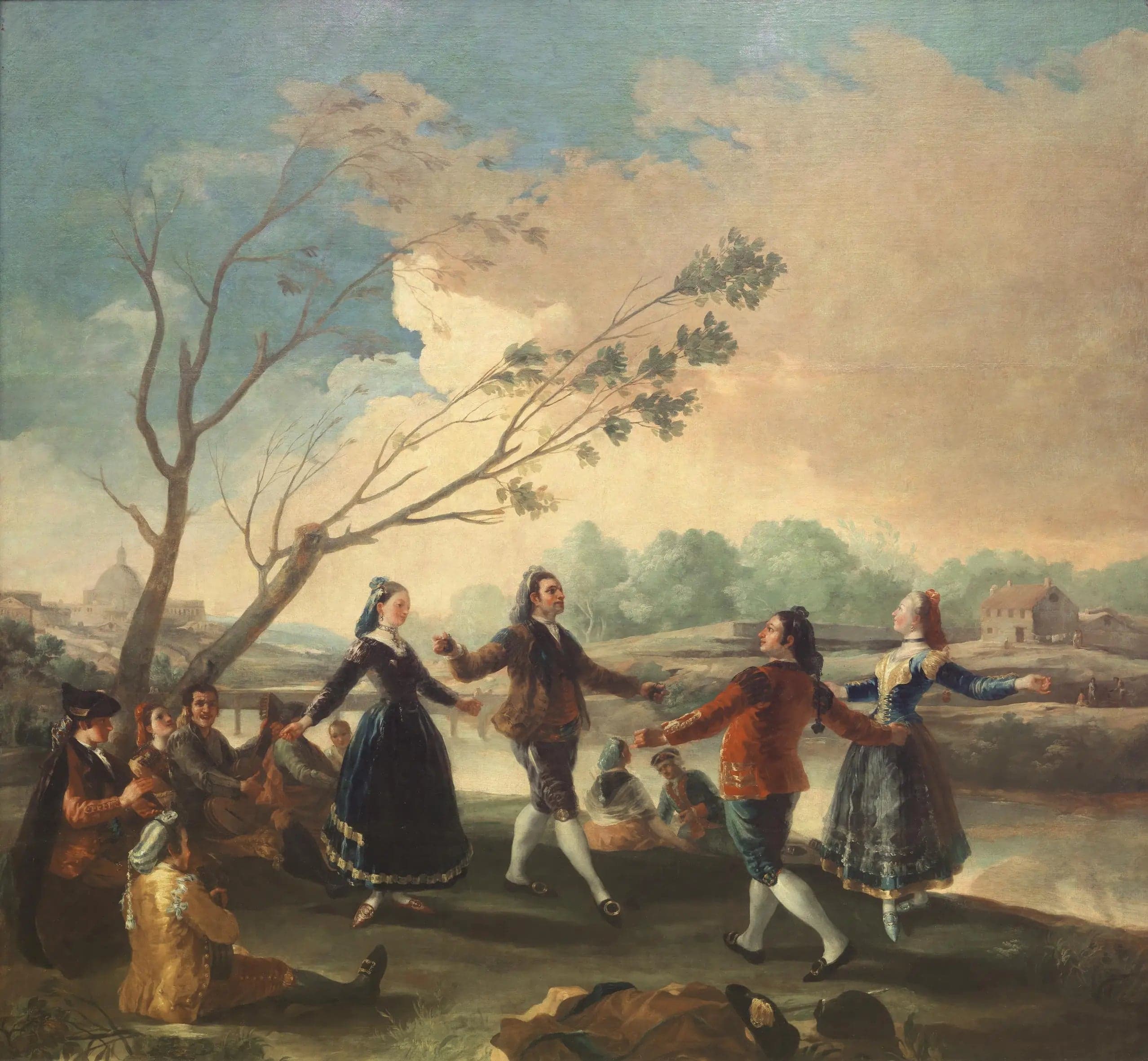
Dance on the Banks of the Manzanares
- Original dimensions
- 295 x 272 cm
- Museum
- Prado Museum
- Year
- 1776
Scene depicted
The canvas depicts a festive scene by the Manzanares River, where characters dance, dressed in traditional costumes. A joyful atmosphere emanates from it, illustrating the zest for life and the passion of the inhabitants of the time. This work awakens the senses, evoking the movement and sound of the music that accompanies each dance step.
Historical context
Created in 1776, this painting is an emblematic reflection of 18th century Spain, a period of great cultural and artistic transformations. In the heart of Madrid, the canvas is now displayed at the prestigious Prado Museum, where it fascinates visitors with its lively composition and vibrant atmosphere.
Place in the artist's career
In Goya's career, this painting marks a turning point, a period of artistic maturity. Alongside his royal portraits and the famous canvases of the Caprices, it shows another facet of his talent: that of a keen and poetic observer of Spanish life, where joy and lightness contrasted with his darker later works.
Anecdote
Goya once declared: "Colors lead emotions and souls into an eternal dance." It was at the source of a sunny morning, by the banks of the Manzanares, that the inspiration for this masterpiece awakened, transforming this fleeting moment into a timeless painting .