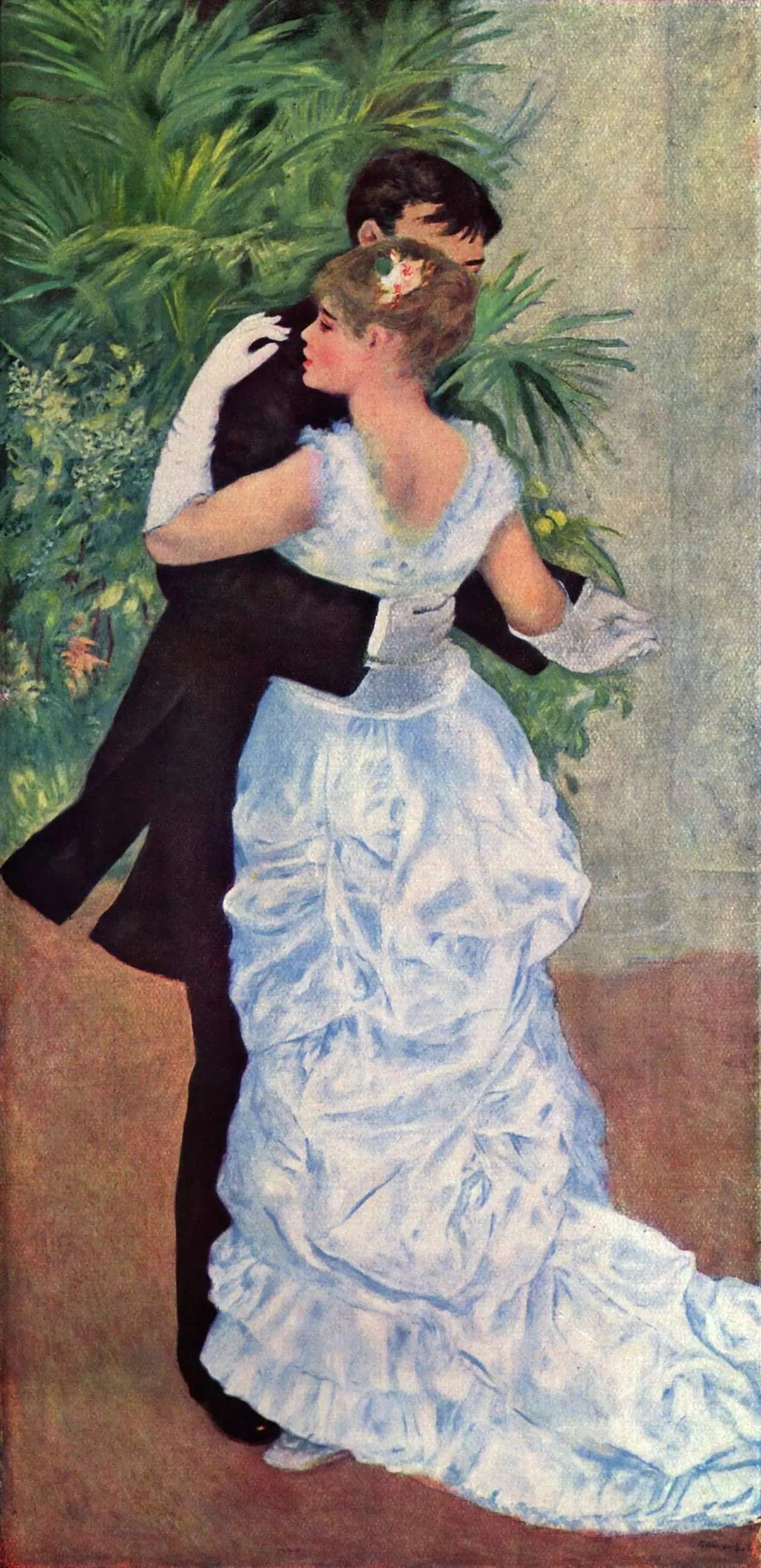
Dance in the City - Pierre
- Original dimensions
- 90 x 180 cm
- Museum
- Orsay Museum
- Year
- 1883
Scene depicted
In Dance in the City , Renoir depicts a lively scene where couples leap gracefully on a shiny dance floor, surrounded by blurred silhouettes. The fluid movements and radiant smiles transform this painting into a vibrant testament to the joy of living. It is a true tableau of emotions, evoking the conviviality and festive world of the 19th-century Parisian bourgeoisie.
Historical context
Created in 1883, Dance in the City is part of the Impressionist movement, born in Paris, where Renoir captured the joy and vibrancy of urban life. This painting is currently exhibited at the Orsay Museum , a prestigious setting that houses a multitude of works from this revolutionary movement. Measuring 90 x 180 cm, this canvas is a true window into an era of light and color.
Place in the artist's career
Dance in the City marks a significant milestone in Renoir's career, illustrating his stylistic evolution. After exhibiting works such as The Luncheon of the Boating Party and before reaching the maturity of The Large Bathers , this canvas already shows the mastery of light and color that would characterize him later.
Anecdote
“I want to paint pleasure, freshness, youth,” said Renoir. Imagine a spring morning, the first notes of a waltz floating in the lilac-scented air. It is in such a moment that Renoir drew his inspiration for this pictorial work , capturing the joy of dance and the fleeting beauty of the moment.
Major exhibitions
Paul Durand-Ruel, the Bet of Impressionism