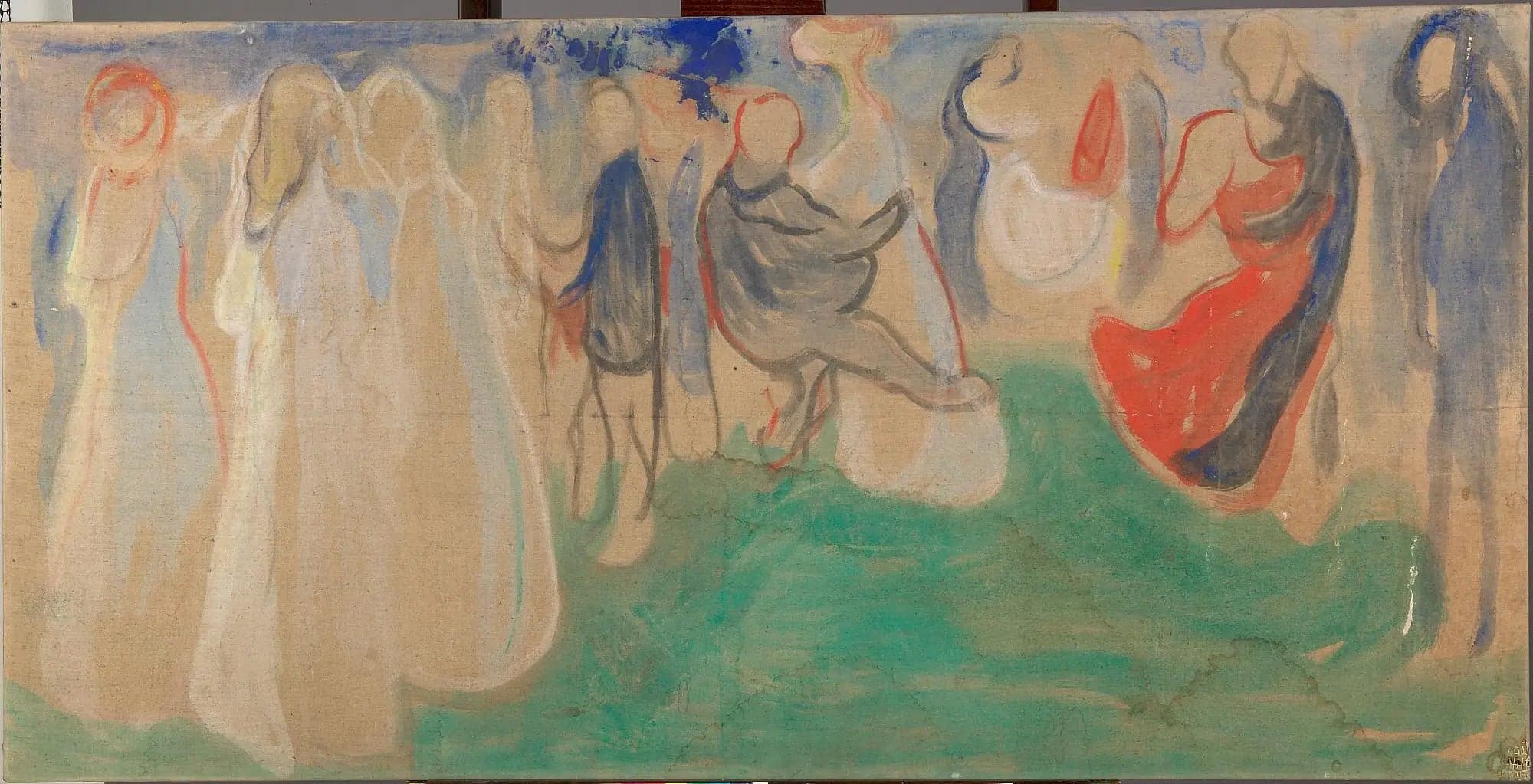
Dance
- Original dimensions
- 159.5 x 80 cm
- Museum
- Munch Museum
- Year
- 1909
Scene depicted
The painting “Dance” by Edvard Munch illustrates a dynamic scene where sketched figures dance in a surge of emotion, evoking a spiritual connection among the participants. The fluid movements and intensified expressions that inspire Munch capture the essence of collective joy, while hinting at underlying layers of anxiety and desire.
Historical context
Created in Oslo in 1909, this canvas is at the heart of the expressionist movement, a time when painting began to explore the deepest corners of human emotions. The painting , currently at the Munch Museum, bears witness to the passion and intensity that fueled the artist during this period.
Place in the artist's career
“Dance” positions itself at a crucial moment in Munch's career, capturing both a bold style and a quest for emotional authenticity. It fits perfectly between “The Scream,” an iconic work, and “The Madonna,” indicating his evolution towards increasingly personal and emotional expressions.
Anecdote
“Every dance is an expression of the soul. A melody that one feels deep within.” These words of Munch come to life in his painting , where inspiration springs from a sunny evening, as a group of dancers leaped, their silhouettes vibrating to the rhythm of mysterious music.