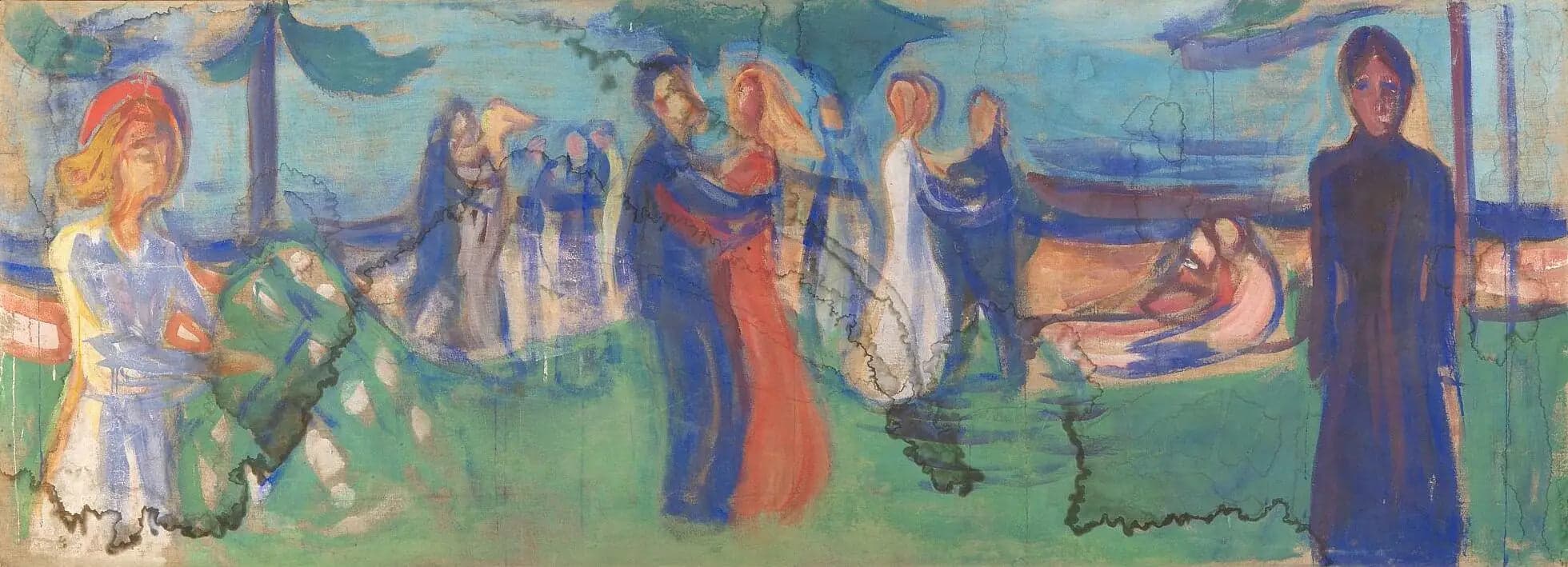
Dance by the Sea
- Original dimensions
- 247 x 90 cm
- Museum
- Munch Museum
- Year
- 1906
Scene depicted
In Dance by the Sea , Munch captures a moment of collective ecstasy where movement and energy seem to merge with the seascape. The characters, holding hands, illustrate joy and freedom, while the sea in the background reflects the bright sunlight. This composition sweeps the viewer into a whirlwind of emotions, where every ripple of water and every dance step are synchronized in perfect harmony.
Historical context
Created in 1906 in Oslo, Norway, Dance by the Sea is an iconic example of the expressionist movement. This painting was made at a time when Munch was intensely exploring human emotions and the relationship with nature. Currently exhibited at the Munch Museum, this work remains a striking testament to its time and the turmoil that inspired the artist.
Place in the artist's career
Dance by the Sea is a pivotal work in Munch's career. It marks a transition to a bolder exploration of forms and colors, echoing paintings such as The Scream and The Madonna . This masterpiece expresses technical maturity while foreshadowing the recurring themes of modernity to come.
Anecdote
“Nature, with its forms and colors, is my source of inspiration,” Munch once said. Inspired by a morning vibrant with light, he imagines the characters dancing on the beach, their silhouettes outlined against the horizon. This moment of creation is felt in every brushstroke of the painting , a surge of life and passion that makes the heart of this canvas beat.