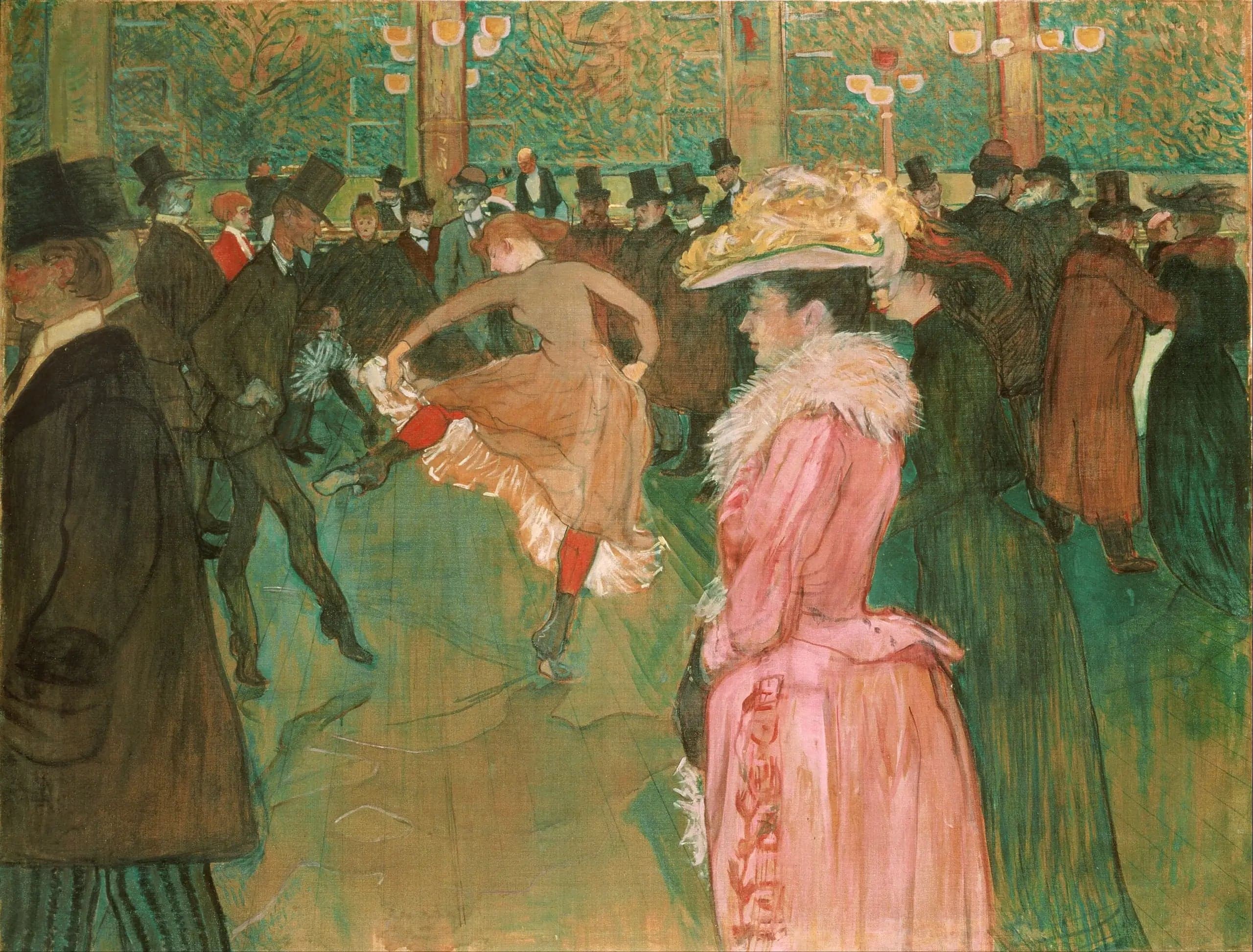
Dance at the Moulin-Rouge - Henri de Toulouse
- Original dimensions
- 150 x 115.5 cm
- Museum
- Philadelphia Museum of Art
- Year
- 1890
Scene depicted
The painting "The Dance at the Moulin-Rouge" encapsulates a vibrant scene of entertainment with characters in motion, integrating both music and the joyful atmosphere of a Parisian evening. The silhouettes of the dancers intertwine on stage under the warm glow of lanterns, perfectly illustrating the excitement of nighttime performances. Every detail of this scene, thanks to the artist's mastery, testifies to the vitality of popular culture of the time.
Historical context
Created in 1890, this painting is an emblematic reflection of a vibrant era in Paris, at the height of the post impressionist movement. The canvas stands out as a living document of nightlife at the Moulin-Rouge, a place of entertainment and culture, vibrant in the Montmartre district. Currently housed at the Philadelphia Museum of Art , this captivating composition draws the eye with its majestic dimensions.
Place in the artist's career
This painting is at the heart of Toulouse-Lautrec's career, revealing his genius for capturing modern life. At the crossroads of his major works such as "Le Chat Noir" and "Les Folies-Bergère", "The Dance at the Moulin-Rouge" shows a maturation of his style, both in technique and in the emotion conveyed through the canvas .
Anecdote
“There is a joy in dance that only true hearts can understand.” These words, imagined to be spoken one morning in Montmartre, illustrate Toulouse-Lautrec's passion for the energetic life that reigned at the Moulin-Rouge. The artist, fascinated by the dancers and the magic of the shows, captured the essence of this pictorial work with a rare intensity.