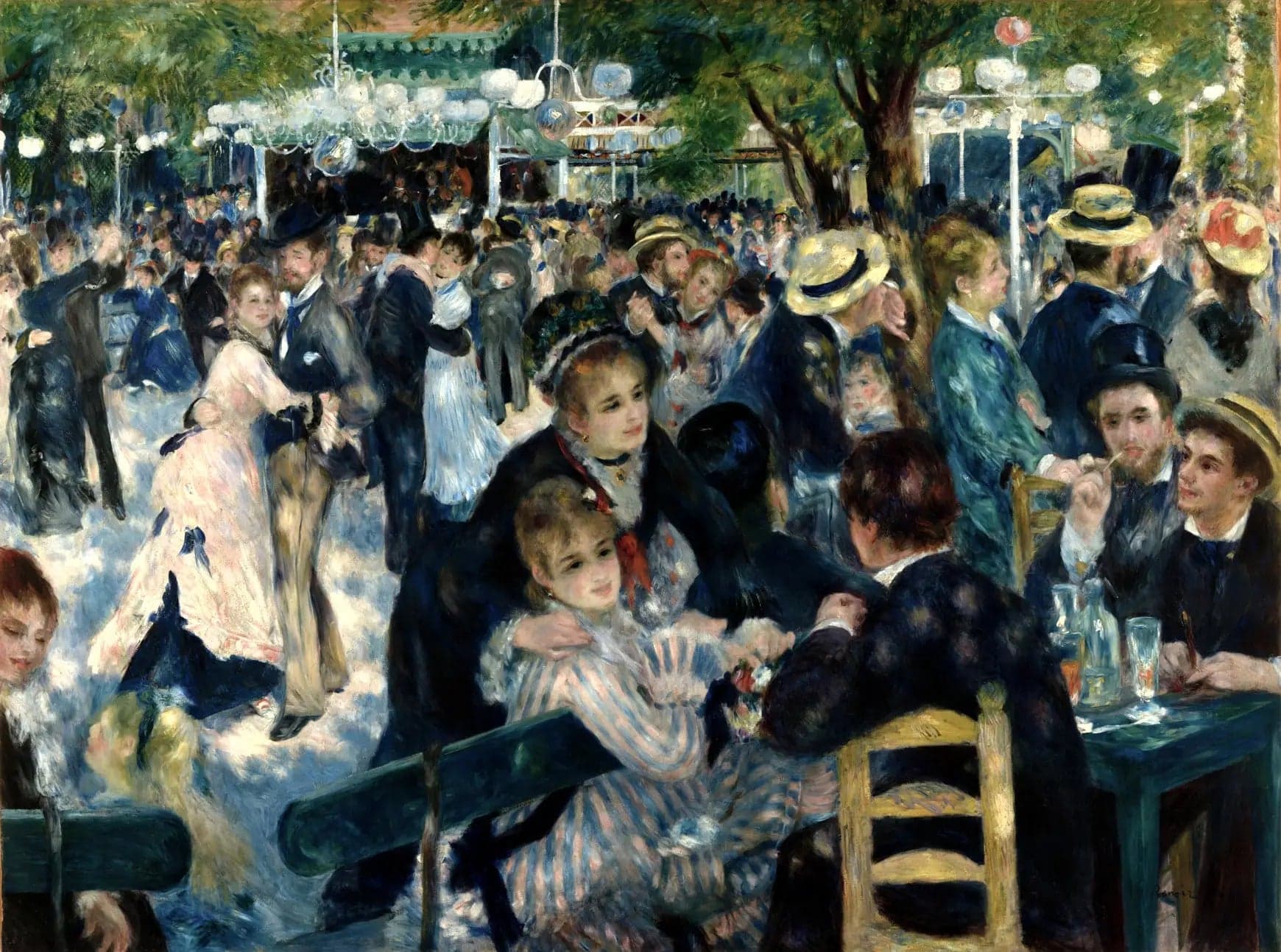
Dance at Le Moulin de la Galette - Pierre
- Original dimensions
- 175 x 131 cm
- Movement
- Impressionism
- Museum
- Orsay Museum
- Year
- 1876
Scene depicted
The painting reveals a lively and animated scene. Couples mingle on the dance floor, amidst laughter and melodies. The characters, almost tangible, are enclosed in a bubble of happiness, enjoying a precious moment of conviviality within the iconic mill. Renoir manages to achieve a dialogue between nature and man, making this painting timeless and magically everyday.
Historical context
Created in the heart of 19th century bohemian Paris, Ball at the Moulin de la Galette is an iconic canvas that captures the vibrant and festive essence of its time. Renoir, inspired by the simple pleasures of Parisian life, immortalizes in this painting scenes of joy and camaraderie typical of a popular ball in Montmartre. This masterful painting is currently housed at the Orsay Museum , sharing its Impressionist legacy with thousands of admirers.
Place in the artist's career
The Ball at the Moulin de la Galette represents a crucial turning point in Renoir's career, marking the peak of his Impressionist style. Alongside Lunch of the Boaters and The Dance in the City , this canvas illustrates his unique ability to capture movement and human emotion, highlighting how light and color are essential to his artistic vision.
Anecdote
Renoir once said: “I paint women and flowers because they are my two pleasures.” On a sunny spring morning, he reportedly came across a group of friends laughing and dancing at the mill. This joyful vision inspired him to create this masterpiece where light and shadow dance on faces and floral dresses, paying homage to the profound evocation of Ball at the Moulin de la Galette .
Major exhibitions
third Impressionist exhibition