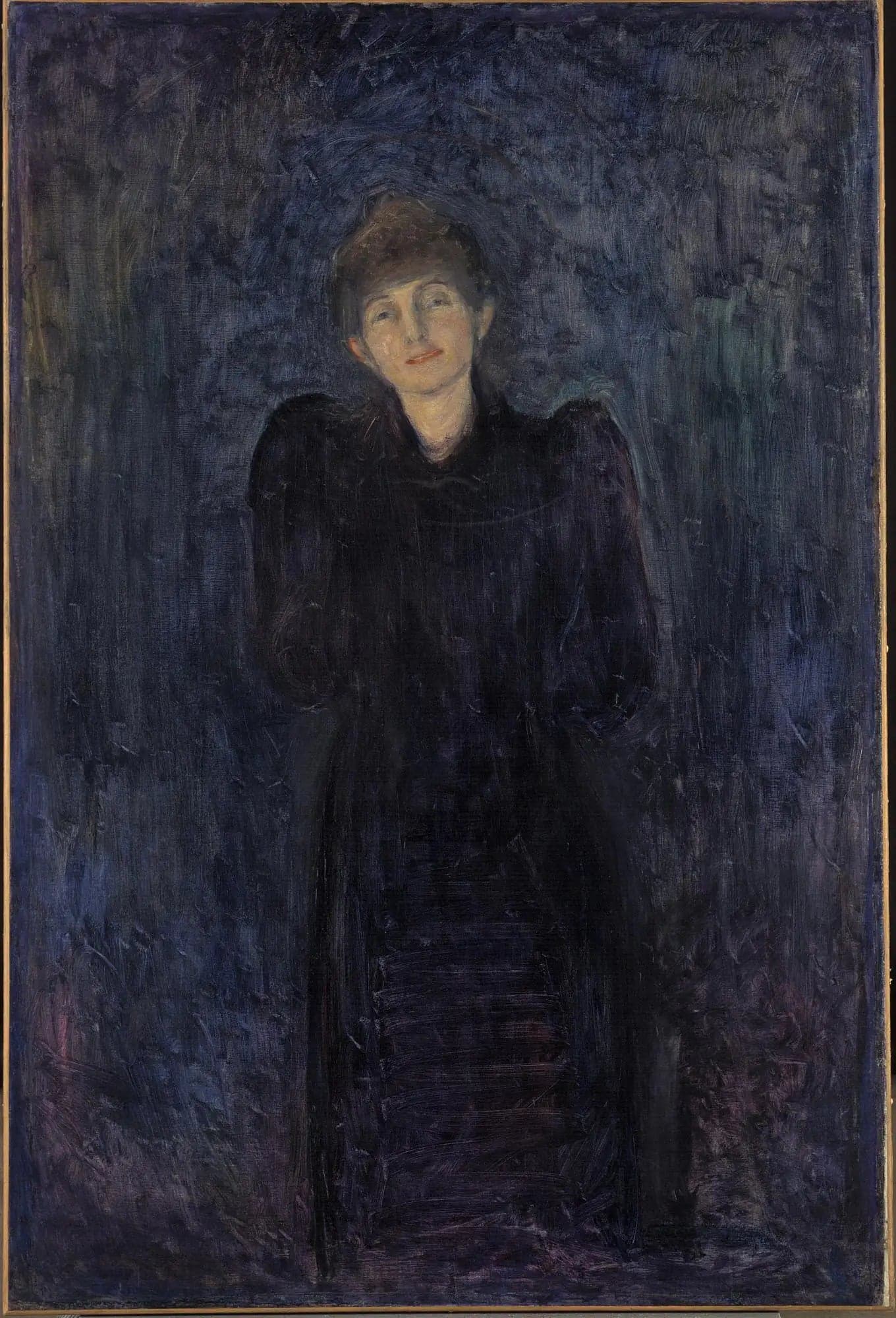
Dagny Juel Przybyszewska
- Original dimensions
- 100.5 x 149 cm
- Museum
- Munch Museum
- Year
- 1893
Scene depicted
The painting “Dagny Juel Przybyszewska” captured by Munch illustrates not only a portrait but also an evanescent atmosphere where time seems suspended. Dagny, an iconic figure, embodies beauty, melancholy, and the complexity of human relationships, while revealing the struggle between love and passion.
Historical context
Created in 1893, in Oslo, this painting is at the heart of the expressionist movement. Edvard Munch , a key figure of this era, plays with emotions and forms, his painting evolving with the cultural tensions of the late 19th century. Currently exhibited at the Munch Museum, this canvas fills its environment with a vibrant and authentic breath.
Place in the artist's career
This painting represents a crucial step in Munch's career, marking a maturation towards more introspective works like “The Scream” and “The Madonna.” Each painting bears witness to an emotional evolution, connecting portraits and human experiences.
Anecdote
“In every face, I see a story. A story that echoes the dreams and fears of humanity.” This quote from Edvard Munch resonates particularly during the creation of this masterpiece . One foggy morning, in a café in Oslo, he may have crossed paths with Dagny, his muse, an exchanged glance, a spark. Tiny details make the painting an exploration of the human soul.
Major exhibitions
Edvard Munch : portraits