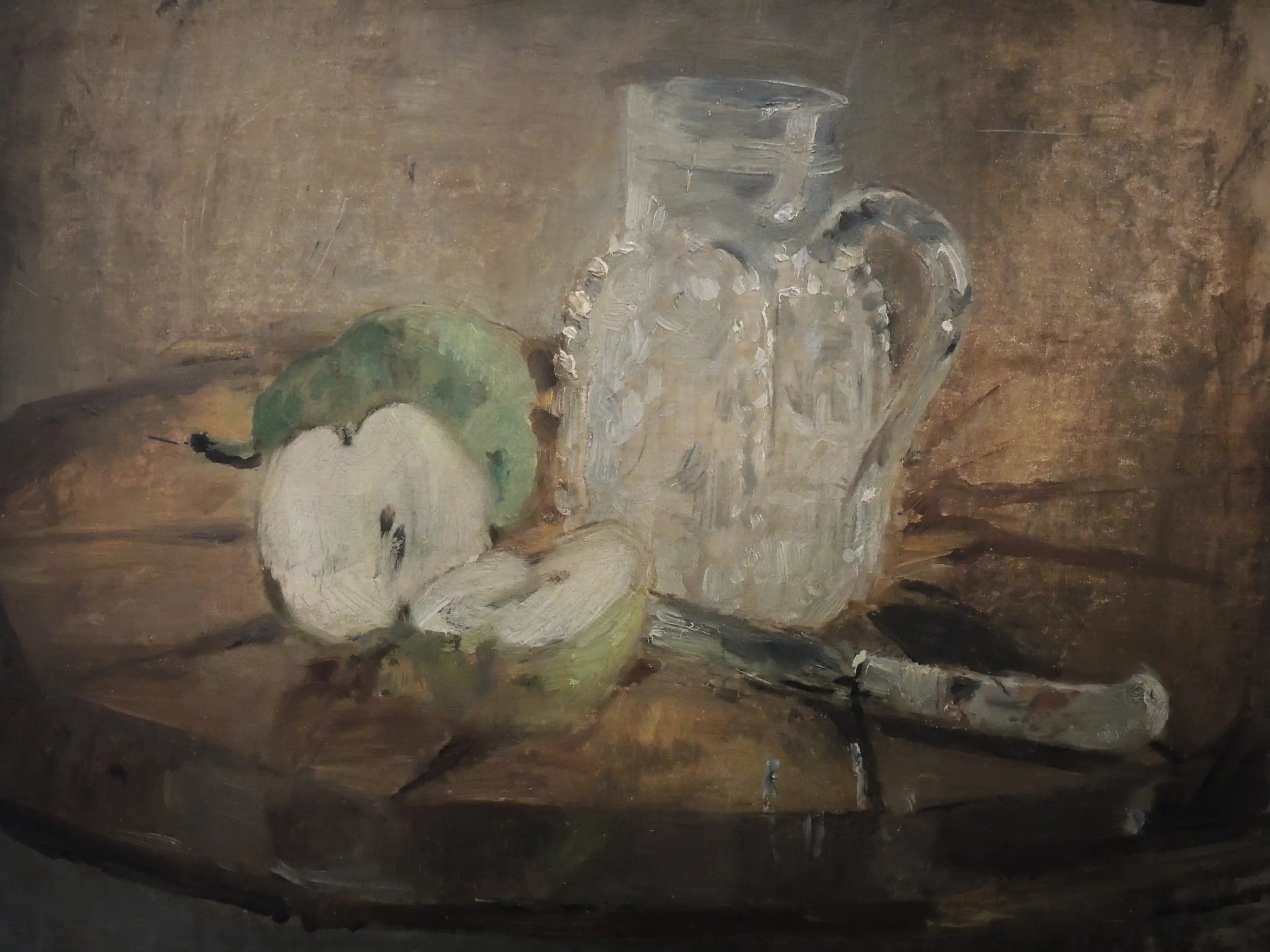
Cut Apple and Jug
- Original dimensions
- 41 x 32 cm
- Museum
- Marmottan Monet Museum
- Year
- 1876
Scene depicted
In this delicate composition , a carefully cut apple rests next to a pitcher, configuring a scene that embodies the very essence of domestic life. The nuances of light caress the surfaces, revealing a tranquil and ephemeral beauty, like a moment frozen in time where the art of living resonates with softness and simplicity.
Historical context
Created in 1876, during a pivotal period of the Impressionist movement in Paris, this painting is set in a context where artists, including Berthe Morisot , sought to capture the light and simplicity of everyday life. Currently exhibited at the Marmottan Monet Museum in Paris, this canvas offers an intimate look at familiar objects, rich in meaning and emotion, while displaying dimensions of 41 x 32 cm.
Place in the artist's career
A pioneer of the Impressionist movement, Berthe Morisot achieves here a unique stylistic maturity, which is also manifested in other works of hers such as “The Cradle” or “A Summer in the Countryside.” “Cut Apple and Pitcher” marks a moment of balance between technical finesse and palpable emotion, while testifying to the evolution in her way of using light for the sake of storytelling.
Anecdote
“Beauty lies in the simplest details,” Morisot once declared, inspired by the soft light of a spring morning. This fleeting moment, captured in the painting “Cut Apple and Pitcher,” evokes the harmony and serenity present in an apparently mundane daily life, yet rich in meaning.