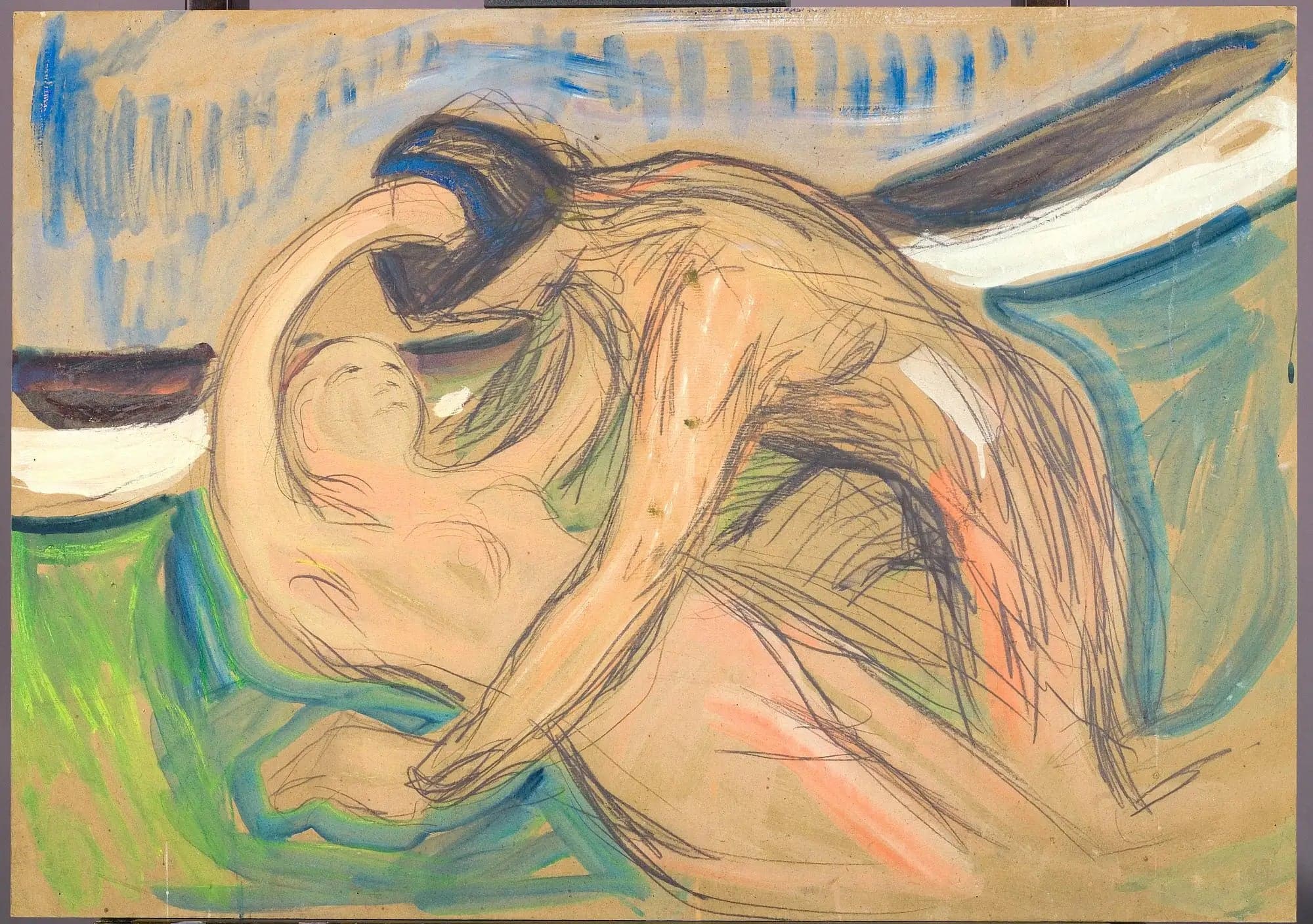
Cupid
- Original dimensions
- 91 x 65.5 cm
- Museum
- Munch Museum
- Year
- 1907
Scene depicted
The painting Cupid represents a powerful scene, where the god of love seems to contemplate with a disturbing intensity. The clean lines and stylized forms express the duality of love, both sweet and painful, inviting the observer to dive into a vibrant melancholy. The carefully crafted details testify to the emotional depth that emanated from the artist's soul.
Historical context
Created in Oslo, Norway, under the influence of the expressionist movement, Cupid resonates with spirits at the beginning of the 20th century. This iconic painting is currently located at the Munch Museum , a must-see for art lovers. It captures the intensity of an era marked by reflections on passion and melancholy, perfectly embodied in this pictorial work .
Place in the artist's career
Cupid fits into a period of maturity in Munch's work, situated between his promising beginnings and the peak of an already rich style. At the time, Munch had already created famous paintings such as The Scream and The Madonna , which also dealt with complex human emotions, establishing connections between suffering and passion.
Anecdote
“Love and suffering are inseparable, like day and night.” This quote could summarize the inspiration behind Cupid . Munch captured the essence of fleeting moments, often in the streets of his hometown, where the morning light warmed faces and emotions mingled in the fresh spring air.
Major exhibitions
Munch og Warnemünde: 1907-1908