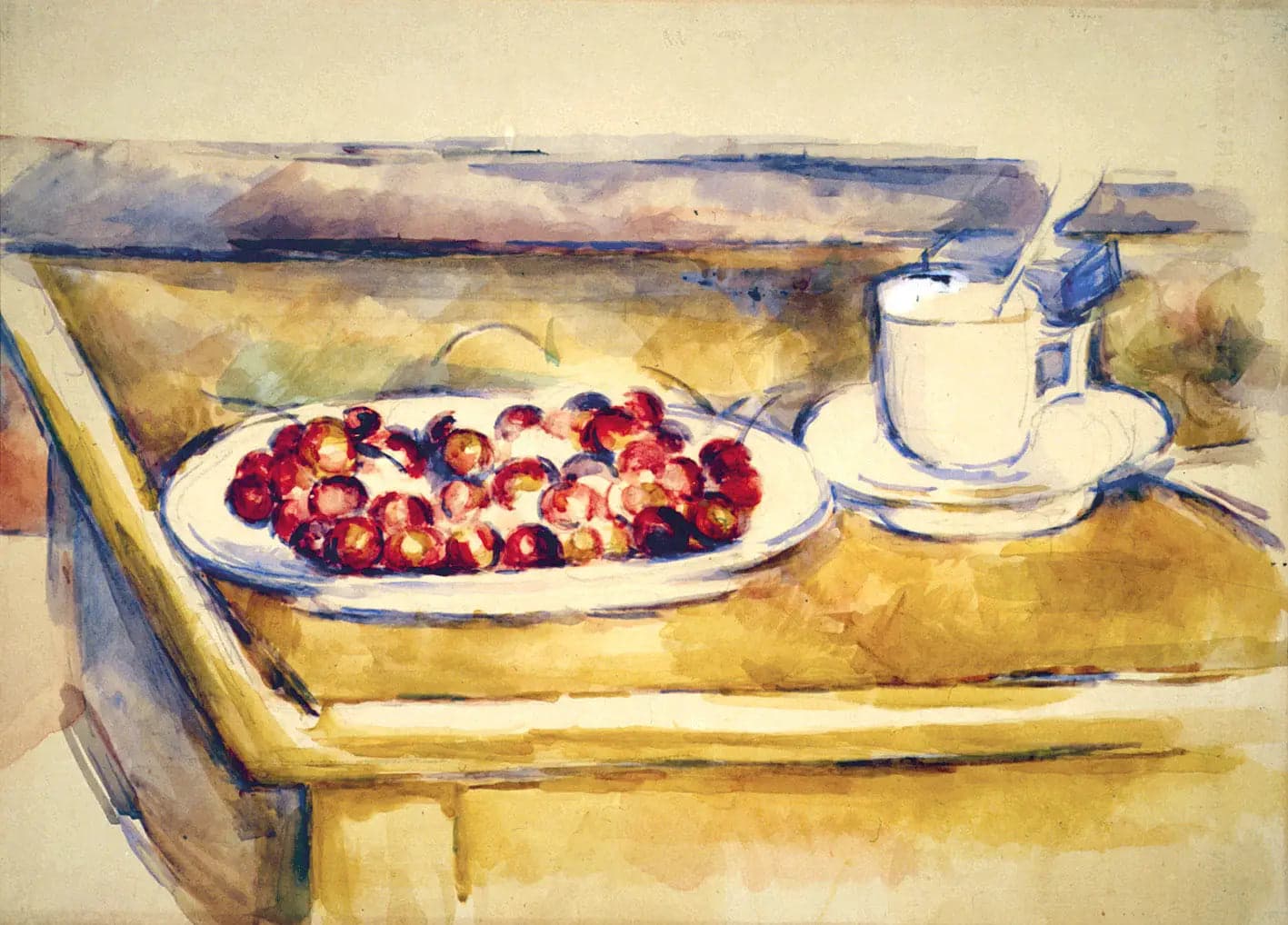
Cup and Plate of Cherries
- Original dimensions
- 49 x 38 cm
- Museum
- Not specified
- Year
- 1890
Scene depicted
In this canvas , the painting focuses on the harmony between objects and light. A simple plate, a vase, and cherries transform a mundane scene into a vibrant and sensory composition. The colors intertwining reveal a deep truth about the ephemeral nature of beauty. Each fruit exudes a unique sensoriality, as if one could taste the sweetness, awakening intimate memories.
Historical context
Created in 1890, this painting is set in the city of Aix-en-Provence, in Provence-Alpes-Côte d'Azur, a region bathed in the light of southern France. Cup and Plate of Cherries is the fruit of the post-impressionist movement, a wonderful blend of emotions and pictorial techniques. This canvas , currently referenced among the masterpieces of the private collection, brings to life a time when art experimented with color and form.
Place in the artist's career
This painting embodies a pivotal period for Cézanne, where his technique begins to detach from traditional impressionism . At this time, he also created other masterpieces such as “Apples and a Plate” or “Still Life with Fruits,” highlighting his journey as an artist as well as the evolution of his style which, gradually, would assert itself in cubism .
Anecdote
“Nature is an eternal essence that I strive to capture,” said Cézanne, torn between the obsession with light and the simple beauty of fruits. This painting was inspired one morning bathed in light when Cézanne, in his family home, infused his soul into the vibrant cherries, evoking this moment of fullness and fleeting beauty.