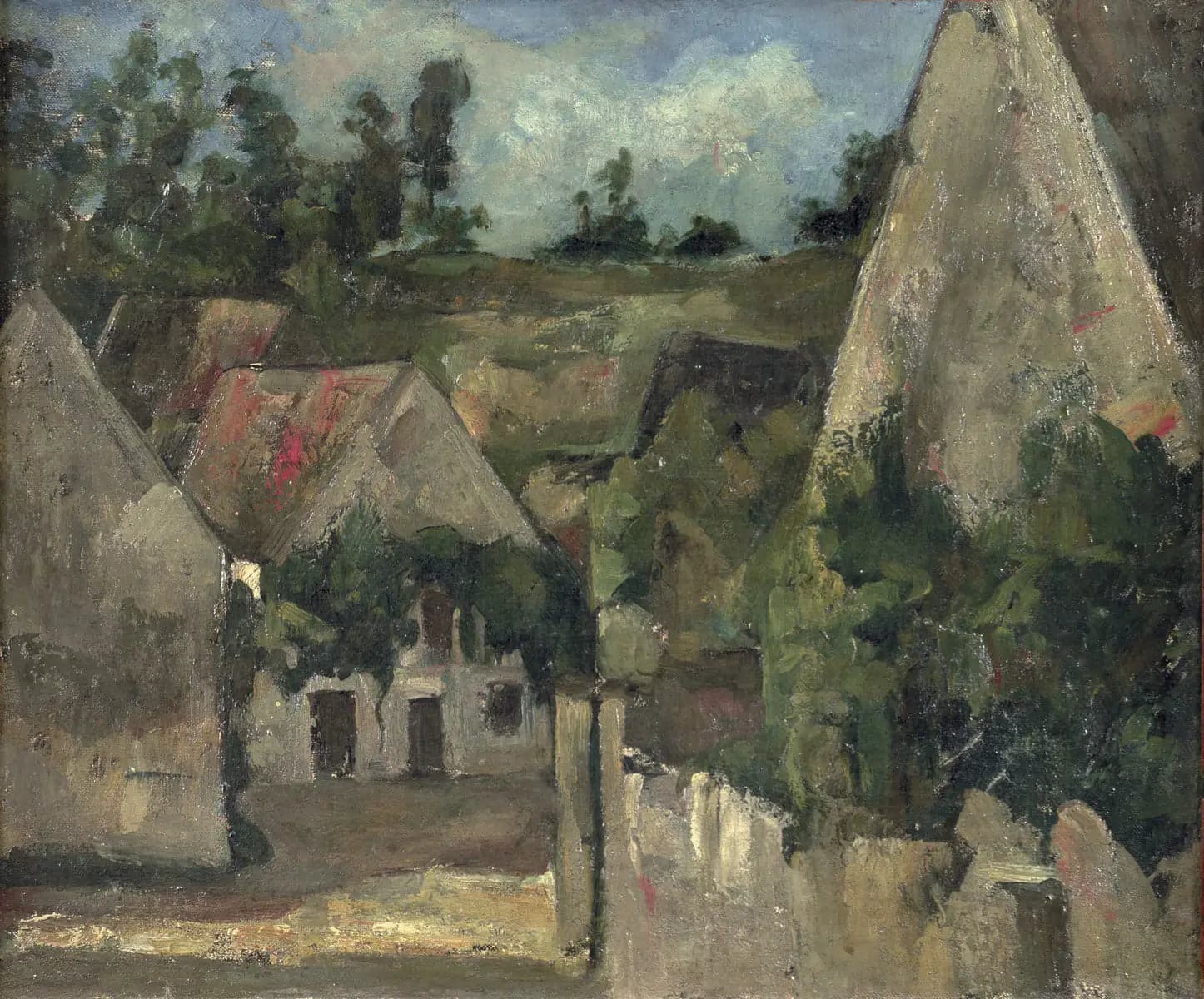
Crossroads of Rémy Street in Auvers-sur-Oise
- Original dimensions
- 45.5 x 38 cm
- Museum
- Orsay Museum
- Year
- 1872
Scene depicted
This painting delicately illustrates a lively intersection of the village, where the streets cross under a light of rare clarity. The roofs of the houses play hide and seek with the shadows, while the silhouettes of passersby add a touch of life to this pictorial work . Cézanne, with his attentive gaze, captures both the ordinary and the extraordinary, offering a valuable reflection on daily life.
Historical context
Created in 1872, this painting is emblematic and is located in Auvers-sur-Oise, a village that inspired many artists of the Impressionist era. This canvas immerses us in a privileged moment of the artistic movement where evoking light and life was essential. Currently, this masterpiece is housed in the Orsay Museum, an ideal setting for this canvas .
Place in the artist's career
This painting represents a pivotal moment in Cézanne's career, situated at the crossroads of his experimentation and artistic maturation. Like his famous painting “La Montagne Sainte-Victoire” and “The Card Players,” this masterpiece testifies to a remarkable technical evolution, marking his unique approach to light and form.
Anecdote
Paul Cézanne once expressed: “Painting is silent poetry.” This quote resonates particularly when thinking of the scene in the painting , captured one morning where the sunlight plays with the spring atmosphere of Auvers-sur-Oise. The vibrant composition of this masterpiece evokes a fleeting encounter, an impressive emotion of escape.