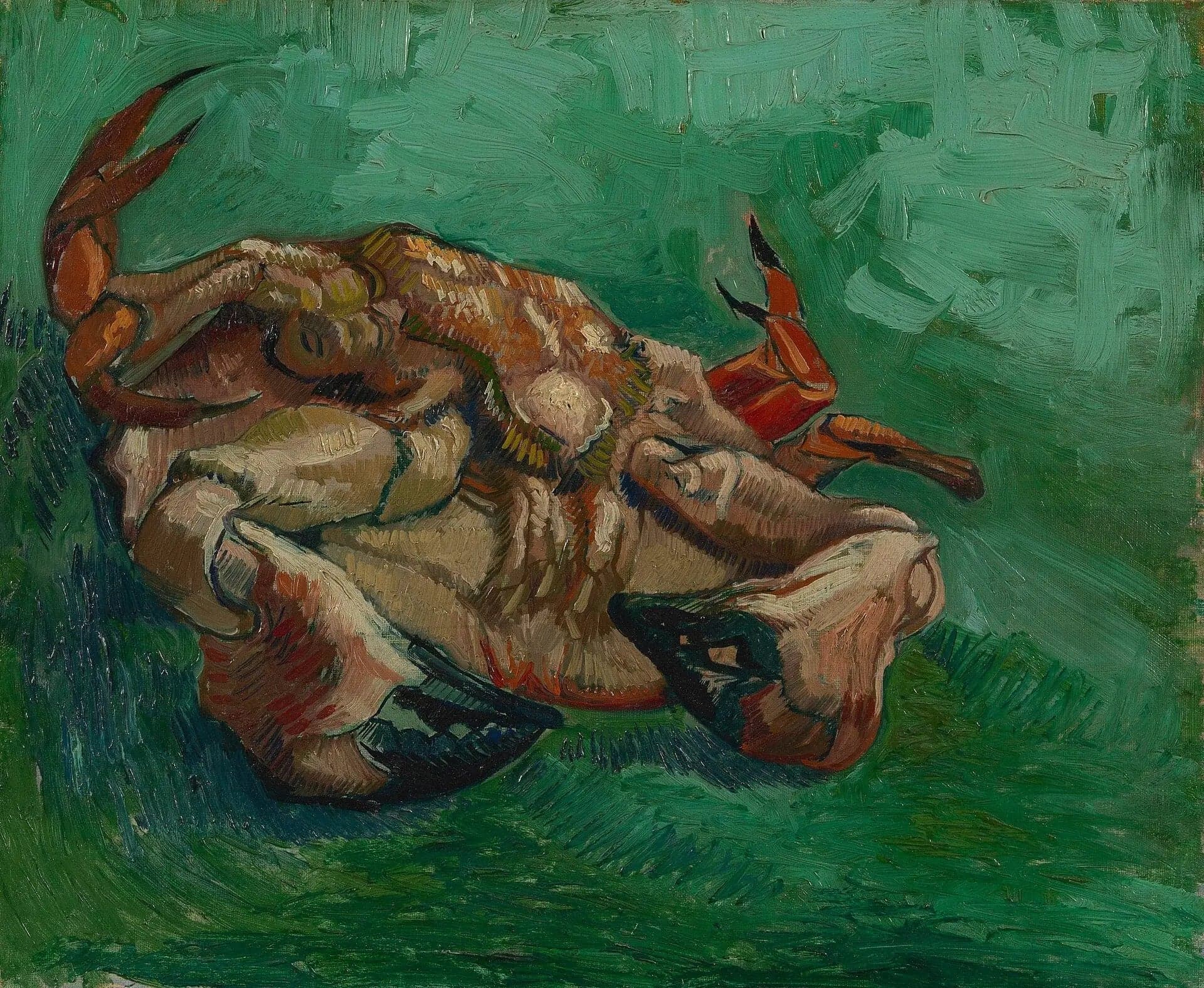
Crab, lying on its back
Scene depicted
In this captivating composition, Van Gogh immortalizes a crab on its back, a subject as simple as it is intriguing. The canvas accurately captures the details of the creature, offering an unexpected view of nature. With bold strokes and vibrant hues, the artist magnifies this moment of stillness in uncertainty, exploring the contrasts between marine life and the unique perspective of the observer.
Historical context
Created in 1887, this painting is set against the vibrant backdrop of Paris , a city in full artistic effervescence. Vincent van Gogh , then a member of the post-impressionist movement, captures here a moment of nature with a unique intensity. The canvas is currently displayed at the Van Gogh Museum in Amsterdam, having left a mark with its remarkable dimensions of 46.8 x 38 cm.
Place in the artist's career
The painting “Crab, lying on its back” represents an important milestone in Van Gogh's career. Situated between his promising beginnings and his mature period, it dialogues with other masterpieces such as “ The Starry Night ” and “ The Sunflowers ,” each revealing the technical and emotional evolution of the artist, while affirming his relentless quest for color and form.
Anecdote
“Art is what gives meaning to my life,” Van Gogh might have claimed, inspired by the simple wonders of nature. That morning, in the quiet streets of Paris , a soft light flooded his studio, illuminating every corner of his creative space, like a promise of beauty to come. It is in this luminous atmosphere that the evocative power of the painting revealed itself, transforming into a fascinating pictorial work.