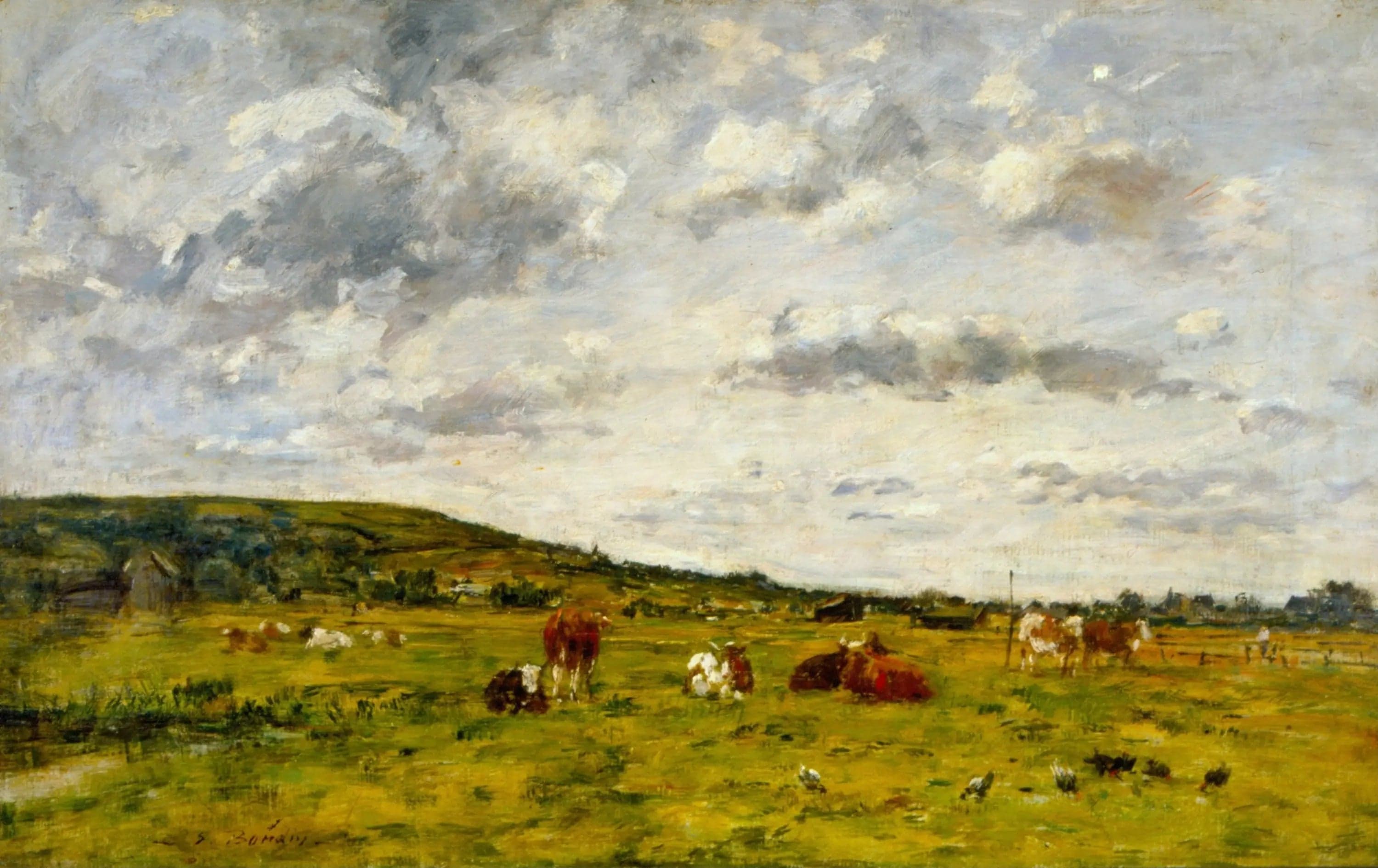
Cows in the Pasture
- Original dimensions
- 65.3 x 40.3 cm
- Museum
- Not specified
- Year
- 1850
Scene depicted
In this painting , the cows peacefully scattered in a lush pasture reflect a tranquil rurality. Boudin, a skilled observer of nature, manages to convey the calm of the Norman landscape, ideal for soothing contemplation. Every detail, from the movement of the animals to the setting sun's light caressing the ground, testifies to an intimate connection with this pictorial work.
Historical context
Created in 1850, this painting magnifies the bucolic beauty of the Norman landscapes, a region where Eugène Boudin drew his deep inspiration. As a pioneer of Impressionism , he captures everyday life with a unique mastery, giving this canvas a prominent place in the artistic heritage of the time. Currently, this painting remains in private collections, preserving the emotion that only a masterpiece can convey.
Place in the artist's career
The painting “Cows in Pasture” fits into a pivotal period of Boudin's career, marking his transition to artistic maturity. By juxtaposing it with other works such as “Trouville Beach” and “The Port of Honfleur,” one observes a palpable technical evolution, softened by an increasingly bold color palette and growing expertise in capturing light.
Anecdote
“To paint is to stop time to share it with eternity,” could say Eugène Boudin . This quote perfectly summarizes the spirit of creation that inhabited him as he painted the cows frolicking in the pasture, one spring morning when the song of birds accompanied the sweet scent of freshly cut grass. The serene energy of this scene is palpable, like a parenthesis of tranquility fixed on his painting .