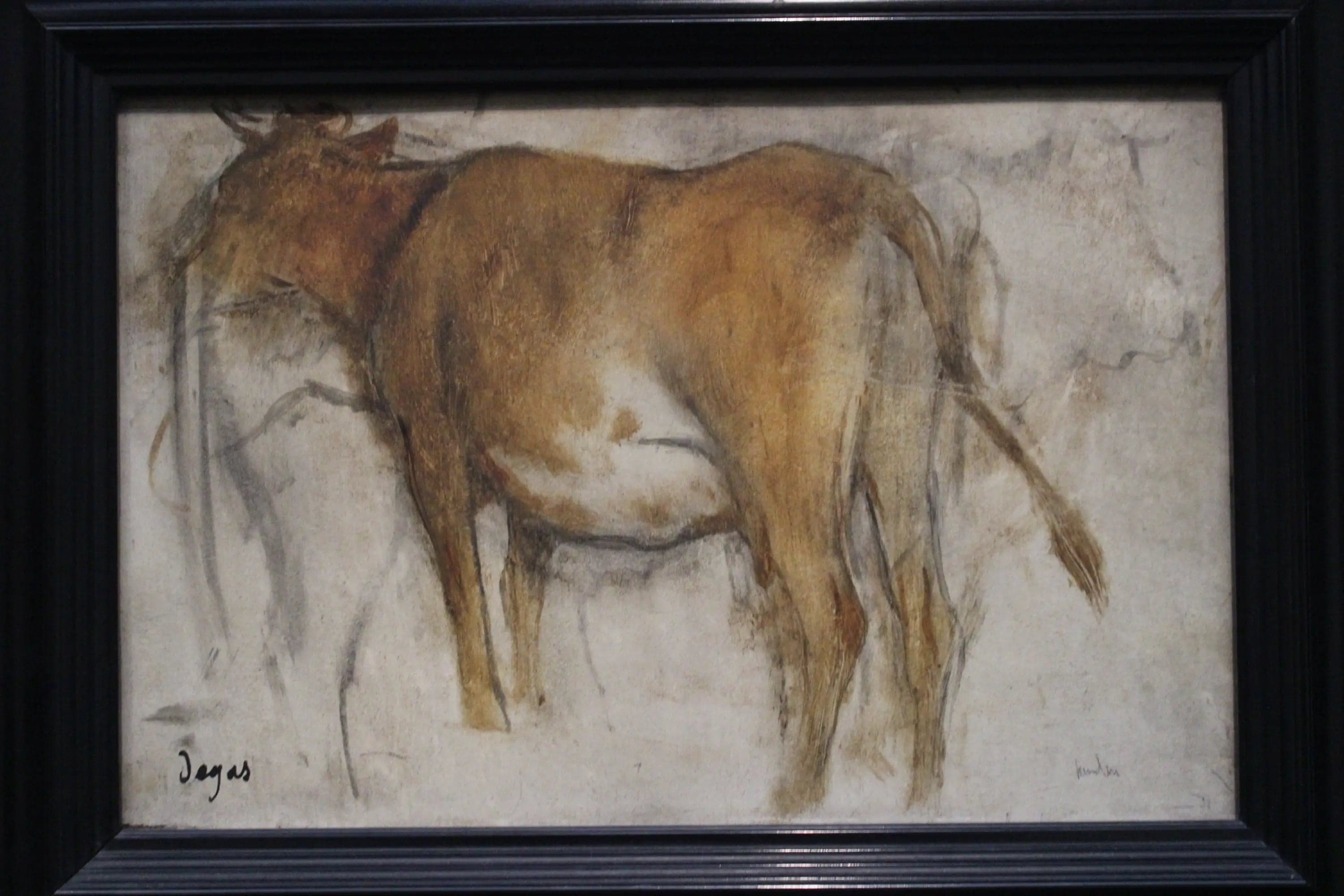
Cow
- Original dimensions
- 29.5 x 20.3 cm
- Museum
- Philadelphia Museum of Art
- Year
- 1876
Scene depicted
On his canvas , Degas manages to capture a suspended moment where a cow, in all its tranquil majesty, grazes peacefully. The composition conveys a palpable serenity, where each brushstroke seems to whisper the sweetness of rural life, inviting contemplation and respect for nature.
Historical context
Created in 1876 in the heart of Paris, this canvas is emblematic of the impressionist movement, celebrating the beauty of everyday life and natural light. In a time when art sought to show the fleeting moment, Degas offers his audience a sensitive look at rural life, a subject often overlooked in the context of his work. Currently, this painting is preserved at the Philadelphia Museum of Art , signifying the international appreciation of the artist.
Place in the artist's career
Positioned between Degas's promising beginning and stylistic maturity, “Cow” represents a turning point where the artist explores new techniques. In parallel, his works like “Dancers at Rest” and “The Café-concert” illustrate the evolution of his gaze on movement and light, confirming the richness of his artistic journey.
Anecdote
“Art exists only in sensation,” said Edgar Degas , recalling his inspiration one spring morning in the French meadows, where light played on the coat of a cow. It is this sensory escape that is intimately found in the painting “Cow,” allowing each viewer to brush against the authenticity of nature.