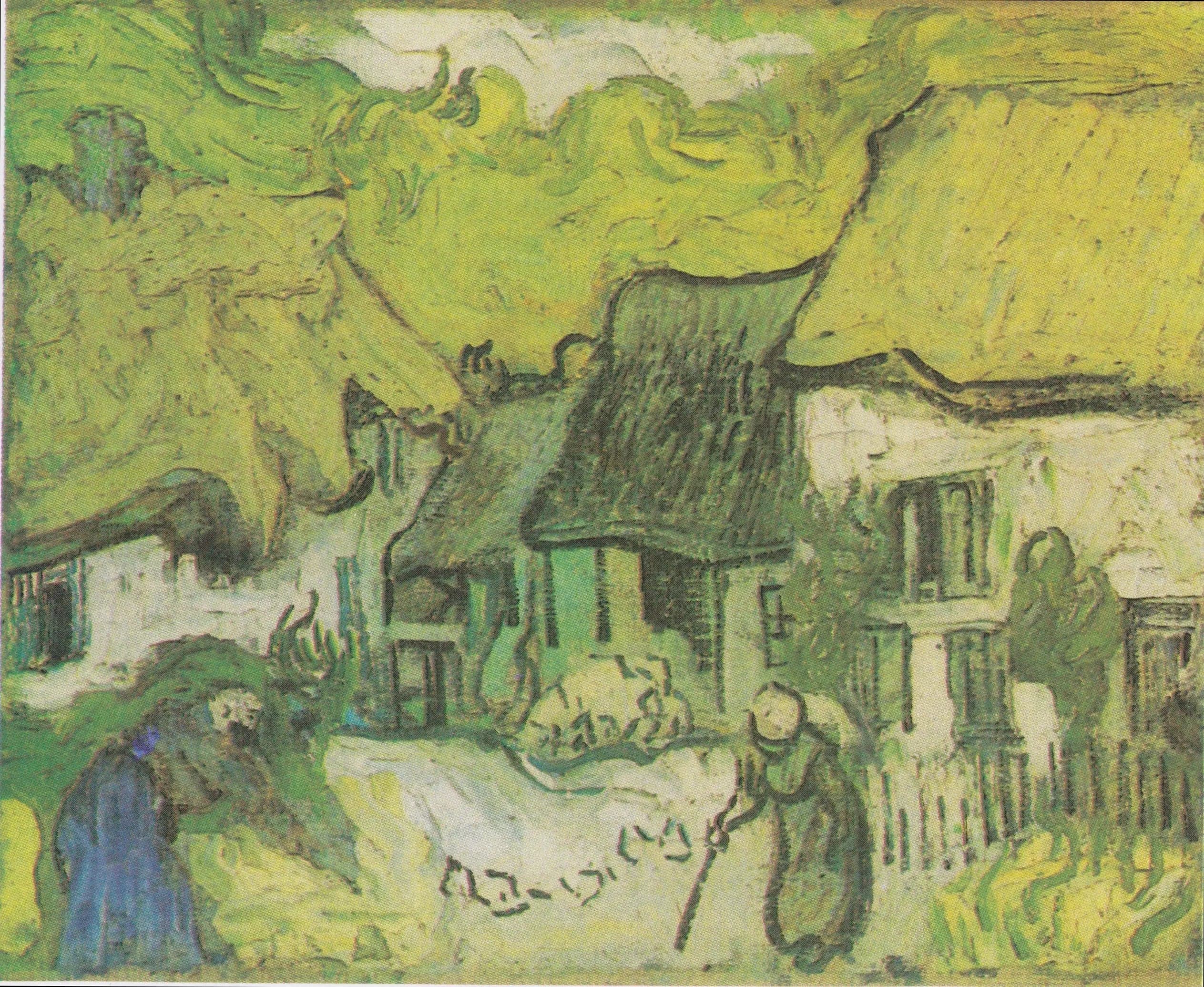
Cottages at Jorgus
- Original dimensions
- 40.5 x 33 cm
- Museum
- Not specified
- Year
- 1890
Scene depicted
In this canvas , Vincent van Gogh invites us to dive into a pastoral landscape , illustrating a delicate harmony between man and nature. The cottages, silent and peaceful, evoke the serenity of a rural village, where every detail of the composition echoes daily life. Light plays a central role, illuminating the thatched roofs in a dance of golden reflections, while the surrounding nature envelops the scene in a warm softness.
Historical context
Created in 1890, this painting embodies its roots in Auvers-sur-Oise , a refuge and haven for Vincent van Gogh during his final creative period. Within the post-impressionist movement, this work resonates with its quest for emotion and authenticity through vibrant compositions. Although the canvas is not currently exhibited in a specific museum, it remains at the heart of discussions about the artistic legacy of its creator.
Place in the artist's career
“Cottages at Jorgus” marks a crucial turning point in Van Gogh's career. Created as he reached the peak of his artistic maturity, this painting stands alongside major works such as “ The Sunflowers ” and “ The Starry Night .” These traditional canvases testify to the evolution of his style, transitioning from experimentation to an unparalleled mastery of color and light.
Anecdote
“I aspire to capture the ephemeral beauty of simple cottages,” Van Gogh might have declared while contemplating the landscape before him. This precise moment, a tranquil morning in Auvers, gave birth to a pictorial work deeply intimate, imbued with the artist's recent emotions, marked by the search for peace and the beauty of simple things.