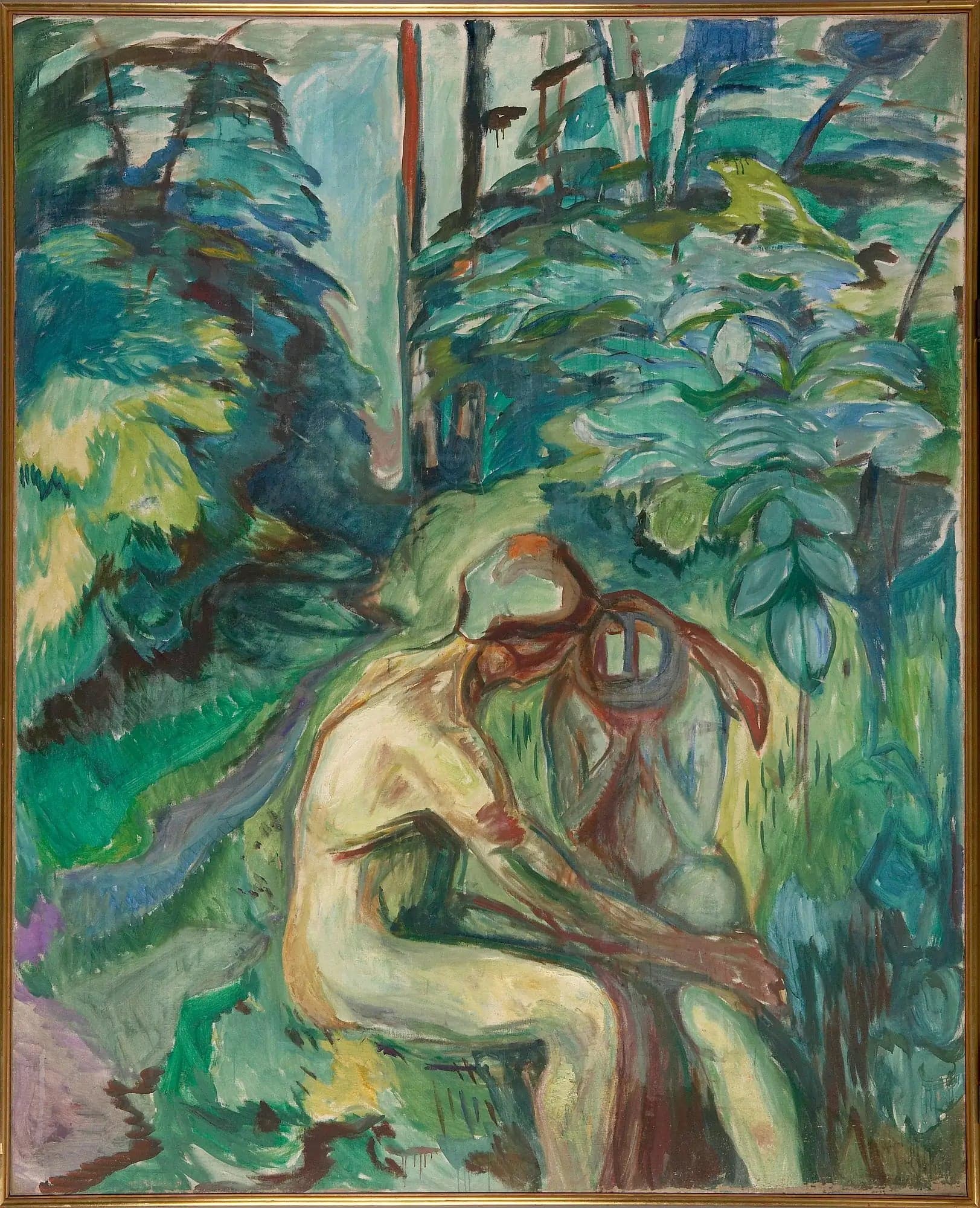
Consolation in the Forest
- Original dimensions
- 173 x 215 cm
- Museum
- Munch Museum
- Year
- 1924
Scene depicted
The canvas represents a melancholic scene, where the emotions of calm and solitude intertwine. In the heart of the forest, gentle human figures get lost in a cocoon of greenery. The vibrant patterned foliage envelops these wandering souls, offering a sense of comfort in the face of the tumult of existence. Nature becomes the refuge of profound consolation, an intangible link between man and his environment.
Historical context
Created in 1924, this painting is rooted in the expressionist movement that emerged in Norway, specifically in Oslo. Consolation dans la forêt stands as a poignant testimony to a historical context where inner struggles and existential concerns were gradually brought to the forefront. This canvas , owned by the Munch Museum, resonates with the questions of its time, while unfolding in impressive dimensions.
Place in the artist's career
Consolation dans la forêt is positioned at the heart of Edvard Munch 's artistic evolution, marking a period of maturity where he fully masters his visual language. Compared to other canvases such as The Scream and The Dance of Life , this work reveals an increased interest in scenes of nature and human emotions. Each painting brilliantly addresses the conflict between the individual and their existential anxieties.
Anecdote
Edvard Munch once stated: "Colors are the memories of a bygone time." It is within this emotional framework that he conceived Consolation dans la forêt . One spring morning, while observing the delicate glimmers filtering through the foliage, the artist felt a vital call from nature. This moment etched itself in his mind, transformed into a pictorial work full of depth.