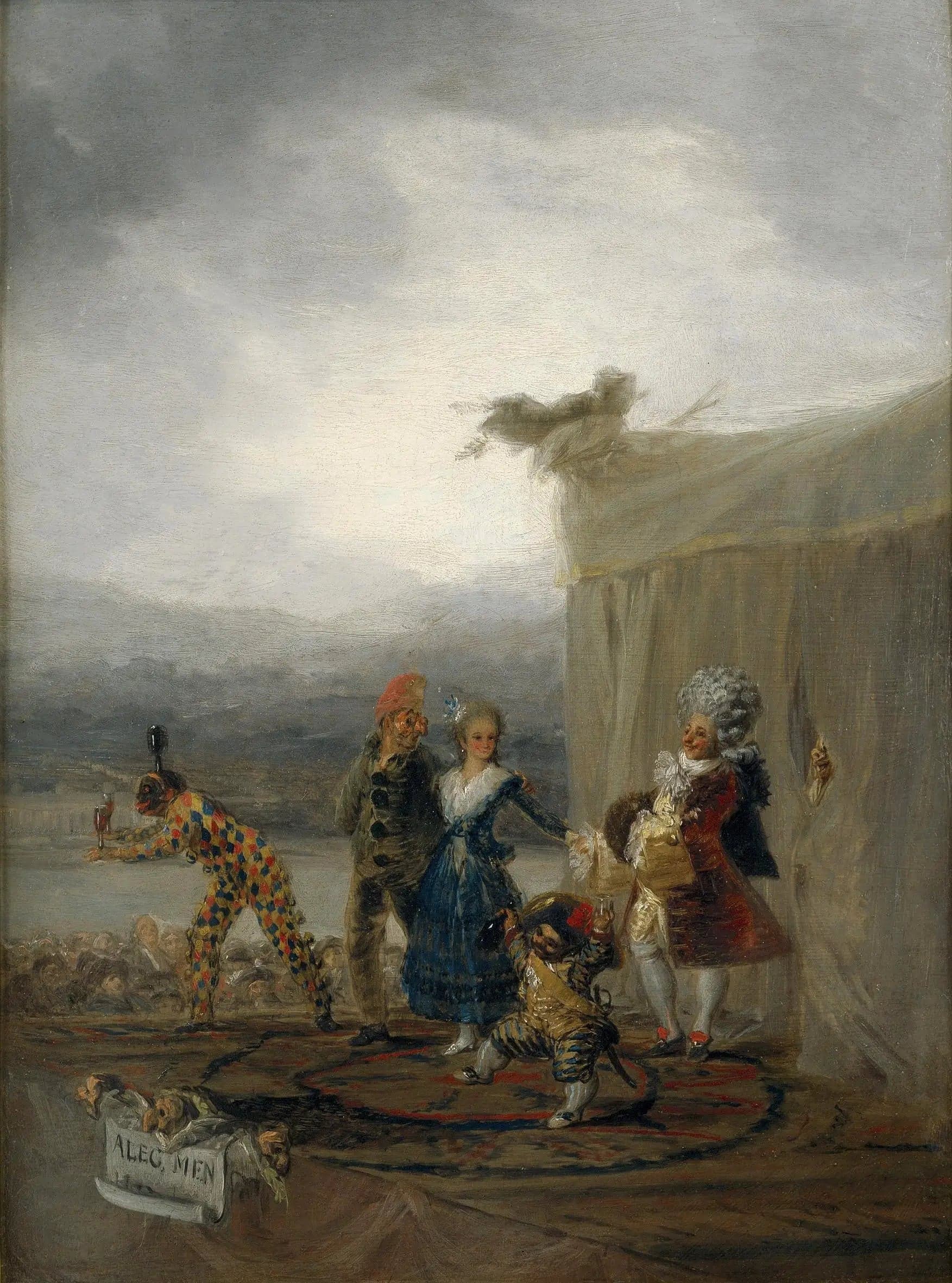
Comedic Walking Actors
- Original dimensions
- 31.7 x 42.5 cm
- Movement
- Neoclassicism
- Museum
- Prado Museum
- Year
- 1793
Scene depicted
In this fascinating composition, Goya immerses us in the world of comedic actors, true troubadours of the street, embodying the lightness and laughter of an era. This painting also reflects society at that time, blending joy with a hint of melancholy, a celebration of everyday life through the art of performance.
Historical context
Created in Madrid, this canvas emblematic of the year 1793 is at the heart of the neoclassical movement. Goya, as a precursor, captured an era rich in upheavals and innovations. Today, the painting is preserved in the prestigious Prado Museum, an artistic treasure whose dimensions of 31.7 x 42.5 cm reveal the full intensity of this pictorial work.
Place in the artist's career
This painting marks a pivotal period in Goya's career, laying the groundwork for a deeper exploration of human emotions. At the crossroads of his previous works such as La Maja Desnuda and those to come like The Disasters of War, this masterpiece testifies to a stylistic and emotional development that enriches his legend.
Anecdote
“I wanted to capture laughter in light and movement, to have the humor of everyday life,” Goya might have said when recalling the spark that guided his hand on the canvas. This masterpiece came to life during one of those vibrant mornings when the streets of Madrid echoed with the cries of street performers, bursts of laughter, and joy. The memory of these moments endures with every glance at this painting .