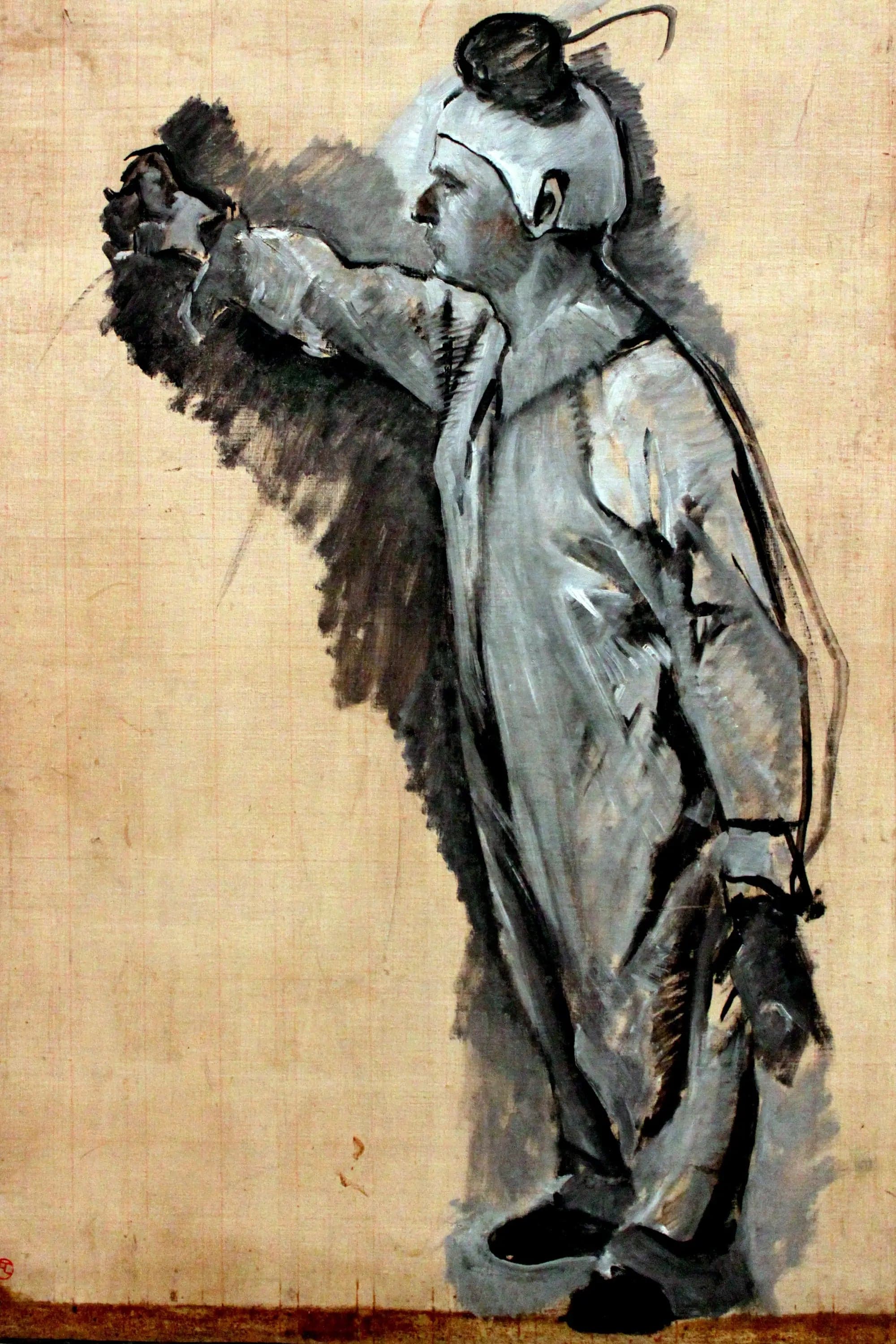
Clown - Henri de Toulouse
- Original dimensions
- 57 x 81.5 cm
- Museum
- Alte Nationalgalerie
- Year
- 1886
Scene depicted
The composition of “Clown” reveals an artist fascinated by performance and the lives of cabaret artists. The clown, a figure contrasted between the joy of the show and inner solitude, is depicted with dramatic intensity. His posture, although charged with energy, invites a deeper reading, reflecting the multiple facets of human identity in the face of the entertainment world.
Historical context
Created in 1886 in Paris, this painting is emblematic of the artistic movement of post-impressionism . At that time, Toulouse-Lautrec was immersed in the vibrant culture of the Montmartre district, where nightlife and cabaret shows reigned. The canvas is currently located at the Alte Nationalgalerie in Berlin, a museum that celebrates masterpieces of European art. Its dimensions, 57 x 81.5 cm, make it all the more imposing and captivating.
Place in the artist's career
This painting is at the heart of Toulouse-Lautrec's career, revealing his transition to optimal stylistic mastery. It is a bridge between earlier works like “La Goulue” and later creations such as “Aristide Bruant in his cabaret.” Each of these canvases testifies to his evolution, both technically and emotionally.
Anecdote
“Art is the beauty of the ephemeral,” Toulouse-Lautrec might have said, evoking the fleeting moment of a performance. On that famous spring morning, while observing a clown twirling on stage, he captured the essence of joy and melancholy. The painting “Clown” was born, vibrating with this duality, both anchored in the moment and carried by the eternity of emotion.