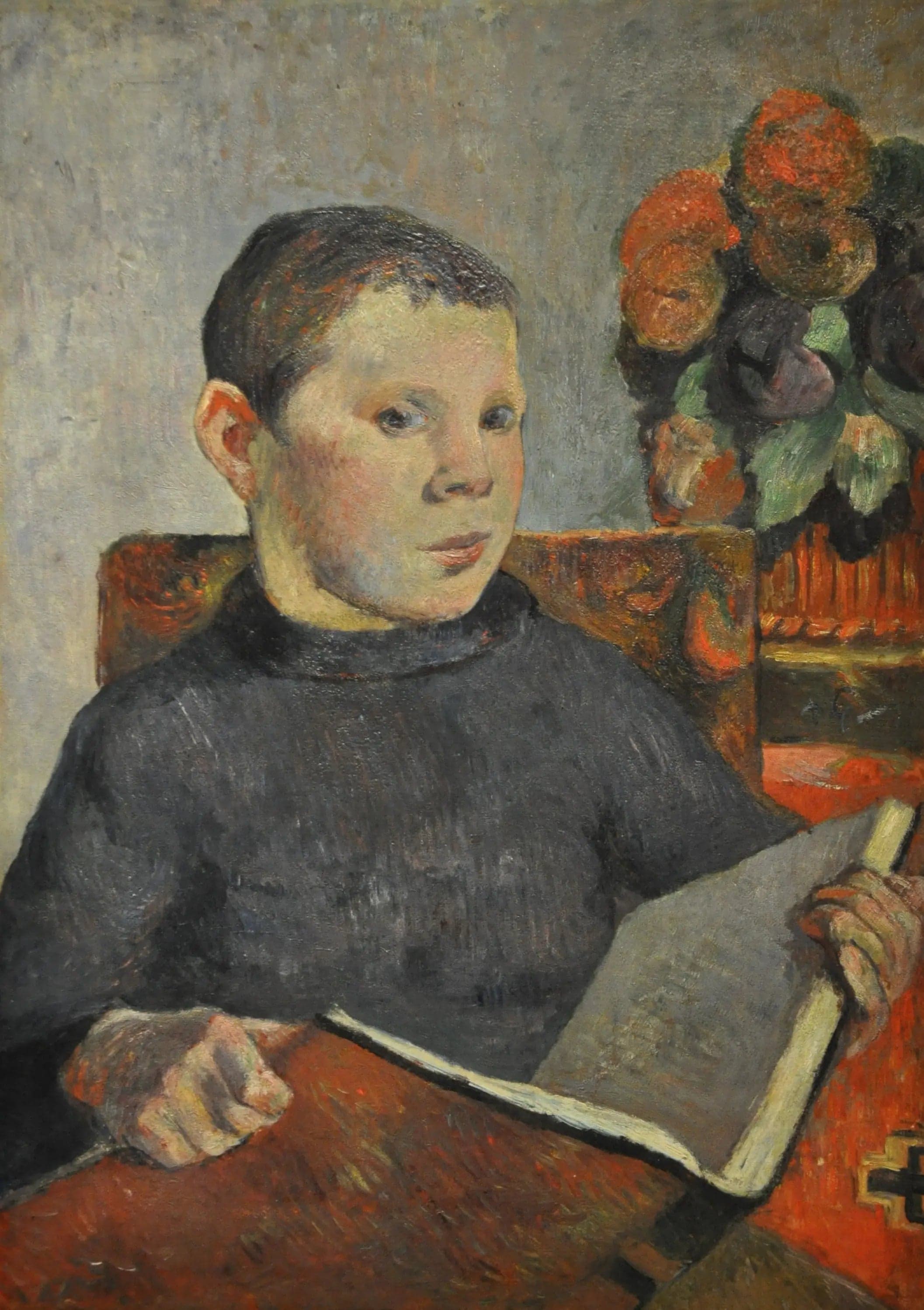
Clovis
- Original dimensions
- 40.5 x 56.5 cm
- Museum
- Not specified
- Year
- 1886
Scene depicted
The painting “Clovis” unfolds in a rich atmosphere, blending symbolism and naturalism. It features characters, figures of the local society, whose expressiveness reveals a fascinating psychological depth. Their environment, bathed in golden light, seems to vibrate with life. The painting thus reveals a subtle narrative, evoking both the richness of human interactions and the tranquility of a peaceful landscape.
Historical context
Created in 1886, this iconic painting is situated at the crossroads of artistic history, in the heart of beautiful Brittany. This painting, rooted in the post-impressionist movement, resonates with the bold experimentation of colors and forms that characterizes Gauguin's work. Although it has not been included in a specific collection, its memory endures, evoking the exact atmosphere of the time when modernity began to assert itself. This masterpiece offers perfect dimensions for an artistic display of 40.5 x 56.5 cm.
Place in the artist's career
“Clovis” stands as a crucial pivot in Gauguin's artistic exploration. This pictorial work marks a period of maturation, where the artist seeks to transcend simple representation. Alongside “Vision after the Sermon” and “The Nap,” this painting illustrates the evolution of his style towards a bolder abstraction, where emotions and colors blend intensely.
Anecdote
“There is a singular beauty in every face encountered, a story woven in the light,” Gauguin might have said, inspired during a melancholic walk at the crossroads of alleys decorated by the morning's play of shadows. This quote resonates deeply in the painting , capturing the essence of a fleeting moment and the vibrant magic of everyday life.