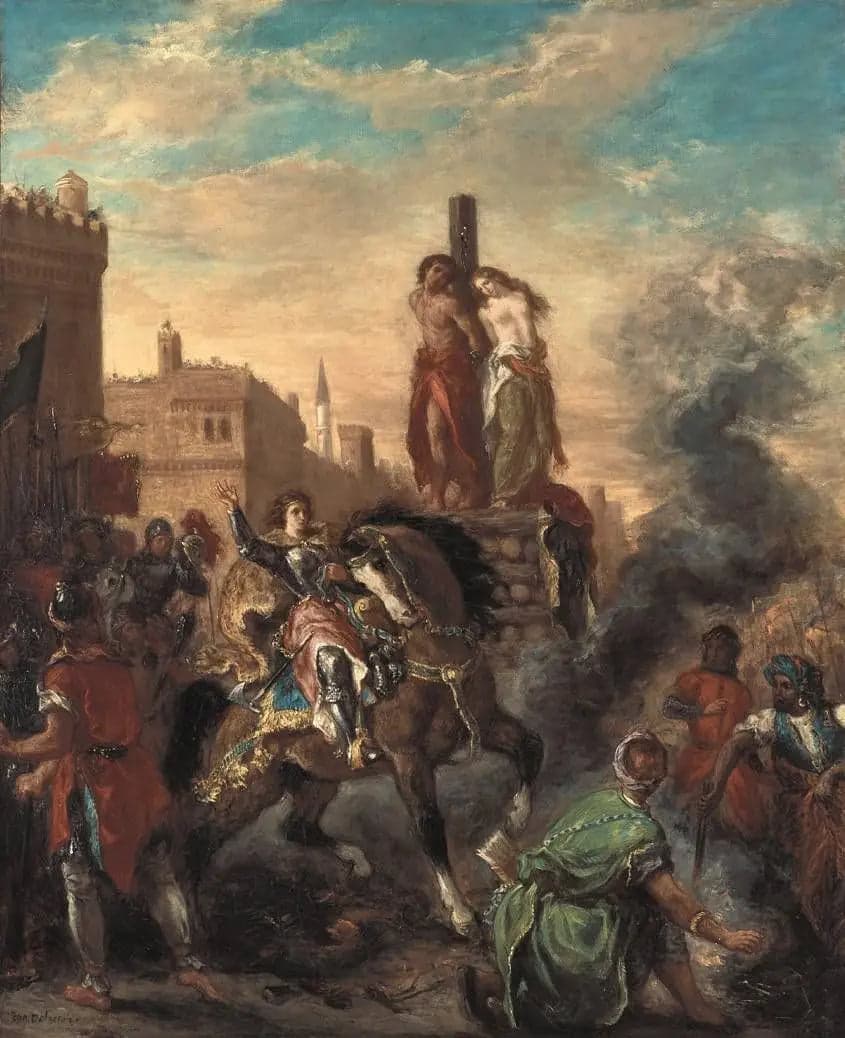
Clorinda Saves Olindo and Sophronia
- Original dimensions
- 82 x 101 cm
- Museum
- Neue Pinakothek
- Year
- 1856
Scene depicted
The painting depicts a key moment from the epic of Torquato Tasso, where Clorinda, a Muslim warrior, saves Olindo and Sophronia from the claws of fate. The dramatic intensity of this scene is magnified by the intertwined bodies, united by a beauty and palpable suffering, inviting the viewer to experience this dramatic tension deep within themselves.
Historical context
Created in 1856, this painting is situated in the vibrant heart of the romantic movement, within a France experiencing a surge of intellectual and artistic fervor. The painting, currently displayed at the Neue Pinakothek in Munich, speaks to a time when human emotions and passions found their most intense expression in art. The dimensions of this canvas make it a work that captivates the eye, inviting deep contemplation.
Place in the artist's career
This painting stands as a stylistic turning point in Delacroix's career, reflecting his commitment to emotional expression. It resonates with other masterpieces such as " Liberty Leading the People " and " The Massacres of Scio ", highlighting his evolution towards a mastery of color and light, a true signature of his art.
Anecdote
“Light and shadow are merely allies of emotions,” could have said Eugène Delacroix as he drew inspiration from this canvas . Imagine him one morning in the heart of Paris, observing the golden light of the spring sun playing on the cobblestones, integrating this memory into his painting . It is this evocative force that permeates Clorinda, the heroine of his masterpiece .