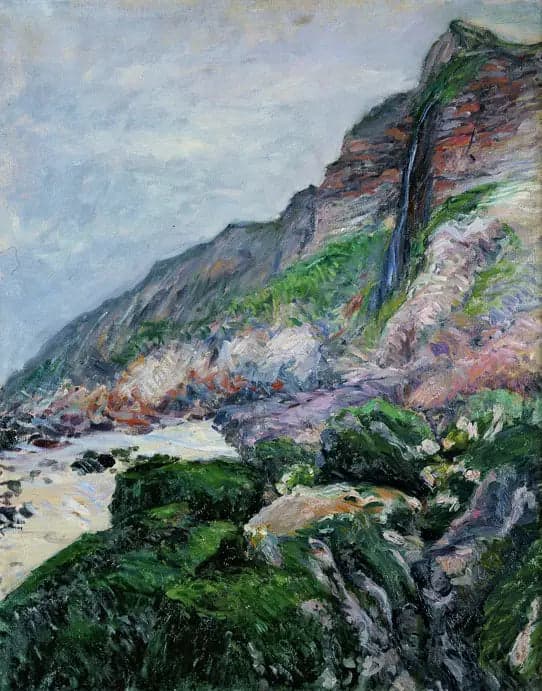
Cliff in Normandy
- Original dimensions
- 73 x 60 cm
- Museum
- Not specified
- Year
- 1880
Scene depicted
The painting "Falaise en Normandie" depicts a majestic panorama, imbued with serenity. The cliffs rising under a vibrant sky evoke the tranquil power of nature, while the sparkling sea captures light in an almost magical way. Each brushstroke tells the story of this Norman landscape through a composition where raw beauty and delicacy meet.
Historical context
Created in 1880, the painting emblematic "Falaise en Normandie" by Gustave Caillebotte finds its inspiration in the natural beauty of the Normandy region, emblematic of French landscapes. Rooted in the Impressionist movement, this pictorial work evokes a time when light and color redefined artistic perception. Although the hosting museum is not specified, this canvas holds an invaluable place in the history of art, with its precise dimensions of 73 x 60 cm, capturing a moment suspended in time.
Place in the artist's career
"Falaise en Normandie" represents an important phase in Caillebotte's career, a period when the artist focuses on exploring landscapes. When compared to works such as "The Floor Scrapers" and "A Rainy Day in Paris," it is evident that this achievement marks his technical evolution, from realism to a more Impressionist approach, capturing the very essence of light and moment.
Anecdote
"Art is the reflection of nature," said Caillebotte while contemplating these Normandy cliffs on a cheerful summer morning. It is in this warm light that the artist immortalized the dance of the waves against the rocks, a living echo of this encounter with nature that profoundly marked him and resonates strongly in his masterpiece .