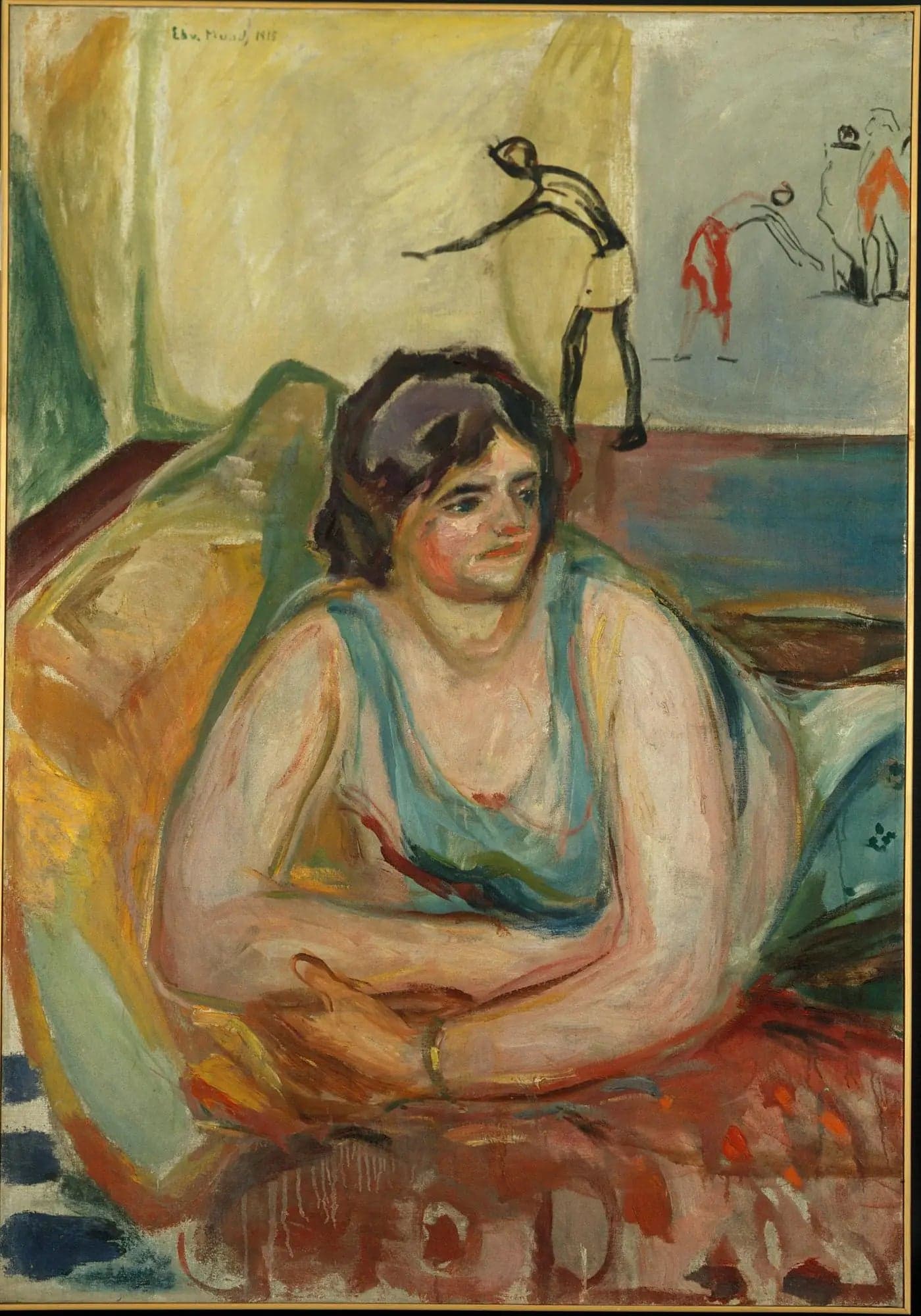
Cleopatra
- Original dimensions
- 102.5 x 146.5 cm
- Museum
- Munch Museum
- Year
- 1916
Scene depicted
The painting "Cleopatra" transposes an iconic vision of this historical figure. Munch represents the majesty of the Queen of Egypt with palpable emotional intensity. The background is tinted with vibrant colors, creating a striking contrast with Cleopatra's melancholic face, symbolizing the duality of her existence between power and solemnity.
Historical context
Created in 1916, the painting "Cleopatra" is part of the expressionist movement, a revolutionary period marked by the quest for the human soul. Edvard Munch , born in Loten, Norway, draws his inspiration from psychological turmoil and human passions. This canvas , now preserved in the Munch Museum in Oslo, immerses us in an atmosphere tinged with mystery and sensitivity, with its generous dimensions of 102.5 x 146.5 cm.
Place in the artist's career
"Cleopatra" is part of Munch's artistic maturity, at a time when he merges his typical expressionism with a deeper exploration of themes of love and solitude. This painting resonates with other works like "The Scream" and "The Madonna," where tormented emotions are both universal and personal, betraying the constant evolution of his poignant style.
Anecdote
Regarding the legend of Cleopatra, Munch once stated: "Cleopatra is not just a queen, she is the soul of passion and suffering, an echo of human struggles." This sentiment fueled the inspiration behind his masterpiece , perhaps created on a bright morning, when the rays of the sun filter through the veils of memory, bringing to life the vibrant image of the illustrious queen.
Major exhibitions
Edvard Munch and his models: 1912-1943