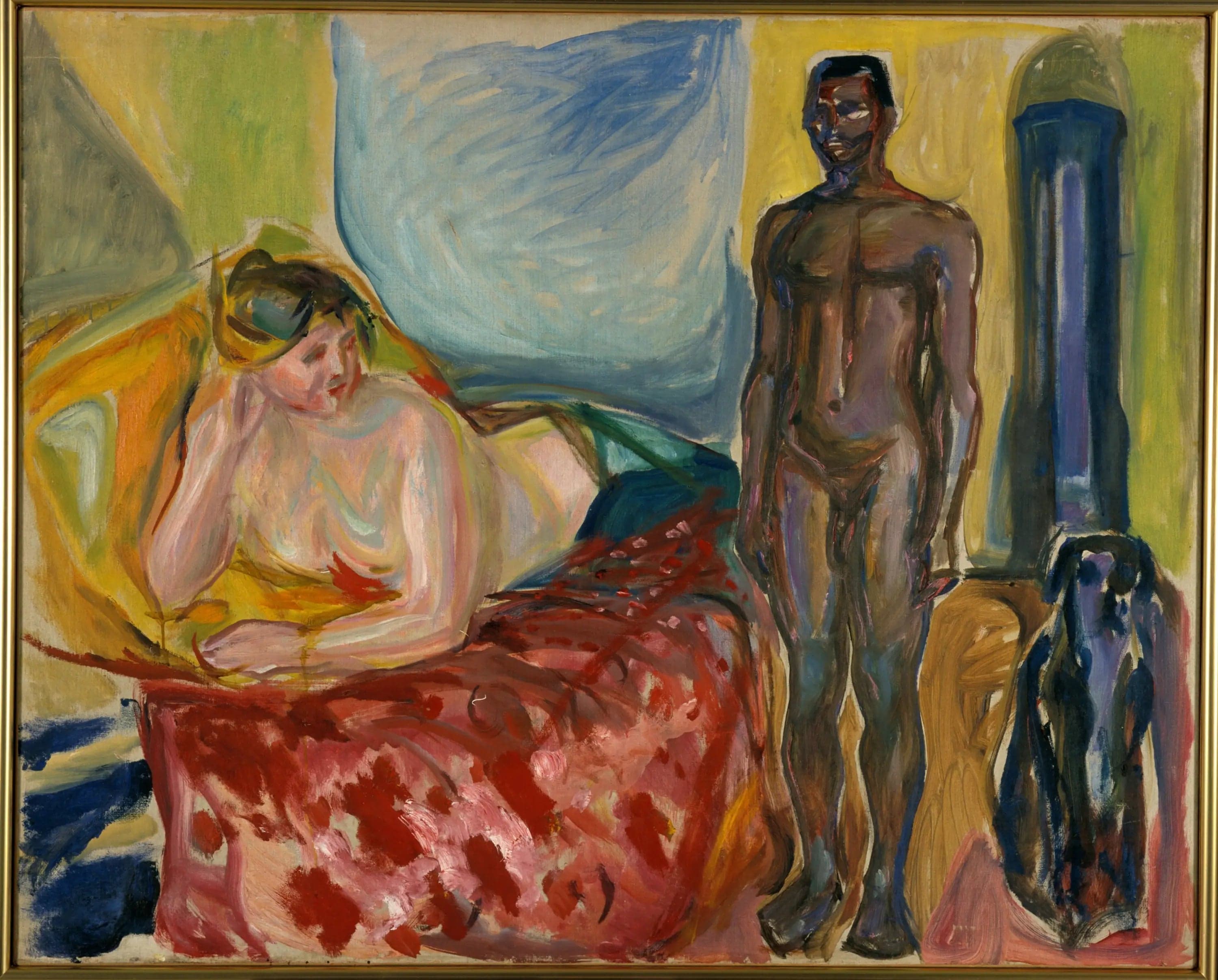
Cleopatra and the Slave
- Original dimensions
- 125 x 100.5 cm
- Museum
- Munch Museum
- Year
- 1916
Scene depicted
In this painting , Munch depicts Cleopatra, the legendary queen of Egypt, in intimate conversation with a young slave. Their exchanged glances immerse us in the intimacy of a forbidden passion, where power and vulnerability intertwine. The composition suggests a palpable emotional tension, illuminated by soft lights and delicate shadows.
Historical context
Created in 1916, this painting is set in the artistic and cultural context of Norway, where Edvard Munch , an iconic figure of symbolism , explores the complexities of human emotions. Currently, this canvas is preserved at the Munch Museum in Oslo, where it attracts art enthusiasts from around the world.
Place in the artist's career
Cleopatra and the Slave marks a turning point in Munch's career, where the artist, already recognized for his expressive works, further explores the psychology of characters. In parallel with The Scream and The Madonna, this painting illustrates his evolution towards greater technical finesse and unparalleled emotional depth.
Anecdote
“The ephemeral beauty of romantic relationships captures my soul, and it is through this canvas that I attempt to freeze these moments.” Such were Munch's words, inspired by the fleeting essence of human passions, in the midst of Norwegian spring, before the reflection of soft light on faces. The composition of Cleopatra, imbued with melancholy and desire, reveals the intensity of this inspiration.
Major exhibitions
Edvard Munch and his models: 1912-1943