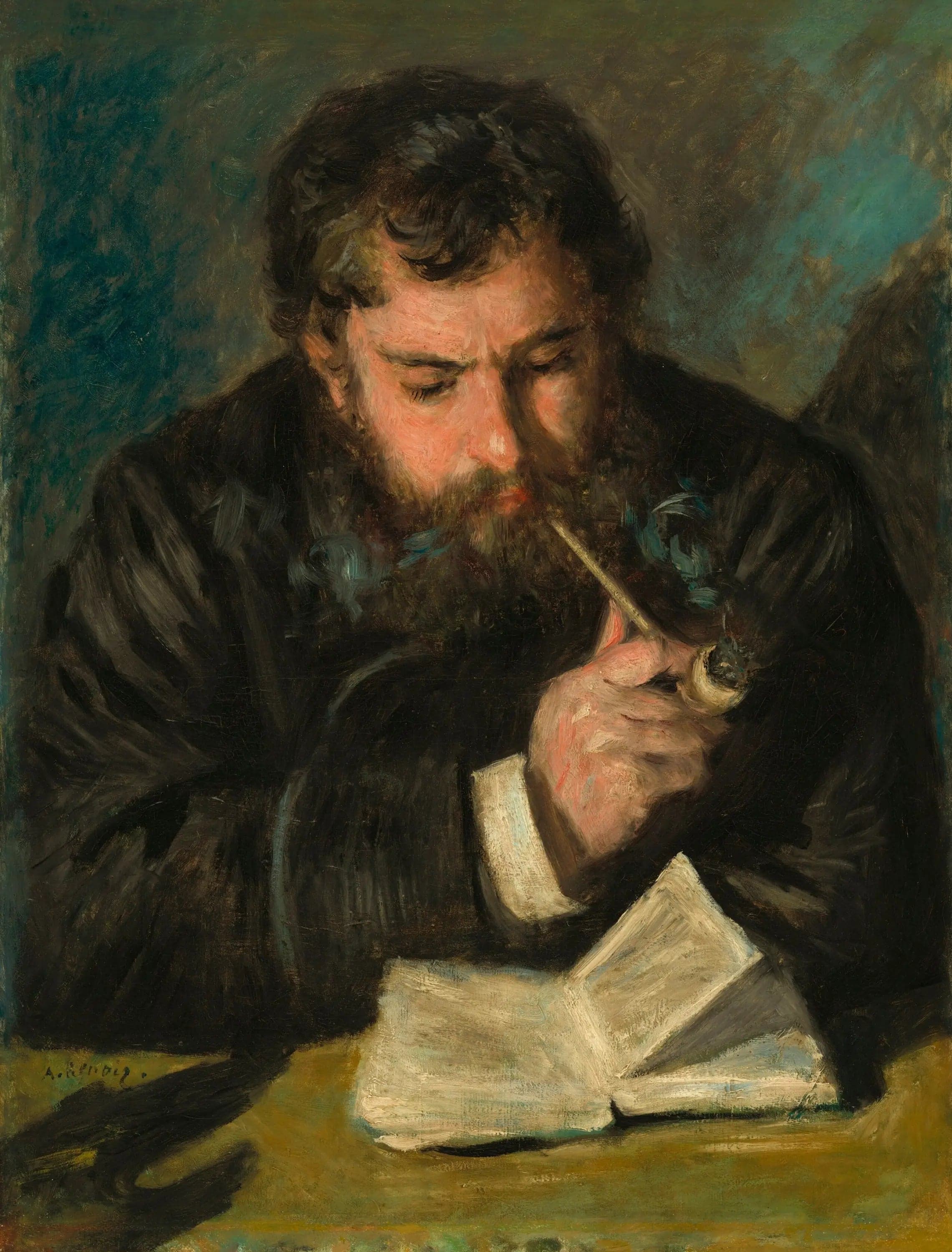
Claude Monet - Pierre
- Original dimensions
- 50 x 65 cm
- Museum
- National Gallery of Art
- Year
- 1872
Scene depicted
This canvas illustrates a fleeting moment, where light caresses the vegetation and human figures intertwine with nature. The characters, bathed in a warm and playful atmosphere, seem to dance with the light air of spring, creating a perfect harmony between man and his environment.
Historical context
This painting , born in the heart of Paris in 1872, bears witness to the emergence of the Impressionist movement, an artistic revolution that shakes conventions. The canvas , currently exhibited at the National Gallery of Art , captures the essence of this vibrant era, uniting boldness and creativity in a burst of color and light.
Place in the artist's career
This painting represents a turning point in Renoir's career, marking him as one of the pillars of Impressionism . Echoing his previous works such as "Luncheon of the Boating Party" and "Dance in the City," this masterpiece demonstrates an evolution towards a more intuitive understanding of light and color.
Anecdote
Auguste Renoir once stated: "Nature is my muse and every encounter with it is a dance of light." It is under this gentle spring sun that the painting comes to life, evoking the quivering of nature, like a light breath on the skin, ready to awaken the deepest emotions.