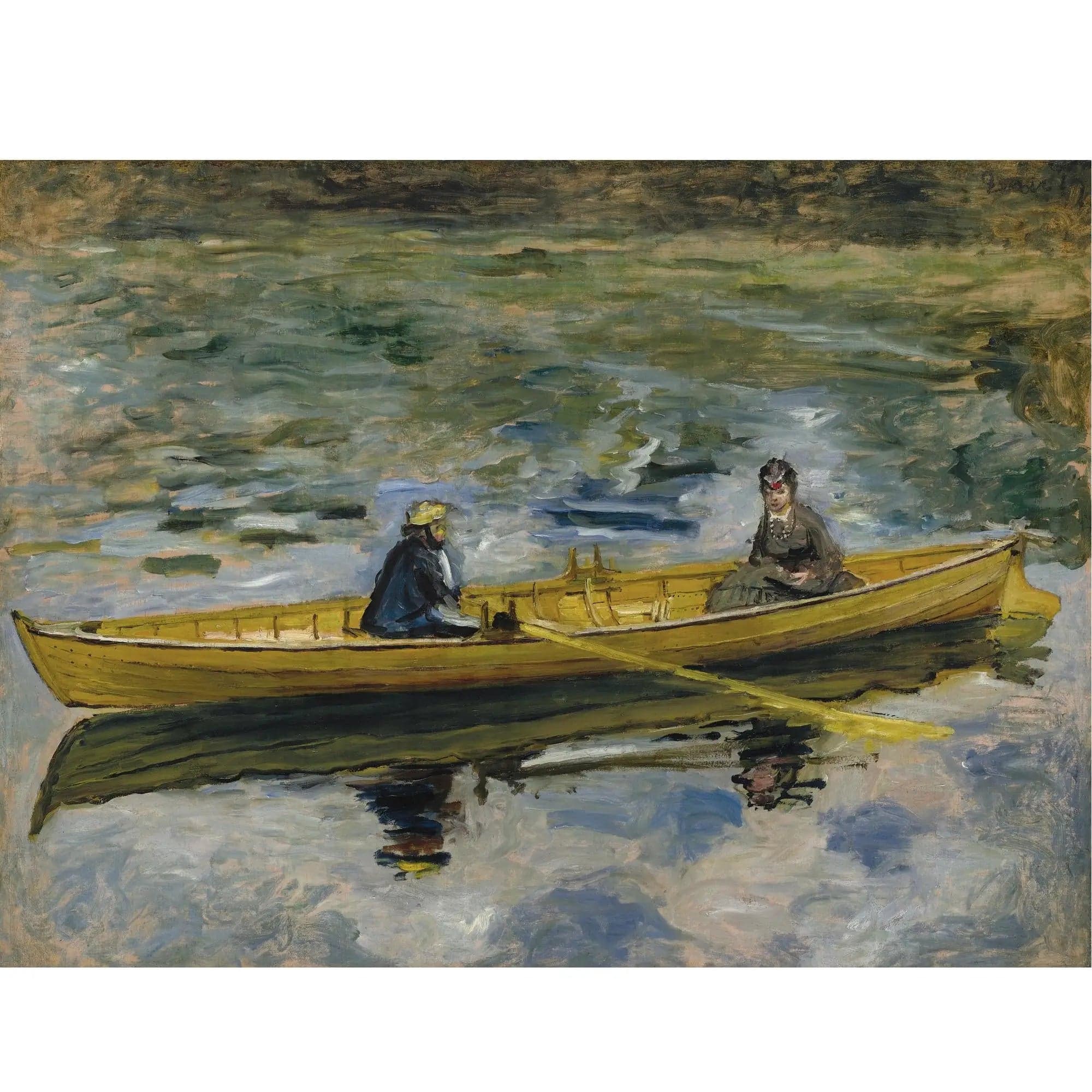
Claude Monet and Mme Henriot - Pierre
- Original dimensions
- 73 x 54 cm
- Museum
- Not specified
- Year
- 1880
Scene depicted
This painting presents an intimate scene where nature, human beauty, and light meet. Through the delicate representation of Mme Henriot, Renoir manages to capture a harmony between the subject and her environment, revealing the depth of human sensations in the face of the living nature that surrounds her. The composition evokes a moment of pure serenity, where each brushstroke seems to whisper secrets to those who take the time to look.
Historical context
Created in 1880, this painting is set against the vibrant backdrop of the Belle Époque, in Paris, the cradle of the impressionist movement. At that time, the city was transforming, vibrant with lights and colors, and became the home of artistic innovation. Although the canvas is currently not displayed in a museum, it remains a symbol of an era when artists sought to capture the ephemeral through their pictorial works.
Place in the artist's career
This canvas is situated at a significant turning point in Renoir's career, as he begins to explore more nuances and textures. Compared to his earlier works like “Luncheon of the Boating Party” and later “Dance in the Country,” it illustrates the transition from realism to an impression while still remaining grounded in reality, marking a notable evolution in his mastery of light and color.
Anecdote
“Light is music for my eyes,” Renoir said, evoking the inspiration that led to the emergence of this masterpiece . It was on a spring morning, in a friend's garden, that the artist met Mme Henriot. The brilliance of the flowers, the delicate scent of the roses, all played a major role in the creation of this painting, seeking to freeze a moment of happiness.