Citrus Dish
Scene depicted
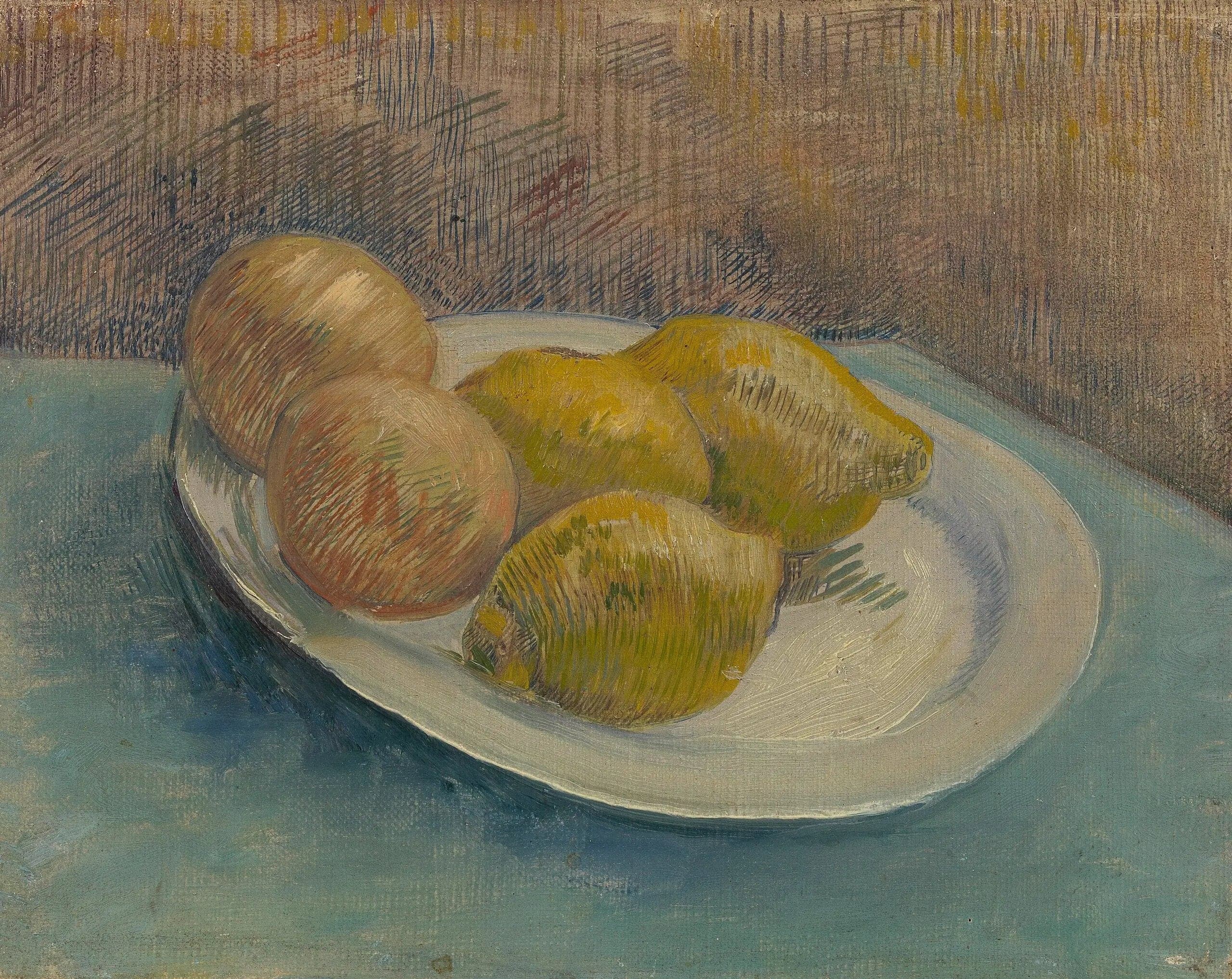
The painting “Citrus Plate” testifies to the vastness of Van Gogh's influences, brilliantly capturing a delicate composition of citrus fruits, carefully arranged, contrasting with the dark background. Each fruit, each shade intertwines to create a visual harmony that evokes life and nature. Emerging from the depths of his artistic soul, this painting is not only a representation of objects but an ode to the ephemeral beauty of nature.
Historical context
Created in 1887, this painting emblematic comes to life in the vibrant city of Paris , during a time when Impressionism and Post-Impressionism intertwine to give birth to new artistic perspectives. Currently, the canvas is preserved at the Van Gogh Museum , a sanctuary in Amsterdam dedicated to the legacy of this genius artist. Its dimensions, 26.5 x 21 cm, reveal the intimacy of this pictorial work, a composition that captures the warmth and light of a time in full effervescence.
Place in the artist's career
Situated at the heart of his career, “Citrus Plate” fits into a period of artistic maturity for Vincent van Gogh , marked by experimentation and the quest for light. Compared to his canvas “ The Starry Night ” and “ The Sunflowers ”, this work reveals a remarkable progression both technically and emotionally, each piece betraying the evolution of his style and his unique vision of the world.
Anecdote
Vincent van Gogh once declared: “Painting is my window to the world.” This sentiment resonates in every brushstroke of his creation. Imagine him, one spring morning, wandering through the alleys of Montmartre, inspired by the shapes and colors of the Parisian markets. In this enchanting atmosphere, his citrus fruits come alive on the canvas , revealing an intense and authentic emotion that makes this painting a true masterpiece.