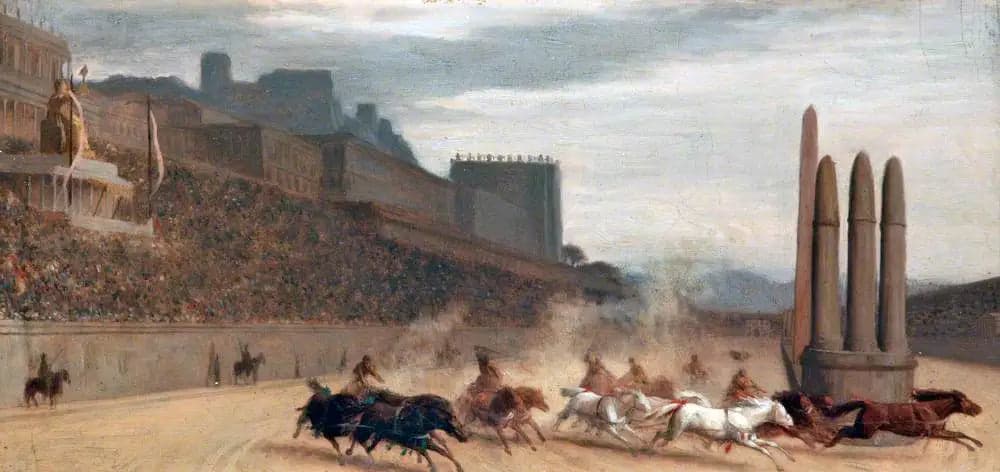
Circus Maximus - Jean
- Original dimensions
- 32.3 x 16.1 cm
- Museum
- Sudley House
- Year
- 1876
Scene depicted
The painting “Circus Maximus,” a true pictorial work by Gérôme, represents a vibrant scene from ancient Rome. The spectators, captivated by the fierce chariot races, testify to an atmosphere that is both exhilarating and tense. Gérôme succeeds in immortalizing this moment of triumph and tension, plunging the viewer into the heart of the action.
Historical context
Created in Paris in 1876, at the heart of an artistic movement that celebrates neoclassicism , Circus Maximus evokes a significant moment in Roman history. Jean-Léon Gérôme , an iconic artist of his time, captures here the essence of Antiquity with meticulous precision. Today, this painting can be admired at Sudley House, a museum that houses treasures of Victorian art.
Place in the artist's career
Circus Maximus is part of a pivotal period in Gérôme's career, revealing his talent for visual storytelling. Alongside works such as “Pollice verso” and “The Cairo,” a significant evolution in his approach to historical themes can be observed. This painting illustrates his transition to a pictorial and emotional mastery that would mark his era.
Anecdote
“Light and shadow meet where history is written,” said Gérôme, perhaps evoking the moment when inspiration seized him. Imagine a clear morning in Paris, where the softness of spring caresses the cobblestones, a muse under the blue sky, revealing ancestral stories through the filter of her canvas .