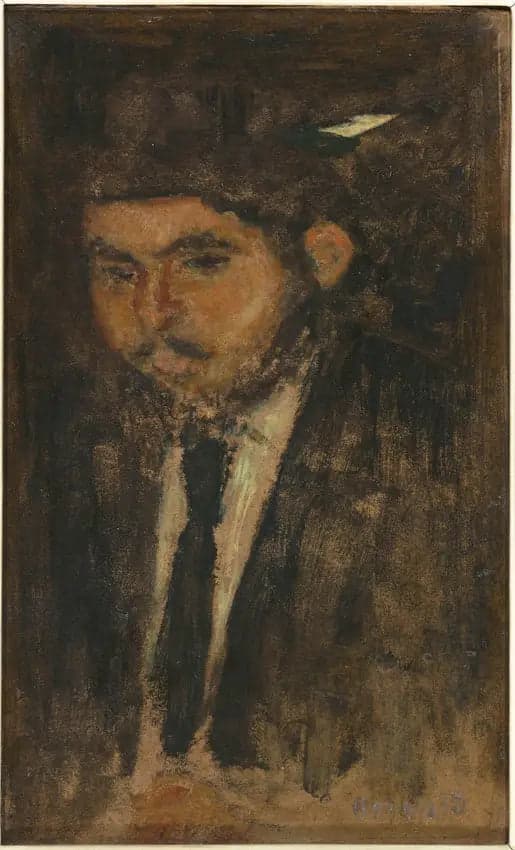
Cipa Godebski
- Original dimensions
- 21.5 x 33 cm
- Museum
- musée d'Orsay
- Year
- 1895
Scene depicted
The painting “Cipa Godebski” represents a rare moment captured in an intimate setting, a deeply human portrait that celebrates the harmony of a female figure bathed in light. This painting evokes the softness and delicacy of the subject while integrating decorative elements inspired by everyday life. The artist excels at conveying a peaceful atmosphere, where each gaze upon the canvas brings forth a bygone past.
Historical context
Created in 1895, in the beautiful city of Paris, this canvas is emblematic of the Nabi s movement, an artistic current that advocates the synthesis of forms and colors. The painting echoes a time rich in artistic innovations, a moment when emotion and brightness intertwine. Today, the painting is located at the musée d'Orsay , where it continues to captivate visitors with its brilliance and depth.
Place in the artist's career
This painting , the fruit of a period of maturity for Bonnard, reflects his stylistic explorations. In summary, it is situated between two other notable paintings : “La Terrasse à Vernon” and “Les Cuisinières,” where the evolution of the treatment of light and colors becomes evident, placing Bonnard at the pinnacle of his art.
Anecdote
“Each painting is a window into the human soul,” said Bonnard while painting from life. One bright April morning, as he observed the shadows playing on Cipa's face, he conceived this masterpiece where the tenderness and subtlety of each brushstroke reveal an unprecedented intimacy. This canvas captures not only a beautiful face but also an entire universe of sensations.