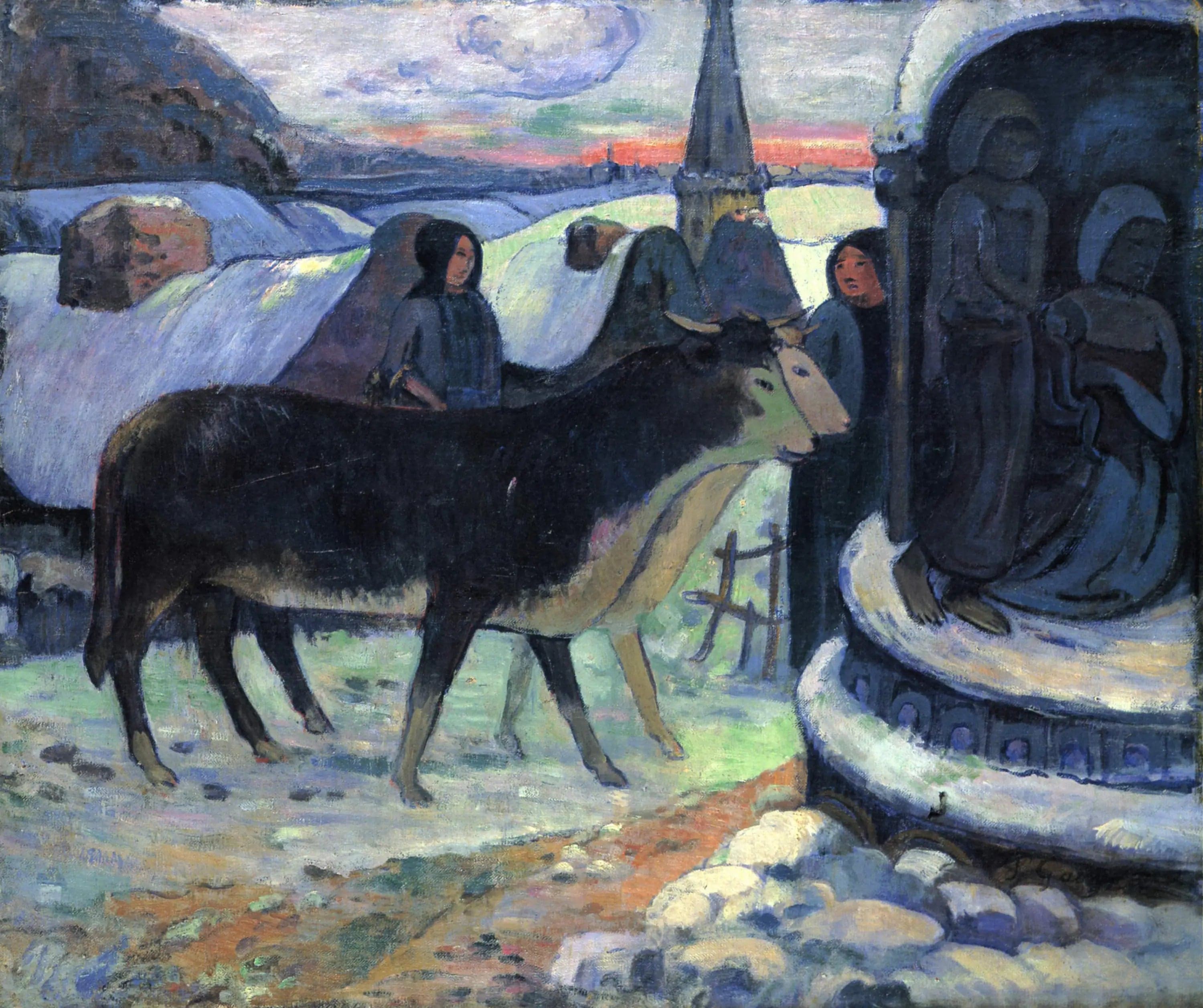
Christmas Night, The Blessing of the Oxen
- Original dimensions
- 32.5 x 27.94 cm
- Museum
- Indianapolis Museum of Art
- Year
- 1900
Scene depicted
This pictorial work depicts the sacred moment when the oxen, symbols of fertility and life, prepare to bless the night of Christmas. The surrounding darkness is illuminated by the soft glow of the stars, while the silhouettes of the characters seem to dance to the rhythm of songs and prayers. Gauguin captures here a passage between the profane and the sacred, an atmosphere of communion between man and nature.
Historical context
Created in 1900, in the bubbling context of the end of the 19th century, the painting "Night of Christmas, The Blessing of the Oxen" is part of the Symbolist movement. A witness of its time, this masterpiece was created in Pont-Aven, a small town in Brittany rich in artistic inspirations. The canvas , which evokes a scene imbued with traditions and spirituality, is today preserved at the Indianapolis Museum of Art , where it continues to fascinate with its delicate dimensions of 32.5 x 27.94 cm.
Place in the artist's career
"Night of Christmas, The Blessing of the Oxen" represents a turning point in Gauguin's career, illustrating his quest for simplification and intense emotion. In parallel with works such as "The Viewing" and "The Woman by the River," this painting marks an artistic maturity, blending vibrant colors and symbolism with an introspective gaze on the human condition.
Anecdote
"Reality is often the shadow of my dreams." These words from Gauguin resonate like an echo at the moment he leaned over his palette. It was one evening, enveloped by the sweet scent of fir trees, when he let himself be inspired by the Breton night. The painting rises, then, as a tribute to the simplicity of rituals, offering a poetic vision of the world in his canvas .