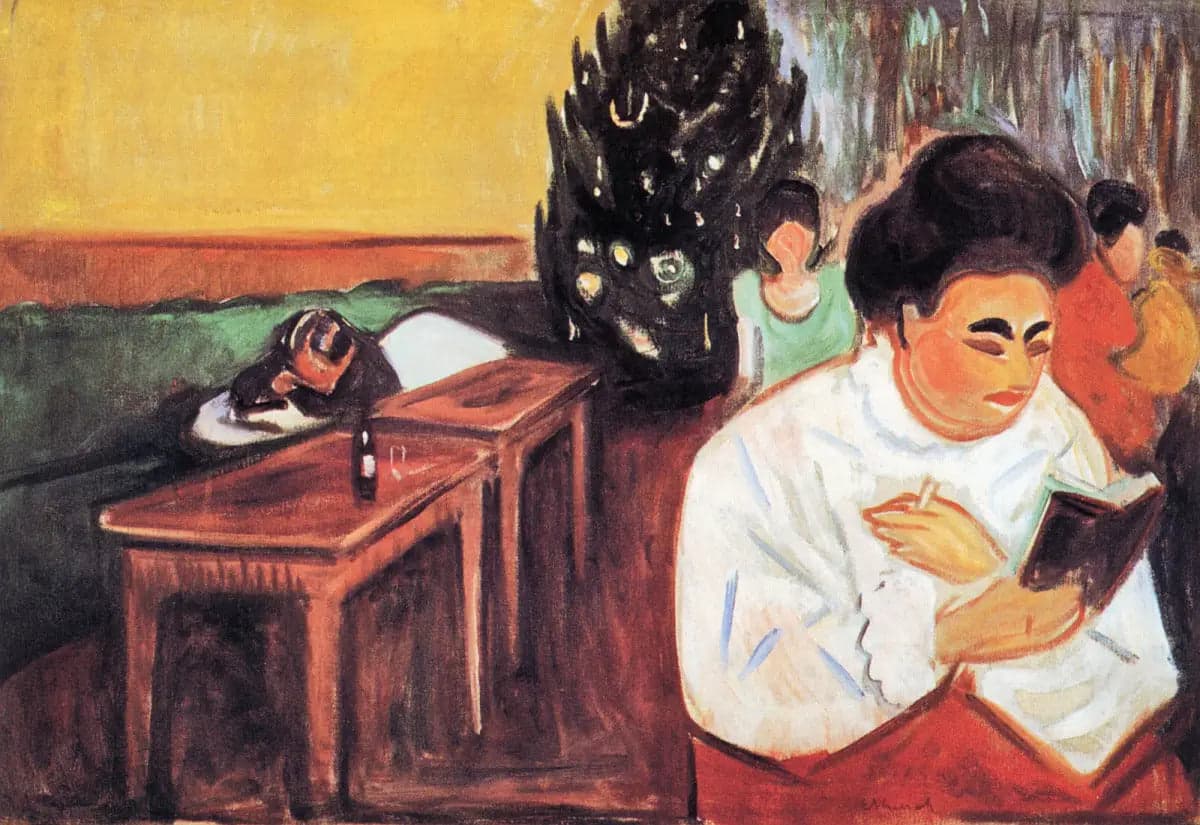
Christmas at the Brothel
- Original dimensions
- 88 x 60.5 cm
- Museum
- Munch Museum
- Year
- 1904
Scene depicted
This painting presents a nocturnal atmosphere where shadows and lights intertwine, symbols of solitude and communion. Munch captures a scene of almost chaotic intimacy, where human tenderness and desire blend in a choreography of contradictory emotions, evoking stories while leaving room for personal interpretation.
Historical context
Created in Oslo at the beginning of the 20th century, this painting is part of the Symbolist movement. The work was born in a time marked by social and cultural upheavals, where Edvard Munch was a witness to the modern world. The painting is currently located at the Munch Museum, an iconic place for compiling the work of this visionary artist.
Place in the artist's career
Noël au bordel stands as a major work from Munch's maturation period, succeeding masterpieces like The Scream and preceding The Madonna . This canvas reflects a remarkable technical evolution echoing his exploration of themes of anxiety and passion.
Anecdote
“I paint my desires, my fears, my dreams, each brushstroke is a cry from the heart.” In the silence of a December morning, Munch was struck by the haunting beauty of a Christmas hidden behind the veils of society, an inspiration that resonates deeply in the evocative power of Noël au bordel .