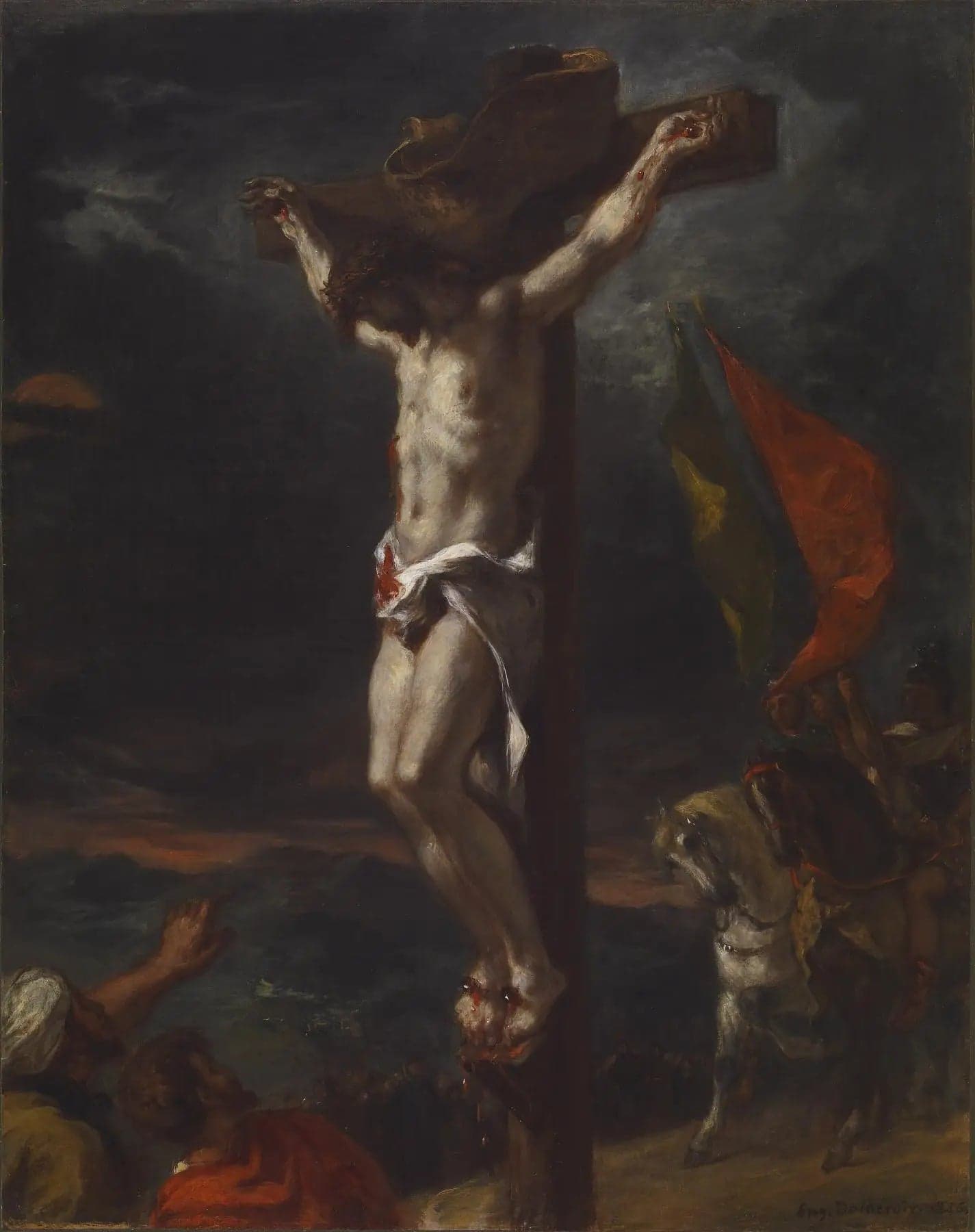
Christ on the Cross
- Original dimensions
- 59.7 x 73.5 cm
- Museum
- National Gallery
- Year
- 1853
Scene depicted
This monumental painting represents the ultimate sacrifice of Christ, a scene imbued with powerful emotions and symbolism. Delacroix, with his masterful brush, captures pain and resilience, evoking suffering and redemption. The secondary figures surrounding the cross are delicately intertwined with an atmosphere charged with tension, transforming the canvas into a true spiritual and contemplative experience.
Historical context
Created in 1853, this painting emanates from the innovative spirit of Eugène Delacroix , an iconic figure of Romanticism. The work, which can be found today at the National Gallery in London, is set against a rich historical backdrop, where spirituality and class struggle intertwine. The canvas unfolds an unparalleled emotional power, resonating deeply with the sensibility of the time and the tensions surrounding it.
Place in the artist's career
The Christ on the Cross stands as one of Delacroix's major works, representing the pinnacle of his Romantic period. This painting is the result of several years of artistic maturation, standing equidistant from his previous masterpieces, such as Liberty Leading the People and The Death of Sardanapalus , where one can observe an evolution established in the propaganda of grand feelings through sumptuous execution.
Anecdote
Delacroix himself said: "I paint with my guts." This phrase summarizes the vital impulse that inhabited the artist during the creation of this masterpiece . One spring morning, while contemplating a stormy sky, the artist faced his own quest for transcendence. The tumultuous colors of The Christ on the Cross then become a reflection of this raw, vibrant, and sincere emotion.
Major exhibitions
Delacroix (1798-1863)