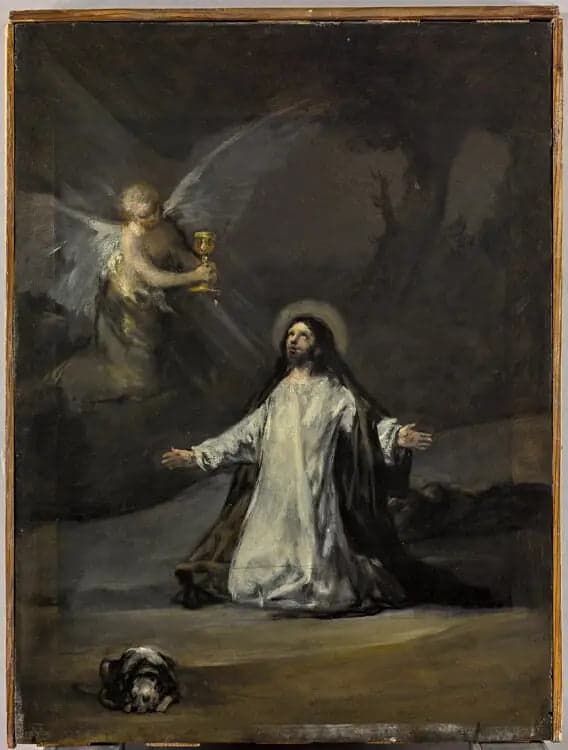
Christ in the Garden of Olives
- Original dimensions
- 35 x 47 cm
- Museum
- musée Calasancio
- Year
- 1819
Scene depicted
The painting “Christ au jardin des oliviers” depicts a decisive moment, the Savior's meditation before his arrest. In an atmosphere of melancholic turmoil, Goya conveys the palpable tension of this crucial night. The dim light filters through the branches, accentuating the despair and resilience of the protagonist.
Historical context
Created in 1819, this painting is an integral part of Spanish artistic heritage. Francisco de Goya , a key figure of the romantic movement, captured here a moment of deep introspection. The canvas is currently located at the musée Calasancio, where visitors can appreciate its dimensions of 35 x 47 cm, immersive in a setting where time seems suspended.
Place in the artist's career
This painting represents a turning point in Goya's career, symbolizing his period of maturity. It complements earlier works like “The Disasters of War” and “The Naked Maja,” revealing an evolution in his emotional and technical approach, oscillating between shadow and light.
Anecdote
“In the shadow of the olive trees, I found the clarity of doubt,” Goya might have said, inspired while painting this canvas . This masterpiece evokes a peaceful night, where silence is only disturbed by the whisper of leaves and the delicate scent of flowers, bearing witness to the wounded soul of Christ.